Pholidophorus
Pholidophorus is an extinct genus of stem-teleost fish. Numerous species were assigned to this genus in the past, but only the type species Pholidophorus latiusculus, from the Late Triassic of Europe, is considered to be a valid member of the genus today.

Ghedoghedo · CC BY-SA 4.0 · via Wikipedia/Commons. May be a photograph of a specimen, or an artist’s reconstruction — an interpretation of a skeleton, since colour and soft tissue are almost never preserved.
On record
Recorded, not inferred- Sits inside
- PholidophoridaePBDB
- Diet
- suspension feederPBDB, for Pholidophoridae
- Motility
- actively mobilePBDB, for Pholidophoridae
Time the record covers
At least 143 million years on record.
The record covers at least 244.4 Mya to 100.5 Mya. No occurrence read is dated outside 248.6 Mya to 93.9 Mya.
95 occurrences of Pholidophorus on record, most of them in the Late Triassic. Bar height is expected occurrences, not a count: each fossil is spread across the span it is dated to, so a tall narrow bar means tight dating and a low wide one means loose.
When
95 occurrences- Early Triassicunder 1%
- Middle Triassic6%
- Late Triassic32%
- Early Jurassic30%
- Middle Jurassic4%
- Late Jurassic18%
- Early Cretaceous5%
- Late Cretaceous4%
These are dates about fossils, not the animal: the record can only begin after it arose and end before it died out, so either end may reach further. Shares are expected occurrences: a fossil dated to a span is counted partly in each period it straddles. More on what this infers.
Found in
24 formations
- Solnhofen Formation7
- Hauptdolomit Formation5
- Seefelder Formation4
- Westbury Formation · Penarth Group4
- Liegende Bankkalk Formation4
- Grünsandstein Formation4
Loading coastlines…
The named rock units Pholidophorus has been recovered from, largest first. Drawn where the rock is now, not where it formed. 44 occurrences have no formation on record, which is common for older literature.
Pholidophorus and its relatives
Late TriassicWhere Pholidophorus and its relatives were recorded in the Late Triassic.
Found in the same rock
621 taxa- Paralepidotus ornatus11 sites
- Pachycormus macropterus10 sites
- Leptolepis coryphaenoides9 sites
- Legnonotus krambergeri6 sites
- Caturus5 sites
- Colobodus latus5 sites
- Dapedius pholidotus5 sites
- Lepidotes5 sites
- Dapedium milloti4 sites
- Dapedium radiatum4 sites
- Lepidotes elvensis4 sites
- Saurostomus esocinus4 sites
- Aspidorhynchus ornatissimus3 sites
- Caturus furcatus3 sites
- Caturus pachyurus3 sites
- Dapedium3 sites
- Dapedium dorsalis3 sites
- Dapedium magnevillei3 sites
- Heterolepidotus cephalus3 sites
- Heterolepidotus serrulatus3 sites
- Myriacanthus paradoxus3 sites
- Peltopleurus humilis3 sites
- Polyacrodus cloacinus3 sites
- Ptycholepis bollensis3 sites
The Paleobiology Database records 66 sites for Pholidophorus, and this reads all of them. The number is how many of those sites it was catalogued from too. The 24 sharing the most are listed.
This is not a list of everything alive at the time. It is only what has come out of the same ground as this animal and been written down.
Entered from
37 references- Catalogue of the Fossil Fishes in the British Museum (Natural History), Part III28
- Monographie der fossilien Fische aus den Lithographischen Schiefern Bayerns13
- The Norian fish deposits of Wiestal ("Seefeld Member", Northern Calcareous Alps, Salzburg, Austria) - taxonomy and palaeoenvironmental implications5
- Im Reich der Meerengel. Der Nusplinger Plattenkalk und seine Fossilien4
- Compléments a l'étude des poissons actinoptérygiens du Jurassique français4
- Pesci fossili di Lumezzane in val Trompia3
- Les Actinoptérygiens de l'Aptien inférieur (Töck) d'Helgoland2
- On certain Triassic and Liassic representatives of the family Pholidophoridae s. str2
- The fossil fishes of the Upper Karroo Beds of South Africa2
- Die obertriadische Fischfauna von Hallein in Salzburg2
- La ittiofauna della Dolomia Principale di Giffoni (Provincia di Salerno)2
- Die fossilen Fische der Asphaltschiefer von Seefeld in Tirol2
Each of the 95 occurrences read was entered from one of these publications, ordered by how many each accounts for. This is not a search for papers mentioning the name. 25 further references are not listed. Entries link to doi.org where the Paleobiology Database holds an identifier, and to its own record where it does not. Relayed as the Paleobiology Database holds them, not checked against what they resolve to.
Media and terms
Media content2

Picture of Pholidophorus
- Source
- Wikipedia/Commons
- Credit
- Ghedoghedo
- Licence
- CC BY-SA 4.0
- Commercial use
- the licence allows it
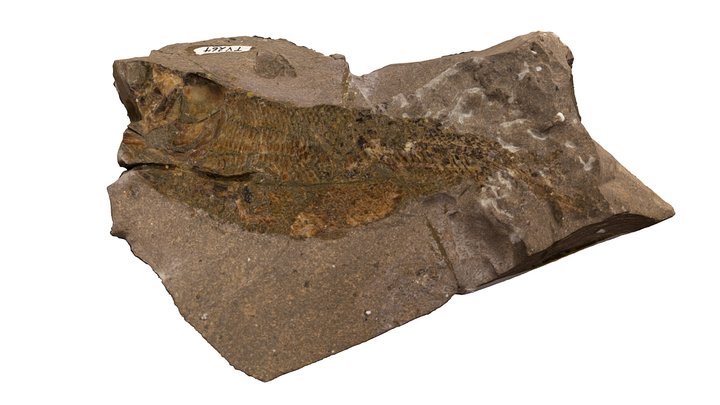
3D model
- Source
- Sketchfab
- Licence
- CC Attribution
- Commercial use
- cannot be read from the licence given — check the record
The description on this site
- Licence
- CC BY-SA 4.0
This is what the site found, which is not the same as what exists.
Keep going
What may have been alongside itPholidophoridae through timeFormations of the Late TriassicThe world it lived on
Occurrence data from the Paleobiology Database, CC BY 4.0. Agassiz 1832