Pocillopora
Pocillopora is a genus of stony corals in the family Pocilloporidae occurring in the Pacific and Indian Oceans. They are commonly called cauliflower corals and brush corals.

Uncredited · via Wikipedia/Commons. May be a photograph of a specimen, or an artist’s reconstruction — an interpretation of a skeleton, since colour and soft tissue are almost never preserved.
On record
Recorded, not inferred- Sits inside
- PocilloporidaePBDB
- Diet
- microcarnivore, photosymbioticPBDB, for Scleractinia
- Life habit
- intermediate-level epifaunal, colonial, clonalPBDB, for Scleractinia
- Motility
- stationary, attachedPBDB, for Scleractinia
- Vision
- blindPBDB, for Anthozoa
- Environment
- marinePBDB, for Scleractinia
Time the record covers
At least 33 million years on record.
The record covers at least 33.9 Mya to 11.7 ka. No occurrence read is dated outside 56 Mya to 0 Mya.
358 occurrences of Pocillopora on record, most of them in the Pleistocene. The Paleobiology Database records this as a living group. Bar height is expected occurrences, not a count: each fossil is spread across the span it is dated to, so a tall narrow bar means tight dating and a low wide one means loose.
When
358 occurrencesThese are dates about fossils, not the animal: the record can only begin after it arose and end before it died out, so either end may reach further. Shares are expected occurrences: a fossil dated to a span is counted partly in each period it straddles. More on what this infers.
Found in
39 formations
- Discovery Point Formation16
- Merizo Formation8
- Nias Formation8
- Hato Formation6
- Cercado Formation4
- Ironshore Formation4
Loading coastlines…
The named rock units Pocillopora has been recovered from, largest first. Drawn where the rock is now, not where it formed. 15 further formations hold fewer occurrences each and are not listed. 266 occurrences have no formation on record, which is common for older literature.
Pocillopora and its relatives
PleistoceneWhere Pocillopora and its relatives were recorded in the Pleistocene.
Found in the same rock
1,110 taxa- Porites51 sites
- Acropora38 sites
- Stylophora pistillata24 sites
- Goniastrea retiformis23 sites
- Goniastrea stelligera20 sites
- Galaxea fascicularis19 sites
- Leptoria phrygia18 sites
- Favia17 sites
- Montipora17 sites
- Montastraea16 sites
- Platygyra daedalea15 sites
- Acropora humilis14 sites
- Isopora palifera14 sites
- Fungia13 sites
- Goniastrea pectinata13 sites
- Hydrolithon onkodes13 sites
- Porites lobata13 sites
- Seriatopora hystrix13 sites
- Acropora hyacinthus12 sites
- Acropora robusta12 sites
- Agathistoma eiseni12 sites
- Alveopora12 sites
- Cyphastrea microphthalma12 sites
- Cyphastrea serailia12 sites
The Paleobiology Database records 143 sites for Pocillopora, and this reads all of them. The number is how many of those sites it was catalogued from too. The 24 sharing the most are listed.
This is not a list of everything alive at the time. It is only what has come out of the same ground as this animal and been written down.
Entered from
119 references- Fossil corals from the Gulf of California, Mexico: still a depauperate fauna but it bears more species than previously thought20
- Escaping the heat: range shifts of reef coral taxa in coastal Western Australia19
- Invertebrate megafossils of Pleistocene (Sangamon Interglacial) age from Isla de Guadalupe, Baja California, Mexico12
- Sealevel history recorded in the Pleistocene carbonate sequence in IODP Hole 310-M0005D, off Tahiti8
- Coral variation in two deep drill cores: significance for the Pleistocene development of the Great Barrier Reef8
- Geology and geomorphology of Henderson Island8
- Community structure and petrography of an emergent Holocene reef limestone on Guam8
- Recherches sur les Madreporaires et les formations recifales Miocenes de la Mediterranee occidentale [Miocene corals and reefs from the western Mediterranean]8
- Holocene key coral species in the Northwest Pacific: indicators of reef formation and reef ecosystem responses to global climate change and anthropogenic stresses in the near future7
- A 300000-yr coral reef record of sea level changes, Mururoa atoll (Tuamotu archipelago, French Polynesia)7
- Limited membership in Pleistocene reef coral assemblages from the Huon Peninsula, Papua New Guinea: constancy during global change7
- Quaternary fossil coral communities in uplifted strata along the Balochistan coast of Pakistan: understanding modern coral decline in the Arabian Sea6
Each of the 358 occurrences read was entered from one of these publications, ordered by how many each accounts for. This is not a search for papers mentioning the name. 107 further references are not listed. Entries link to doi.org where the Paleobiology Database holds an identifier, and to its own record where it does not. Relayed as the Paleobiology Database holds them, not checked against what they resolve to.
Media and terms
Media content2

Picture of Pocillopora
- Source
- Wikipedia/Commons
- Credit
- nobody named on the record
- Licence
- not stated by the source
- Commercial use
- cannot be read from the licence given — check the record
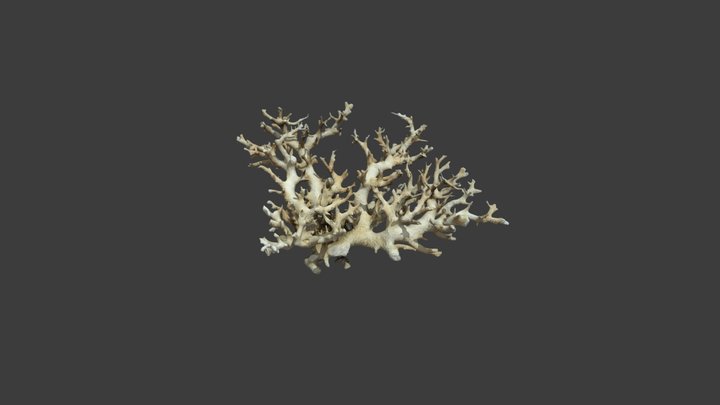
3D model
- Source
- Sketchfab
- Licence
- CC0 Public Domain
- Commercial use
- the licence allows it
Smithsonian Open Access and MorphoSource were not reached for this taxon, so this list is what the others held rather than everything there is.
The description on this site
- Source
- Wikipedia, “Pocillopora”
- Licence
- CC BY-SA 4.0
This is what the site found, which is not the same as what exists.
Keep going
What may have been alongside itPocilloporidae through timeFormations of the PleistoceneThe world it lived on
Occurrence data from the Paleobiology Database, CC BY 4.0. Lamarck 1816