Pteranodon
Pteranodon is a genus of pterosaur that included some of the largest known flying reptiles, with P. longiceps having a wingspan of over 6 m (20 ft). They lived during the late Cretaceous geological period of North America in present-day Kansas, Nebraska, Wyoming, South Dakota and Alabama. More fossil specimens of Pteranodon have been found than any other pterosaur, with about 1,200 specimens known to science, many of them well preserved with nearly complete skulls and articulated skeletons. It was an important part of the animal community in the Western Interior Seaway.

Matt Martyniuk · CC BY 3.0 · via Wikipedia/Commons. May be a photograph of a specimen, or an artist’s reconstruction — an interpretation of a skeleton, since colour and soft tissue are almost never preserved.
On record
Recorded, not inferred- Sits inside
- PteranodontiaPBDB
- Diet
- piscivorePBDB
- Life habit
- volantPBDB
- Motility
- actively mobilePBDB, for Osteichthyes
- Environment
- marinePBDB, for Pterosauria
- Mass
- 93 kgWikidata
Time the record covers
At most 18 million years on record.
Every occurrence read is dated to somewhere between 89.8 Mya and 72.2 Mya, and nothing in the dating separates them, so that window is what the record shows rather than a span.
43 occurrences of Pteranodon on record, most of them in the Late Cretaceous. Bar height is expected occurrences, not a count: each fossil is spread across the span it is dated to, so a tall narrow bar means tight dating and a low wide one means loose.
When
43 occurrences- Late Cretaceous100%
These are dates about fossils, not the animal: the record can only begin after it arose and end before it died out, so either end may reach further. Shares are expected occurrences: a fossil dated to a span is counted partly in each period it straddles. More on what this infers.
Found in
4 formations
- Niobrara Formation · Colorado Group25
- Pierre Shale Formation · Montana Group14
- Merchantville Formation · Matawan Group2
- Sharon Springs Formation · Pierre Shale Group1
Loading coastlines…
The named rock units Pteranodon has been recovered from, largest first. Drawn where the rock is now, not where it formed. 1 occurrence has no formation on record, which is common for older literature.
Pteranodon and its relatives
Late CretaceousWhere Pteranodon and its relatives were recorded in the Late Cretaceous.
Found in the same rock
46 taxa- Cretoxyrhina mantelli2 sites
- Enchodus2 sites
- Mosasauridae2 sites
- Squalicorax kaupi2 sites
- Toxochelyidae2 sites
- Acrothoracica1 site
- Agerostrea falcata1 site
- Anomia argentaria1 site
- Apsopelix1 site
- Baculites1 site
- Bananogmius1 site
- Cimolichthys nepaholica1 site
- Clavagella armata1 site
- Clioscaphites choteauensis1 site
- Durania1 site
- Exogyra (Exogyra) costata1 site
- Gillicus arcuatus1 site
- Globidens alabamensis1 site
- Hadrosauridae1 site
- Hesperornis regalis1 site
- Holocentridae1 site
- Iaceornis marshi1 site
- Laminospondylus cf. transversus1 site
- Nuculano stephensani1 site
The Paleobiology Database records 39 sites for Pteranodon, and this reads all of them. The number is how many of those sites it was catalogued from too. The 24 sharing the most are listed.
This is not a list of everything alive at the time. It is only what has come out of the same ground as this animal and been written down.
Entered from
17 references- Pteranodon (Reptilia: Pterosauria): stratigraphic distribution and taphonomy in the lower Pierre Shale Group (Campanian), western South Dakota and eastern Wyoming14
- Discovery of additional remains of Pterosauria, with descriptions of two new species6
- Taxonomy and systematics of the Late Cretaceous pterosaur Pteranodon (Pterosauria, Pterodactyloidea)3
- Morphology of the Late Cretaceous pterosaur Pteranodon and systematics of the Pterodactyloidea. University of Kansas3
- The taxonomy of the Pteranodon species from Kansas3
- Notice of a new sub-order of Pterosauria2
- On two new ornithosaurians from Kansas2
- A pteranodontid wing with traces of extensive invertebrate scavenging from the Pierre Shale (Sharon Springs Member, Campanian–Maastrichtian), east central Wyoming (Niobrara County)1
- Evidence for the Cretaceous shark Cretoxyrhina mantelli feeding on the pterosaur Pteranodon from the Niobrara Formation1
- New smallest specimen of the pterosaur Pteranodon and ontogenetic niches in pterosaurs1
- Fossil Vertebrate Collections1
- Rediscovery of the Hesperornis regalis Marsh 1871 holotype locality indicates an earlier stratigraphic occurrence1
Each of the 43 occurrences read was entered from one of these publications, ordered by how many each accounts for. This is not a search for papers mentioning the name. 5 further references are not listed. Entries link to doi.org where the Paleobiology Database holds an identifier, and to its own record where it does not. Relayed as the Paleobiology Database holds them, not checked against what they resolve to.
Media and terms
Media content4

Picture of Pteranodon
- Source
- Wikipedia/Commons
- Credit
- Matt Martyniuk
- Licence
- CC BY 3.0
- Commercial use
- the licence allows it
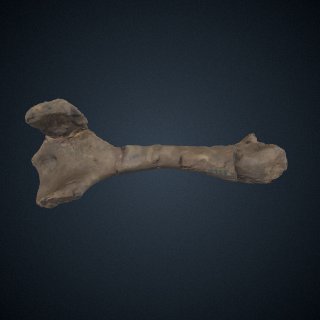
3D scan
- Source
- Smithsonian
- Licence
- CC0 — this site’s default, not the record’s
- Commercial use
- the licence allows it
- Specimen
- Pteranodon ? oregonensis Gilmore, 1928
Photogrammetry
- Source
- MorphoSource
- Licence
- In Copyright
- Commercial use
- cannot be read from the licence given — check the record
- Specimen
- Pteranodon longiceps · FHSM:vp:2183
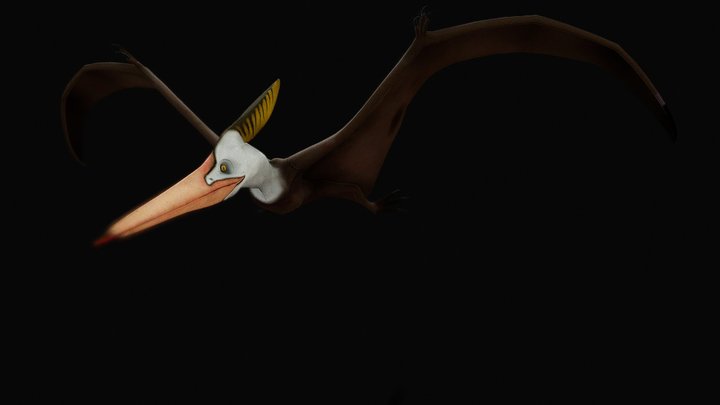
3D model
- Source
- Sketchfab
- Credit
- Paleo Modelist
- Licence
- CC Attribution
- Commercial use
- cannot be read from the licence given — check the record
The description on this site
- Source
- Wikipedia, “Pteranodon”
- Licence
- CC BY-SA 4.0
This is what the site found, which is not the same as what exists.
Keep going
What may have been alongside itPteranodontia through timeFormations of the Late CretaceousThe world it lived on
Occurrence data from the Paleobiology Database, CC BY 4.0. Marsh 1876