Rafinesquina ponderosa

Yale Peabody Museum · CC0 · via GBIF. May be a photograph of a specimen, or an artist’s reconstruction — an interpretation of a skeleton, since colour and soft tissue are almost never preserved.
On record
Recorded, not inferred- Sits inside
- RafinesquinaPBDB
- Diet
- suspension feederPBDB, for Rafinesquina
- Life habit
- epifaunalPBDB, for Rafinesquina
- Motility
- stationaryPBDB, for Rafinesquina
- Vision
- blindPBDB, for Strophomenata
- Environment
- marinePBDB, for Lophophorata
Time the record covers
At most 16 million years on record.
Every occurrence read is dated to somewhere between 458.2 Mya and 443.1 Mya, and nothing in the dating separates them, so that window is what the record shows rather than a span.
22 occurrences of Rafinesquina ponderosa on record, most of them in the Ordovician. Bar height is expected occurrences, not a count: each fossil is spread across the span it is dated to, so a tall narrow bar means tight dating and a low wide one means loose.
When
22 occurrences- Ordovician100%
These are dates about fossils, not the animal: the record can only begin after it arose and end before it died out, so either end may reach further. Shares are expected occurrences: a fossil dated to a span is counted partly in each period it straddles. More on what this infers.
Found in
7 formations
- McMillan Formation · Maysvillian Group6
- Bellevue Formation1
- Leipers Formation1
- Whitewater Formation · Richmondian Group1
- Upper Whitewater Formation · Richmondian Group1
- Waynesville Formation · Richmondian Group1
Loading coastlines…
The named rock units Rafinesquina ponderosa has been recovered from, largest first. Drawn where the rock is now, not where it formed. 10 occurrences have no formation on record, which is common for older literature.
Rafinesquina ponderosa and its relatives
OrdovicianWhere Rafinesquina ponderosa and its relatives were recorded in the Ordovician.
Found in the same rock
50 taxa- Hebertella occidentalis13 sites
- Zygospira modesta11 sites
- Cincinnetina meeki8 sites
- Glyptorthis insculpta8 sites
- Hiscobeccus capax8 sites
- Rafinesquina alternata8 sites
- Strophomena planumbona8 sites
- Eochonetes clarksvillensis7 sites
- Platystrophia clarksvillensis7 sites
- Rhynchotrema dentatum7 sites
- Leptaena richmondensis6 sites
- Retrorsirostra carleyi6 sites
- Tetraphalerella neglecta6 sites
- Platystrophia acutilirata5 sites
- Platystrophia cypha5 sites
- Platystrophia laticosta5 sites
- Lepidocyclus perlamellosa4 sites
- Plaesiomys subquadratus4 sites
- Platystrophia4 sites
- Platystrophia ponderosa4 sites
- Strophomena concordensis3 sites
- Strophomena nutans3 sites
- Strophomena sulcata3 sites
- Cincinnetina multisecta2 sites
The Paleobiology Database records 22 sites for Rafinesquina ponderosa, and this reads all of them. The number is how many of those sites it was catalogued from too. The 24 sharing the most are listed.
This is not a list of everything alive at the time. It is only what has come out of the same ground as this animal and been written down.
Entered from
3 references- GIS-based biogeography of Cincinnatian (Upper Ordovician) brachiopods with special reference to Hebertella20
- The occurrence of pelecypods in early Paleozoic epeiric-sea environments, Late Ordovician of the Cincinnati, Ohio area1
- Pre-Chattanooga stratigraphy in Central Tennessee1
Each of the 22 occurrences read was entered from one of these publications, ordered by how many each accounts for. This is not a search for papers mentioning the name. Entries link to doi.org where the Paleobiology Database holds an identifier, and to its own record where it does not. Relayed as the Paleobiology Database holds them, not checked against what they resolve to.
Media and terms
Media content2
Picture of Rafinesquina ponderosa
- Source
- GBIF
- Credit
- Yale Peabody Museum
- Licence
- CC0
- Commercial use
- the licence allows it
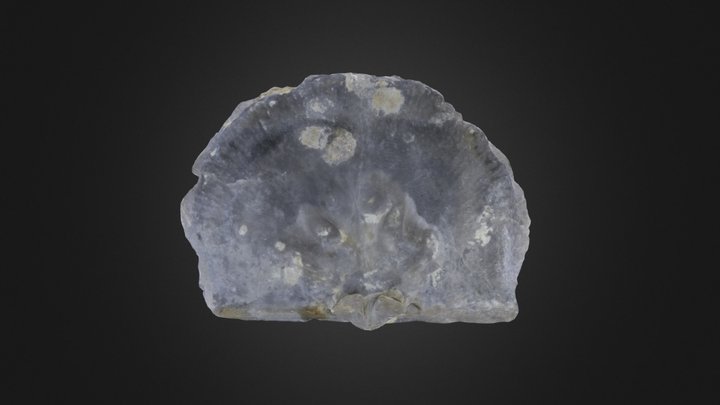
3D model
- Source
- Sketchfab
- Licence
- CC0 Public Domain
- Commercial use
- the licence allows it
Smithsonian Open Access was not reached for this taxon, so this list is what the others held rather than everything there is.
This is what the site found, which is not the same as what exists.
Keep going
What may have been alongside itRafinesquina through timeFormations of the OrdovicianThe world it lived on
Occurrence data from the Paleobiology Database, CC BY 4.0. (Hayes and Ulrich 1903)