Retispira

via iDigBio · CC BY-NC-SA · via iDigBio. May be a photograph of a specimen, or an artist’s reconstruction — an interpretation of a skeleton, since colour and soft tissue are almost never preserved.
On record
Recorded, not inferred- Sits inside
- KnightitinaePBDB
- Diet
- detritivorePBDB, for Bellerophontidae
- Life habit
- low-level epifaunalPBDB, for Bellerophontidae
- Motility
- slow-movingPBDB, for Bellerophontidae
- Vision
- limitedPBDB, for Gastropoda
- Environment
- marinePBDB, for Bellerophontida
Time the record covers
At least 173 million years on record.
The record covers at least 410.62 Mya to 237 Mya. No occurrence read is dated outside 413.02 Mya to 227.3 Mya.
422 occurrences of Retispira on record, most of them in the Carboniferous. Bar height is expected occurrences, not a count: each fossil is spread across the span it is dated to, so a tall narrow bar means tight dating and a low wide one means loose.
When
422 occurrences- Devonian18%
- Carboniferous49%
- Permian31%
- Early Triassic1%
- Late Triassicunder 1%
These are dates about fossils, not the animal: the record can only begin after it arose and end before it died out, so either end may reach further. Shares are expected occurrences: a fossil dated to a span is counted partly in each period it straddles. More on what this infers.
Found in
139 formations
- Second Abden Shale Formation44
- Moscow Formation · Hamilton Group23
- Allegheny Formation11
- Ludlowville Formation · Hamilton Group10
- Bone Spring Formation10
- Laborcita Formation9
Loading coastlines…
The named rock units Retispira has been recovered from, largest first. Drawn where the rock is now, not where it formed. 115 further formations hold fewer occurrences each and are not listed. 26 occurrences have no formation on record, which is common for older literature.
Retispira and its relatives
CarboniferousWhere Retispira and its relatives were recorded in the Carboniferous.
Found in the same rock
3,315 taxa- Crinoidea46 sites
- Paraparchites37 sites
- Glomospira31 sites
- Eomarginifera longispinus30 sites
- Rastidiscus sp.29 sites
- Crurithyris urei28 sites
- Aviculopecten27 sites
- Actinopteria24 sites
- Glabrocingulum22 sites
- Crurithyris21 sites
- Lingularia squamiformis21 sites
- Aclisina pulchra intermedia19 sites
- Edmondia19 sites
- Mucrospirifer mucronatus18 sites
- Ortonia18 sites
- Schizophoria resupinata18 sites
- Bairdia17 sites
- Eldredgeops rana17 sites
- Nuculopsis17 sites
- Strobeus brevis17 sites
- Palaeoneilo16 sites
- Dictyotomaria capillaria15 sites
- Mediospirifer audaculus15 sites
- Palaeoneilo constricta15 sites
The Paleobiology Database records 352 sites for Retispira, and this reads 240 of them. The number is how many of those sites it was catalogued from too. The 24 sharing the most are listed.
This is not a list of everything alive at the time. It is only what has come out of the same ground as this animal and been written down.
Entered from
136 references- The paleoecology of a Lower Carboniferous marine transgression44
- Permian Gastropoda of the southwestern United States. 3. Bellerophontacea and Patellacea29
- Stratigraphy and Paleontology of the Uppermost Pennsylvanian and Lowermost Permian Rocks in Kansas12
- Stratigraphy and brachiopod and molluscan paleontology of the Red Tanks Formation (Madera Group) near the Pennsylvanian–Permian boundary, Lucero uplift, west-central New Mexico11
- The Dynamics of Rapid, Asynchronous Biotic Turnover in the Middle Devonian Appalachian Basin of New York11
- Allegheny fossil invertebrates from eastern Ohio: Gastropoda10
- Yao et al., 19809
- The British and Belgian Carboniferous Bellerophontidae9
- Gastropods from the Carboniferous (Namurian) of Congleton Edge, Cheshire, UK8
- Relative taxonomic and ecological stability in Devonian marine faunas of New York State: a test of coordinated stasis8
- Gastropods (Mollusca) from the Imo Formation (Mississippian, Chesterian) of north-central Arkansas8
- Some gastropods from the Lower Wolfcampian (basal Permian) Laborcita Formation8
Each of the 422 occurrences read was entered from one of these publications, ordered by how many each accounts for. This is not a search for papers mentioning the name. 124 further references are not listed. Entries link to doi.org where the Paleobiology Database holds an identifier, and to its own record where it does not. Relayed as the Paleobiology Database holds them, not checked against what they resolve to.
Media and terms
Media content2
Picture of Retispira
- Source
- iDigBio
- Credit
- via iDigBio
- Licence
- CC BY-NC-SA
- Commercial use
- the licence does not allow it
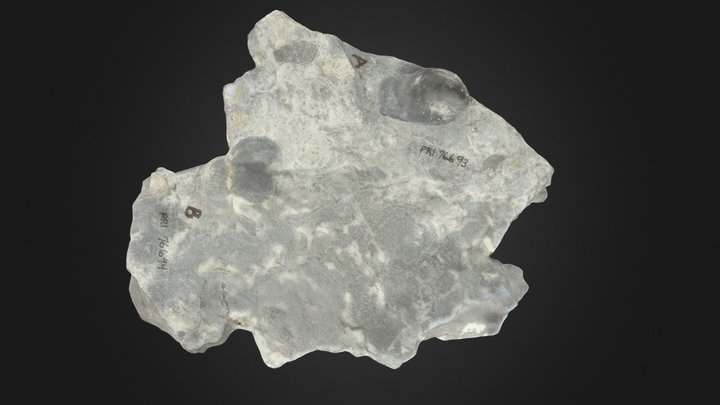
3D model
- Source
- Sketchfab
- Licence
- CC0 Public Domain
- Commercial use
- the licence allows it
Smithsonian Open Access was not reached for this taxon, so this list is what the others held rather than everything there is.
This is what the site found, which is not the same as what exists.
Keep going
What may have been alongside itKnightitinae through timeFormations of the CarboniferousThe world it lived on
Occurrence data from the Paleobiology Database, CC BY 4.0. (Knight 1945)