Rhincodon
The whale shark is a slow-moving, filter-feeding carpet shark and the largest known extant fish species. An individual with a length of 18.8 m (61.7 ft) has been considered the largest reliably recorded. The whale shark holds many records for size in the animal kingdom, most notably being by far the largest living non-cetacean animal. It is the only living species of the genus Rhincodon and the only extant member of the family Rhincodontidae, which belongs to the subclass Elasmobranchii in the class Chondrichthyes. Before 1984, it was classified as Rhiniodon into Rhinodontidae. An extinct species, Rhincodon ferriolensis, was described in Europe, in the Late Burdigalian stage.

Abe Khao Lak · CC BY-SA 4.0 · via Wikipedia/Commons. May be a photograph of a specimen, or an artist’s reconstruction — an interpretation of a skeleton, since colour and soft tissue are almost never preserved.
On record
Recorded, not inferred- Also called
- whale sharkPBDB
- Sits inside
- RhincodontidaePBDB
- Diet
- suspension feederPBDB, for Rhincodontidae
- Life habit
- nektonicPBDB, for Rhincodontidae
- Motility
- actively mobilePBDB, for Rhincodontidae
Time the record covers
At most 9.3 million years on record.
Every occurrence read is dated to somewhere between 23.04 Mya and 13.82 Mya, and nothing in the dating separates them, so that window is what the record shows rather than a span.
2 occurrences of Rhincodon on record, most of them in the Miocene. The Paleobiology Database records this as a living group, and the chart stops with its fossils rather than at the present. Bar height is expected occurrences, not a count: each fossil is spread across the span it is dated to, so a tall narrow bar means tight dating and a low wide one means loose.
When
2 occurrences- Miocene100%
These are dates about fossils, not the animal: the record can only begin after it arose and end before it died out, so either end may reach further. Shares are expected occurrences: a fossil dated to a span is counted partly in each period it straddles. More on what this infers.
Found in
2 formations
- Pungo River Formation1
- Calvert Formation · Chesapeake Group1
Loading coastlines…
The named rock units Rhincodon has been recovered from, largest first. Drawn where the rock is now, not where it formed.
Rhincodon and its relatives
MioceneWhere Rhincodon and its relatives were recorded in the Miocene.
Found in the same rock
359 taxa- Carcharhinus brachyurus2 sites
- Carcharhinus perezi2 sites
- Carcharias cuspidatus2 sites
- Carcharodon hastalis2 sites
- Carcharodon subauriculatus2 sites
- Chesapecten coccymelus2 sites
- Hemipristis serra2 sites
- Isurus oxyrinchus2 sites
- Kentriodontidae2 sites
- Moris loxostyla2 sites
- Physeteridae2 sites
- Physogaleus contortus2 sites
- Squalodon calvertensis2 sites
- Squatina2 sites
- Abertella aberta1 site
- Actinocyclus1 site
- Actinocyclus ingens1 site
- Actinocyclus octonarius1 site
- Actinocyclus tenellus1 site
- Actinoptychus marylandicus1 site
- Actinoptychus senarius1 site
- Actinoptychus virginicus1 site
- Aetobatus1 site
- Alopias superciliosus1 site
The Paleobiology Database records 2 sites for Rhincodon, and this reads all of them. The number is how many of those sites it was catalogued from too. The 24 sharing the most are listed.
This is not a list of everything alive at the time. It is only what has come out of the same ground as this animal and been written down.
Entered from
2 references- The Neogene sharks, rays, and bony fishes from Lee Creek Mine, Aurora, North Carolina1
- The Early Miocene fish fauna from the Pollock Farm Site, Delaware1
Each of the 2 occurrences read was entered from one of these publications, ordered by how many each accounts for. This is not a search for papers mentioning the name. Entries link to doi.org where the Paleobiology Database holds an identifier, and to its own record where it does not. Relayed as the Paleobiology Database holds them, not checked against what they resolve to.
Media and terms
Media content2

Picture of Rhincodon
- Source
- Wikipedia/Commons
- Credit
- Abe Khao Lak
- Licence
- CC BY-SA 4.0
- Commercial use
- the licence allows it
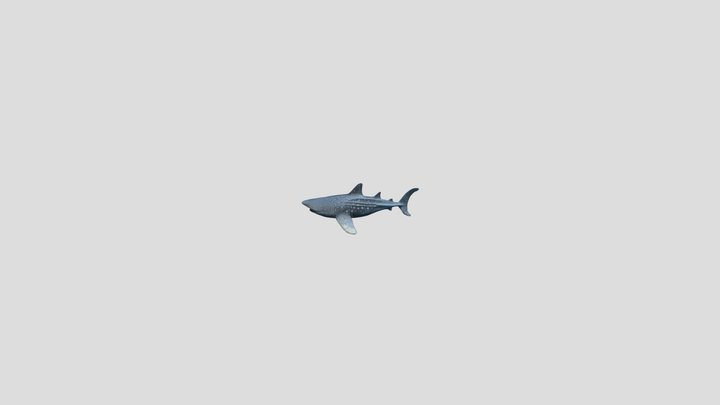
3D model
- Source
- Sketchfab
- Credit
- anurulvirnindayusuf
- Licence
- Free Standard
- Commercial use
- cannot be read from the licence given — check the record
Smithsonian Open Access and MorphoSource were not reached for this taxon, so this list is what the others held rather than everything there is.
The description on this site
- Source
- Wikipedia, “Whale shark”
- Licence
- CC BY-SA 4.0
This is what the site found, which is not the same as what exists.
Keep going
What may have been alongside itRhincodontidae through timeFormations of the MioceneThe world it lived on
Occurrence data from the Paleobiology Database, CC BY 4.0. Smith 1829