Rhinoclavis (Rhinoclavis)
No picture of Rhinoclavis (Rhinoclavis) was found. Wikipedia, Wikidata and iDigBio were searched and had none. Smithsonian Open Access did not answer, so this is what the others held rather than everything there is. GBIF was asked, and what came back is not recorded: nothing, or a picture this site could not tie to Rhinoclavis (Rhinoclavis), or no answer at all. This entry cannot say which.
On record
Recorded, not inferred- Sits inside
- RhinoclavisPBDB
- Diet
- grazerPBDB, for Cerithiidae
- Life habit
- epifaunalPBDB, for Cerithiidae
- Motility
- actively mobilePBDB, for Cerithiidae
- Vision
- limitedPBDB, for Gastropoda
Time the record covers
At least 15 million years on record.
The record covers at least 15.98 Mya to 129 ka. No occurrence read is dated outside 23.04 Mya to 11.7 ka.
36 occurrences of Rhinoclavis (Rhinoclavis) on record, most of them in the Miocene. The Paleobiology Database records this as a living group. Bar height is expected occurrences, not a count: each fossil is spread across the span it is dated to, so a tall narrow bar means tight dating and a low wide one means loose.
When
36 occurrences- Miocene46%
- Pliocene16%
- Pleistocene37%
These are dates about fossils, not the animal: the record can only begin after it arose and end before it died out, so either end may reach further. Shares are expected occurrences: a fossil dated to a span is counted partly in each period it straddles. More on what this infers.
Found in
7 formations
- Gurabo Formation6
- Mariana Limestone Formation5
- Poivre Formation3
- Tanapag Limestone Formation2
- Lower Sangkulirang Marl Formation1
- Quilon Limestone Formation1
Loading coastlines…
The named rock units Rhinoclavis (Rhinoclavis) has been recovered from, largest first. Drawn where the rock is now, not where it formed. 17 occurrences have no formation on record, which is common for older literature.
Rhinoclavis (Rhinoclavis) and its relatives
MioceneWhere Rhinoclavis (Rhinoclavis) and its relatives were recorded in the Miocene.
Found in the same rock
520 taxa- Conus10 sites
- Codakia tigerina6 sites
- Anadara (Anadara) antiquata5 sites
- Ancilla (Sparella) cinnamomea5 sites
- Conus arenatus5 sites
- Strombus5 sites
- Tibia5 sites
- Tritia5 sites
- Barbatia (Barbatia) lacerata4 sites
- Cerithium4 sites
- Erosaria turdus4 sites
- Luria isabella4 sites
- Plicatula plicata4 sites
- Spondylus4 sites
- Strombus (Gibberulus) gibberulus4 sites
- Trochus maculatus4 sites
- Turbo (Marmarostoma) radiatus4 sites
- Turbo (Turbo) petholatus4 sites
- Acar plicata3 sites
- Arca imbricata arabica3 sites
- Cardita variegata3 sites
- Cerithium caeruleum3 sites
- Cerithium erythraeonense3 sites
- Chlamys sanguinolenta3 sites
The Paleobiology Database records 13 sites for Rhinoclavis (Rhinoclavis), and this reads all of them. The number is how many of those sites it was catalogued from too. The 24 sharing the most are listed.
This is not a list of everything alive at the time. It is only what has come out of the same ground as this animal and been written down.
Entered from
12 references- Cenozoic fossil mollusks from Western Pacific Islands; Gastropods (Turritellidae through Strombidae)14
- Unpublished census data from Atlantic coastal plain and circum-Caribbean Neogene assemblages and taxonomic opinions6
- Molluschi delle spiagge emerse del Mar Rosso e dell'Oceano Indiano, introduzione e parte I (gasteropodi) [Mollusks from raised beaches bordering the Red Sea and the Indian Ocean, introduction and part I (gastropods)]4
- Cenozoic Molluscs and Echinoids of Barrow Island, Western Australia3
- Mollusques Pleistocenes de la Cote Francaise des Somalis [Pleistocene molluscs from French Somaliland]2
- Late Pleistocene gastropods from the raised reefal limestone of Jeddah, Saudi Arabia: taxonomic and palaeoenvironmental implications1
- Facies pattern and molluscan fauna of the Late Pleistocene raised coral reef of Rabigh area, Red Sea coast, Saudi Arabia1
- Preangerian (Late Miocene) Mollusca from a hill near Sekurau, northern Kutai, Kalimantan Timur (East Borneo)1
- Miocene molluscs from Muara Kobun and Pulu Senumpah, Sangkulirang Bay, northern Kutai (East Borneo)1
- Preangerian (Miocene) Mollusca from the Lower Sangkulirang Marl Formation, Kari Orang, Kalimantan (East Borneo)1
- The Miocene Mollusca from Quilon, Kerala (India)1
- Description of Mollusca from the post-Eocene Tertiary formation of north-western India: Cephalopoda, Opisthobranchiata, Siphonostomata1
Each of the 36 occurrences read was entered from one of these publications, ordered by how many each accounts for. This is not a search for papers mentioning the name. Entries link to doi.org where the Paleobiology Database holds an identifier, and to its own record where it does not. Relayed as the Paleobiology Database holds them, not checked against what they resolve to.
Media and terms
Media content1
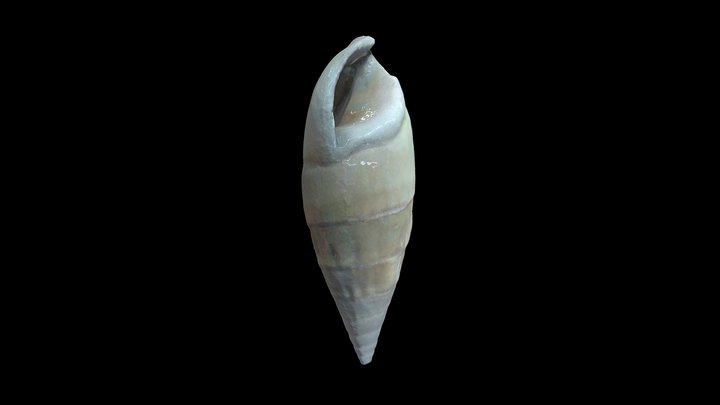
No picture of Rhinoclavis (Rhinoclavis) was found. Wikipedia, Wikidata and iDigBio were searched and had none.
Smithsonian Open Access did not answer, so this is what the others held rather than everything there is.
GBIF was asked, and what came back is not recorded: nothing, or a picture this site could not tie to Rhinoclavis (Rhinoclavis), or no answer at all. This entry cannot say which.
Smithsonian Open Access and MorphoSource were not reached for this taxon, so this list is what the others held rather than everything there is.
This is what the site found, which is not the same as what exists.
Keep going
What may have been alongside itRhinoclavis through timeFormations of the MioceneThe world it lived on
Occurrence data from the Paleobiology Database, CC BY 4.0. Swainson 1840