Rhinolophidae
Horseshoe bats are bats in the family Rhinolophidae. In addition to the single living genus, Rhinolophus, which has about 106 species, the extinct genus Palaeonycteris has been recognized. Horseshoe bats are closely related to the Old World leaf-nosed bats, family Hipposideridae, which have sometimes been included in Rhinolophidae. The horseshoe bats are divided into six subgenera and many species groups. The most recent common ancestor of all horseshoe bats lived 34–40 million years ago, though it is unclear where the geographic roots of the family are, and attempts to determine its biogeography have been indecisive. Their taxonomy is complex, as genetic evidence shows the likely existence of many cryptic species, as well as species recognized as distinct that may have little genetic divergence from previously recognized taxa. They are found in the Old World, mostly in tropical or subtropical areas, including Africa, Asia, Europe, and Oceania.

Lylambda (lylambda@gmail.com) · CC BY-SA 3.0 · via Wikipedia/Commons. May be a photograph of a specimen, or an artist’s reconstruction — an interpretation of a skeleton, since colour and soft tissue are almost never preserved.
On record
Recorded, not inferred- Also called
- horseshoe batPBDB
- Sits inside
- RhinolophoideaPBDB
- Diet
- insectivorePBDB
- Life habit
- volantPBDB, for Chiroptera
- Motility
- actively mobilePBDB, for Osteichthyes
- Environment
- terrestrialPBDB, for Chiroptera
Time the record covers
At least 33 million years on record.
The record covers at least 33.9 Mya to 11.7 ka. No occurrence read is dated outside 56 Mya to 0 Mya.
138 occurrences of Rhinolophidae on record, most of them in the Pleistocene. The Paleobiology Database records this as a living group. Bar height is expected occurrences, not a count: each fossil is spread across the span it is dated to, so a tall narrow bar means tight dating and a low wide one means loose.
When
138 occurrencesThese are dates about fossils, not the animal: the record can only begin after it arose and end before it died out, so either end may reach further. Shares are expected occurrences: a fossil dated to a span is counted partly in each period it straddles. More on what this infers.
Found in
8 formations
- Makapansgat Formation5
- Córcoles Formation2
- Colombacci Formation2
- Kromdraai Formation1
- Etadunna Formation1
- Ville Formation1
Loading coastlines…
The named rock units Rhinolophidae has been recovered from, largest first. Drawn where the rock is now, not where it formed. 124 occurrences have no formation on record, which is common for older literature.
Rhinolophidae and its relatives
PleistoceneWhere Rhinolophidae and its relatives were recorded in the Pleistocene.
Found in the same rock
1,632 taxa- Myotis38 sites
- Rhinolophus36 sites
- Rhinolophus ferrumequinum25 sites
- Apodemus23 sites
- Erinaceus19 sites
- Crocidura18 sites
- Mimomys17 sites
- Sorex16 sites
- Miniopterus15 sites
- Lacerta14 sites
- Microtus14 sites
- Petenyia hungarica14 sites
- Rhinolophus euryale14 sites
- Beremendia fissidens13 sites
- Sciurus13 sites
- Sorex minutus13 sites
- Allocricetus12 sites
- Cervus12 sites
- Eptesicus12 sites
- Rana12 sites
- Aves11 sites
- Equus11 sites
- Hipposideros11 sites
- Martes11 sites
The Paleobiology Database records 87 sites for Rhinolophidae, and this reads all of them. The number is how many of those sites it was catalogued from too. The 24 sharing the most are listed.
This is not a list of everything alive at the time. It is only what has come out of the same ground as this animal and been written down.
Entered from
72 references- Pleistocene vertebrate faunas of Hungary9
- A newly discovered Gigantopithecus fauna from Sanhe Cave, Chongzuo, Guangxi, South China6
- The microvertebrates of Qesem Cave: A comparison of the two concentrations5
- Fossil bats of the Rhinolophus ferrumequinum group in Hungary (Mammalia: Chirooptera)5
- The small mammals of the Guela Cave5
- Huanglong Cave: A Late Pleistocene human fossil site in Hubei Province, China4
- Late Quaternary terrestrial vertebrates from Palawan Islad, Philippines4
- The Latest Villfranchian faunas in Italy - the Pirro Nord local fauna (Apricena, Gargano)4
- Les nouvelles faunes de vertebres anterieurs a la "Grande Coupure" decouvertes dans les phosphorites du Quercy4
- Overview of the geology of the Levač basin and the fossil mammal and the fossil plants localities in the Sibnica area (Central Serbia)3
- Insectivores (Lipotyphla) and bats (Chiroptera) from the Late Miocene of Austria3
- Plio-Pleistocene fossil mammalian microfauna of southern Africa: a preliminary report including descriptions of two new fossil muroid genera (Mammalia: Rodentia)3
Each of the 138 occurrences read was entered from one of these publications, ordered by how many each accounts for. This is not a search for papers mentioning the name. 60 further references are not listed. Entries link to doi.org where the Paleobiology Database holds an identifier, and to its own record where it does not. Relayed as the Paleobiology Database holds them, not checked against what they resolve to.
Media and terms
Media content1
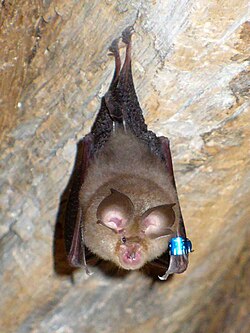
Picture of Rhinolophidae
- Source
- Wikipedia/Commons
- Credit
- Lylambda (lylambda@gmail.com)
- Licence
- CC BY-SA 3.0
- Commercial use
- the licence allows it
No 3D scan of Rhinolophidae was found in MorphoSource and Sketchfab.
Smithsonian Open Access was not reached for this taxon, so this list is what the others held rather than everything there is.
The description on this site
- Licence
- CC BY-SA 4.0
This is what the site found, which is not the same as what exists.
Keep going
What may have been alongside itRhinolophoidea through timeFormations of the PleistoceneThe world it lived on
Occurrence data from the Paleobiology Database, CC BY 4.0. Gray 1825