Rhinolophus ferrumequinum
The greater horseshoe bat is an insectivorous bat of the genus Rhinolophus. Its distribution covers Europe, Northern Africa, Central Asia and Eastern Asia. It is the largest of the horseshoe bats in Europe and is thus easily distinguished from other species. The species is sedentary, typically travelling up to 30 kilometres (19 mi) between the winter and summer roosts, with the longest recorded movement being 180 km (110 mi). The frequencies used by this bat species for echolocation lie between 69–83 kHz, have most energy at 81 kHz and have an average duration of 37.4 ms.

Charles J. Sharp · CC BY-SA 4.0 · via Wikipedia/Commons. May be a photograph of a specimen, or an artist’s reconstruction — an interpretation of a skeleton, since colour and soft tissue are almost never preserved.
On record
Recorded, not inferred- Also called
- greater horseshoe batPBDB
- Sits inside
- RhinolophusPBDB
- Diet
- insectivorePBDB, for Rhinolophidae
- Life habit
- volantPBDB, for Chiroptera
- Motility
- actively mobilePBDB, for Osteichthyes
- Environment
- terrestrialPBDB, for Chiroptera
Time the record covers
At least 1.7 million years on record.
The record covers at least 1.8 Mya to 11.7 ka. No occurrence read is dated outside 5.333 Mya to 0 Mya.
25 occurrences of Rhinolophus ferrumequinum on record, most of them in the Pleistocene. The Paleobiology Database records this as a living group. Bar height is expected occurrences, not a count: each fossil is spread across the span it is dated to, so a tall narrow bar means tight dating and a low wide one means loose.
When
25 occurrences- Pliocene9%
- Pleistocene83%
- Holocene8%
These are dates about fossils, not the animal: the record can only begin after it arose and end before it died out, so either end may reach further. Shares are expected occurrences: a fossil dated to a span is counted partly in each period it straddles. More on what this infers.
Rhinolophus ferrumequinum and its relatives
PleistoceneWhere Rhinolophus ferrumequinum and its relatives were recorded in the Pleistocene.
Found in the same rock
596 taxa- Myotis16 sites
- Apodemus11 sites
- Mimomys11 sites
- Sorex9 sites
- Allocricetus8 sites
- Myodes8 sites
- Petenyia hungarica8 sites
- Talpa fossilis8 sites
- Beremendia fissidens7 sites
- Erinaceus7 sites
- Glis sackdillingensis7 sites
- Microtus7 sites
- Sorex minutus7 sites
- Apodemus sylvaticus6 sites
- Aves6 sites
- Canis lupus6 sites
- Cervus6 sites
- Miniopterus6 sites
- Rhinolophus euryale6 sites
- Citellus5 sites
- Eptesicus5 sites
- Equus5 sites
- Hypolagus5 sites
- Hystrix5 sites
The Paleobiology Database records 25 sites for Rhinolophus ferrumequinum, and this reads all of them. The number is how many of those sites it was catalogued from too. The 24 sharing the most are listed.
This is not a list of everything alive at the time. It is only what has come out of the same ground as this animal and been written down.
Entered from
19 references- Pleistocene vertebrate faunas of Hungary5
- The microvertebrates of Qesem Cave: A comparison of the two concentrations2
- Quaternary vertebrates from Shiriya area, Shimokita Pininsula, northeastern Japan2
- Understanding the biogeography of Western European bats: the latest Pleistocene to Middle Holocene assemblage of El Mirador site (Sierra de Atapuerca, Spain)1
- Marine mammals fossil remains and synthesis of the sedimentary and paleontological record of the Furninha Cave Pleistocene (Peniche, Portugal)1
- Avian remains from new Upper Pleistocene and Holocene sites in the Spanish Pyrenees1
- First record of serotine bat Eptesicus serotinus (Chiroptera: Vespertilionidae) from Early-Middle Holocene in southern Europe (Boeotia - Greece)1
- Huanglong Cave: A Late Pleistocene human fossil site in Hubei Province, China1
- Une faune tres diversifee du Pleistocene inferieur de la Sierra de Quibas (province de Murcia, Espagne)1
- A preliminary study of the early Pleistocene deposits and the mammalian fauna from the Renzi Cave, Fancheng, Anhui, China1
- Le gisement Pleistocene moyen et superieur d'Artenac (Saint-Mary, Charent): premier bilan interdisciplinaire1
- Castiglione 3, un nouveau remplissage fosilifere d'age Pleistocene moyen dans le karst de la region d'Oletta (Haute-Corse)1
Each of the 25 occurrences read was entered from one of these publications, ordered by how many each accounts for. This is not a search for papers mentioning the name. 7 further references are not listed. Entries link to doi.org where the Paleobiology Database holds an identifier, and to its own record where it does not. Relayed as the Paleobiology Database holds them, not checked against what they resolve to.
Media and terms
Media content3

Picture of Rhinolophus ferrumequinum
- Source
- Wikipedia/Commons
- Credit
- Charles J. Sharp
- Licence
- CC BY-SA 4.0
- Commercial use
- the licence allows it
CT scan
- Source
- MorphoSource
- Licence
- not stated by the source
- Commercial use
- cannot be read from the licence given — check the record
- Specimen
- Rhinolophus ferrumequinum · UF:Mammals:6611
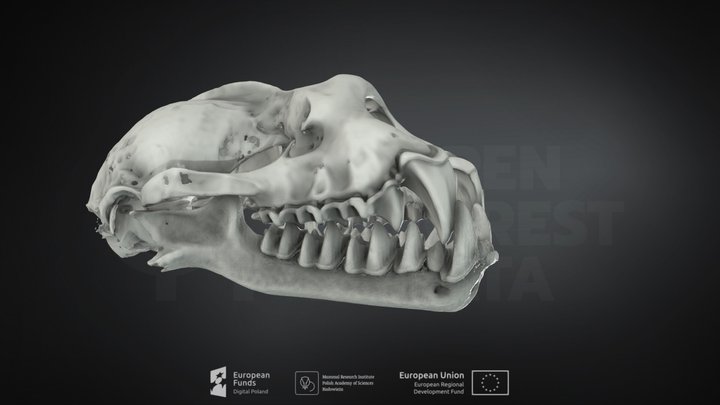
3D model
- Source
- Sketchfab
- Licence
- CC Attribution
- Commercial use
- cannot be read from the licence given — check the record
Smithsonian Open Access was not reached for this taxon, so this list is what the others held rather than everything there is.
The description on this site
- Licence
- CC BY-SA 4.0
This is what the site found, which is not the same as what exists.
Keep going
What may have been alongside itRhinolophus through timeFormations of the PleistoceneThe world it lived on
Occurrence data from the Paleobiology Database, CC BY 4.0. (Schreber 1774)