Rhinophrynus dorsalis
The Mexican burrowing toad is the single living representative of the family Rhinophrynidae. It is a unique species in its taxonomy and morphology, with special adaptations to assist them in digging burrows where they spend most of their time. These adaptations include a small pointed snout and face, keratinized structures and a lack of webbing on front limbs, and specialized tongue morphology to assist in feeding on ants and termites underground. The body is nearly equal in width and length. It is a dark brown to black color with a red-orange stripe on its back along with splotches of color on its body. The generic name Rhinophrynus means 'nose-toad', from rhino- (ῥῑνο-), the combining form of the Ancient Greek rhis and phrunē.

Greg Schechter from San Francisco, USA · CC BY 2.0 · via Wikipedia/Commons. May be a photograph of a specimen, or an artist’s reconstruction — an interpretation of a skeleton, since colour and soft tissue are almost never preserved.
On record
Recorded, not inferred- Also called
- Mexican burrowing toadPBDB
- Sits inside
- RhinophrynusPBDB
- Diet
- carnivorePBDB, for Temnospondyli
- Life habit
- amphibiousPBDB, for Temnospondyli
- Motility
- actively mobilePBDB, for Temnospondyli
- Environment
- brackish,freshwater,terrestrialPBDB, for Tetrapoda
Time the record covers
At most 118 thousand years on record.
The one occurrence read is dated to somewhere between 129 ka and 11.7 ka, which is a dating window rather than a span.
1 occurrence of Rhinophrynus dorsalis on record, most of them in the Pleistocene. The Paleobiology Database records this as a living group. Bar height is expected occurrences, not a count: each fossil is spread across the span it is dated to, so a tall narrow bar means tight dating and a low wide one means loose.
When
1 occurrences- Pleistocene100%
These are dates about fossils, not the animal: the record can only begin after it arose and end before it died out, so either end may reach further. Shares are expected occurrences: a fossil dated to a span is counted partly in each period it straddles. More on what this infers.
Rhinophrynus dorsalis and its relatives
PleistoceneWhere Rhinophrynus dorsalis and its relatives were recorded in the Pleistocene.
Found in the same rock
33 taxa- Artibeus jamaicensis1 site
- Balantiopteryx io1 site
- Chaetodipus hispidus1 site
- Cnemidophorus1 site
- Colubrinae1 site
- Cryptotis parva1 site
- Didelphis marsupialis1 site
- Eumops perotis1 site
- Hesperomys taylori1 site
- Lepidophyma1 site
- Leptodactylus1 site
- Leptonycteris nivalis1 site
- Liomys irroratus1 site
- Marmosa mexicana1 site
- Myotis1 site
- Neotoma micropus1 site
- Notiosorex crawfordi1 site
- Onychomys leucogaster1 site
- Oryzomys palustris1 site
- Perognathus huastecensis1 site
- Peromyscus leucopus1 site
- Peromyscus pectoralis1 site
- Rana pipiens1 site
- Reithrodontomys fulvescens1 site
The Paleobiology Database records 1 site for Rhinophrynus dorsalis, and this reads all of them. The number is how many of those sites it was catalogued from too. The 24 sharing the most are listed.
This is not a list of everything alive at the time. It is only what has come out of the same ground as this animal and been written down.
Entered from
1 referenceEach of the 1 occurrence read was entered from one of these publications, ordered by how many each accounts for. This is not a search for papers mentioning the name. Each entry links to the Paleobiology Database's own record for the work.
Media and terms
Media content2

Picture of Rhinophrynus dorsalis
- Source
- Wikipedia/Commons
- Credit
- Greg Schechter from San Francisco, USA
- Licence
- CC BY 2.0
- Commercial use
- the licence allows it
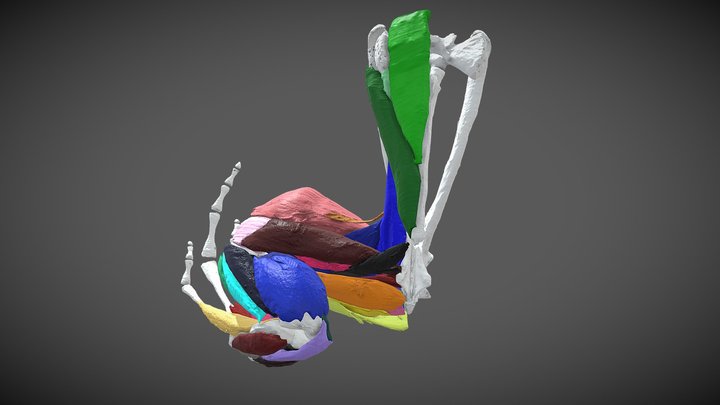
3D model
- Source
- Sketchfab
- Credit
- The Leavey Lab
- Licence
- CC Attribution
- Commercial use
- cannot be read from the licence given — check the record
Smithsonian Open Access and MorphoSource were not reached for this taxon, so this list is what the others held rather than everything there is.
The description on this site
- Licence
- CC BY-SA 4.0
This is what the site found, which is not the same as what exists.
Keep going
What may have been alongside itRhinophrynus through timeFormations of the PleistoceneThe world it lived on
Occurrence data from the Paleobiology Database, CC BY 4.0. Duméril and Bibron 1841