Saccocoma
Saccocoma is an extinct genus of crinoids that lived from the Late Jurassic to the Early Cretaceous in Europe and North America. It contains at least two species.

Smokeybjb · CC BY-SA 3.0 · via Wikipedia/Commons. May be a photograph of a specimen, or an artist’s reconstruction — an interpretation of a skeleton, since colour and soft tissue are almost never preserved.
On record
Recorded, not inferred- Sits inside
- SaccocominaePBDB
- Diet
- suspension feederPBDB, for Saccocomidae
- Life habit
- upper-level epifaunalPBDB, for Saccocomidae
- Motility
- stationary, attachedPBDB, for Saccocomidae
- Vision
- blindPBDB, for Crinoidea
- Environment
- marinePBDB, for Echinodermata
Time the record covers
At least 153 million years on record.
The record covers at least 247 Mya to 93.9 Mya. No occurrence read is dated outside 251.902 Mya to 89.8 Mya.
60 occurrences of Saccocoma on record, most of them in the Late Jurassic. Bar height is expected occurrences, not a count: each fossil is spread across the span it is dated to, so a tall narrow bar means tight dating and a low wide one means loose.
When
60 occurrencesThese are dates about fossils, not the animal: the record can only begin after it arose and end before it died out, so either end may reach further. Shares are expected occurrences: a fossil dated to a span is counted partly in each period it straddles. More on what this infers.
Found in
21 formations
- Lacunosamergel Formation9
- Les Calcaires Médians Formation3
- Les Marnes Intermédiaires Formation3
- Bahloul Formation3
- Untere Felsenkalke Formation3
- Les Marno-Calcaires Supérieurs Formation2
Loading coastlines…
The named rock units Saccocoma has been recovered from, largest first. Drawn where the rock is now, not where it formed. 19 occurrences have no formation on record, which is common for older literature.
Saccocoma and its relatives
Late JurassicWhere Saccocoma and its relatives were recorded in the Late Jurassic.
Found in the same rock
337 taxa- Globochaete11 sites
- Aspidoceras5 sites
- Crassicoma feifeli4 sites
- Crassicoma schattenbergi4 sites
- Geocoma carinata4 sites
- Bivalvia3 sites
- Comaturella3 sites
- Crassicoma mayri3 sites
- Crassicoma subornata3 sites
- Crescentiella morronensis3 sites
- Cyrtosiceras3 sites
- Glochiceras3 sites
- Haploceras3 sites
- Hibolites3 sites
- Hybonoticeras hybonotus3 sites
- Lithacoceras (Progeronia)3 sites
- Nebrodites hospes3 sites
- Ophiopetra lithographica3 sites
- Orthosphinctes polygyratus3 sites
- Rhamphorhynchus muensteri3 sites
- Solnhofia parsonsi3 sites
- Subplanites3 sites
- Acrocidaris2 sites
- Acropeltis2 sites
The Paleobiology Database records 42 sites for Saccocoma, and this reads all of them. The number is how many of those sites it was catalogued from too. The 24 sharing the most are listed.
This is not a list of everything alive at the time. It is only what has come out of the same ground as this animal and been written down.
Entered from
26 references- Remains of saccocomids (Crinoidea: Echinodermata) from the Upper Jurassic of southern Germany12
- Les formations du Jurassique supérieur du Bou Rheddou au Nord de Tiaret (Bordure sud-tellienne, Algérie): âge et milieux de dépôt9
- Oxfordian to Valanginian palaeoenvironmental evolution on the western Moesian Carbonate Platform: a case study from SW Bulgaria5
- The Cenomanian – Turonian boundary in the Gafsa-Chott area (southern part of central Tunisia): biostratigraphy, palaeoenvironments4
- Integrated stratigraphy and palaeoenvironment of the Berriasian peri-reefal limestones at Štramberk (Outer Western Carpathians, Czech Republic)3
- Functional anatomy and mode of life of the latest Jurassic crinoid Saccocoma3
- The oldest stage of the Outer Carpathian evolution in the light of Oxfordian–Kimmeridgian exotic clast studies (southern Poland)2
- Upper Jurassic Solnhofen Plattenkalk of Bavaria, Germany2
- Tithonian crinoids from Rogoznik (Pieniny Klippen Belt, Poland) and their evolutionary relationships2
- Ophiuren-Reste (Echinodermata) aus den Neuburger Bank-kalken (Mittel-Tithon) des Fränkischen Jura2
- Crinoids from Svalbard in the aftermath of the end−Permian mass extinction1
- The crinoid Eugeniacrinites cariophilites from the Late Jurassic of southern Germany: babies, cripples and enigmatic wing plates1
Each of the 60 occurrences read was entered from one of these publications, ordered by how many each accounts for. This is not a search for papers mentioning the name. 14 further references are not listed. Entries link to doi.org where the Paleobiology Database holds an identifier, and to its own record where it does not. Relayed as the Paleobiology Database holds them, not checked against what they resolve to.
Media and terms
Media content2

Picture of Saccocoma
- Source
- Wikipedia/Commons
- Credit
- Smokeybjb
- Licence
- CC BY-SA 3.0
- Commercial use
- the licence allows it
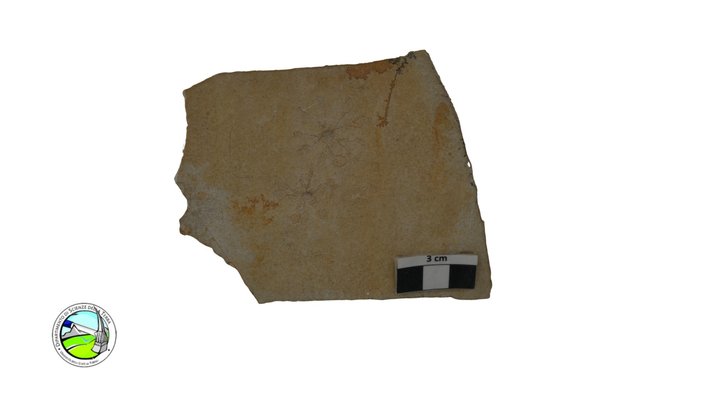
3D model
- Source
- Sketchfab
- Licence
- CC Attribution
- Commercial use
- cannot be read from the licence given — check the record
The description on this site
- Source
- Wikipedia, “Saccocoma”
- Licence
- CC BY-SA 4.0
This is what the site found, which is not the same as what exists.
Keep going
What may have been alongside itSaccocominae through timeFormations of the Late JurassicThe world it lived on
Occurrence data from the Paleobiology Database, CC BY 4.0. Agassiz 1836