Scolytinae
A bark beetle is the common name for the subfamily of beetles Scolytinae. Previously, this was considered a distinct family (Scolytidae), but is now understood to be a specialized clade of the "true weevil" family (Curculionidae). Although the term "bark beetle" refers to the fact that many species feed in the inner bark (phloem) layer of trees, the subfamily also has many species with other lifestyles, including some that bore into wood, feed in fruit and seeds, or tunnel into herbaceous plants. Well-known species are members of the type genus Scolytus, namely the European elm bark beetle S. multistriatus and the large elm bark beetle S. scolytus, which like the American elm bark beetle Hylurgopinus rufipes, transmit Dutch elm disease fungi (Ophiostoma). The mountain pine beetle Dendroctonus ponderosae, southern pine beetle Dendroctonus frontalis, and their near relatives are major pests of conifer forests in North America. A similarly aggressive species in Europe is the spruce ips Ips typographus. A tiny bark beetle, the coffee berry borer, Hypothenemus hampei is a major pest on coffee plantations around the world.

Uncredited · Public Domain · via Wikipedia/Commons. May be a photograph of a specimen, or an artist’s reconstruction — an interpretation of a skeleton, since colour and soft tissue are almost never preserved.
On record
Recorded, not inferred- Also called
- bark beetlePBDB
- Sits inside
- CurculionidaePBDB
- Motility
- actively mobilePBDB, for Arthropoda
- Environment
- terrestrialPBDB, for Insecta
Time the record covers
At least 121 million years on record.
The record covers at least 121.4 Mya to 11.7 ka. No occurrence read is dated outside 125.77 Mya to 0 Mya.
211 occurrences of Scolytinae on record, most of them in the Pleistocene. The Paleobiology Database records this as a living group. Bar height is expected occurrences, not a count: each fossil is spread across the span it is dated to, so a tall narrow bar means tight dating and a low wide one means loose.
When
211 occurrences- Early Cretaceousunder 1%
- Eocene23%
- Oligocene1%
- Miocene14%
- Plioceneunder 1%
- Pleistocene55%
- Holocene5%
These are dates about fossils, not the animal: the record can only begin after it arose and end before it died out, so either end may reach further. Shares are expected occurrences: a fossil dated to a span is counted partly in each period it straddles. More on what this infers.
Found in
15 formations
- Highbury Silts and Sands Formation22
- Quadra Sand Formation15
- Titusville Till Formation9
- Florissant Formation7
- Green River Formation4
- Kap København Formation4
Loading coastlines…
The named rock units Scolytinae has been recovered from, largest first. Drawn where the rock is now, not where it formed. 138 occurrences have no formation on record, which is common for older literature.
Scolytinae and its relatives
PleistoceneWhere Scolytinae and its relatives were recorded in the Pleistocene.
Found in the same rock
3,287 taxa- Stenus29 sites
- Aleocharinae25 sites
- Aphodius21 sites
- Helophorus18 sites
- Bembidion15 sites
- Bledius12 sites
- Elateridae12 sites
- Hydraena12 sites
- Carpelimus11 sites
- Scydmaeninae11 sites
- Dytiscidae10 sites
- Oxytelus laqueatus10 sites
- Bryaxis9 sites
- Dyschiriodes globosus9 sites
- Enochrus9 sites
- Olophrum consimile9 sites
- Patrobus stygicus9 sites
- Pelochares versicolor9 sites
- Quedius9 sites
- Rhynchaenus quercus9 sites
- Bagous8 sites
- Carabidae8 sites
- Colymbetes8 sites
- Dyschirius8 sites
The Paleobiology Database records 72 sites for Scolytinae, and this reads all of them. Of that, one read hit the database's own return limit, so every count below is a floor rather than a total. The number is how many of those sites it was catalogued from too. The 24 sharing the most are listed.
This is not a list of everything alive at the time. It is only what has come out of the same ground as this animal and been written down.
Entered from
42 references- Palaeoenvironmental interpretation of Middle and Late Wisconsinan fossil coleopteran assemblages from western Olympic Peninsula, Washington, USA38
- Marine Isotope Stage 9 environments of fluvial deposits at Hackney, north London, UK22
- Scolytidae and Platypodidae (Coleoptera) from Dominican Republic Amber20
- Die Borkenkäfer des baltischen Bernsteins19
- Environmental interpretation of fossil insect assemblages from MIS 5 at Ziegler Reservoir, Snowmass Village, Colorado17
- Pre-Vashon fossil Coleoptera of Fraser age from the Fraser Lowland, British Columbia15
- Fossil Beetle Evidence for a Short Warm Interval near 40,000 yr B.P. at Titusville, Pennsylvania9
- Ambrosia beetles from copal (Scolytidae and Platypodidae)8
- Borkenkäfer des baltischen Bernsteins8
- The fossil Coleoptera of the Two Creeks Forest Bed, Wisconsin6
- Palaeoentomology of the Kap København Formation, a Plio-Pleistocene sequence in Peary Land, North Greenland4
- The paleoenvironment of the Olympia beds based on fossil beetles from Discovery Park, Seattle, Washington, U.S.A.3
Each of the 211 occurrences read was entered from one of these publications, ordered by how many each accounts for. This is not a search for papers mentioning the name. 30 further references are not listed. Entries link to doi.org where the Paleobiology Database holds an identifier, and to its own record where it does not. Relayed as the Paleobiology Database holds them, not checked against what they resolve to.
Media and terms
Media content2
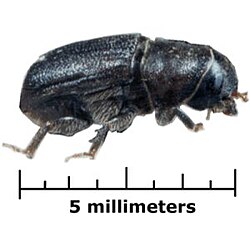
Picture of Scolytinae
- Source
- Wikipedia/Commons
- Credit
- nobody named on the record
- Licence
- Public Domain
- Commercial use
- the licence allows it
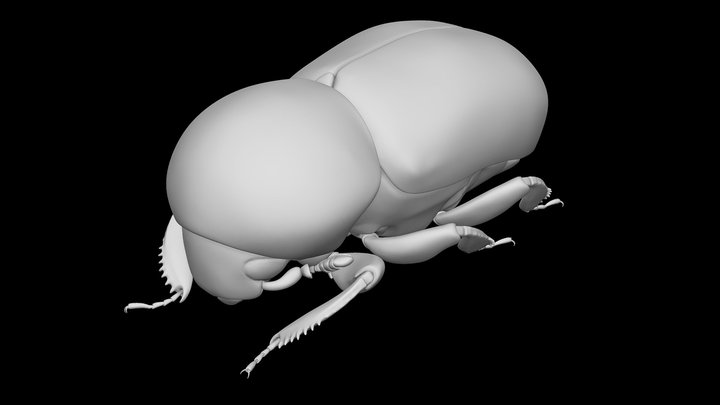
Smithsonian Open Access and MorphoSource were not reached for this taxon, so this list is what the others held rather than everything there is.
The description on this site
- Source
- Wikipedia, “Bark beetle”
- Licence
- CC BY-SA 4.0
This is what the site found, which is not the same as what exists.
Keep going
What may have been alongside itCurculionidae through timeFormations of the PleistoceneThe world it lived on
Occurrence data from the Paleobiology Database, CC BY 4.0. (Latreille 1804)