Scomber
Scomber is a genus of ray-finned fish in the family Scombridae living in the open ocean found in Atlantic, Indian and Pacific Ocean. The genus Scomber and the genus Rastrelliger comprise the tribe Scombrini, known as the "true mackerels". These fishes have an elongated body, highly streamlined, muscular and agile. The eyes are large, the head is elongated, with a big mouth provided with teeth. They have two triangular dorsal fins, with some stabilizing fins along the caudal peduncle. The basic color is blue-green with a silvery white belly and a darker back, usually black mottled.

Titus Tscharntke · Public Domain · via Wikipedia/Commons. May be a photograph of a specimen, or an artist’s reconstruction — an interpretation of a skeleton, since colour and soft tissue are almost never preserved.
On record
Recorded, not inferred- Sits inside
- ScombridaePBDB
- Motility
- actively mobilePBDB, for Osteichthyes
Time the record covers
At least 45 million years on record.
The record covers at least 48.07 Mya to 2.58 Mya. No occurrence read is dated outside 56 Mya to 1.8 Mya.
33 occurrences of Scomber on record, most of them in the Miocene. The Paleobiology Database records this as a living group, and the chart stops with its fossils rather than at the present. Bar height is expected occurrences, not a count: each fossil is spread across the span it is dated to, so a tall narrow bar means tight dating and a low wide one means loose.
When
33 occurrences- Eocene6%
- Oligocene15%
- Miocene64%
- Pliocene11%
- Pleistocene4%
These are dates about fossils, not the animal: the record can only begin after it arose and end before it died out, so either end may reach further. Shares are expected occurrences: a fossil dated to a span is counted partly in each period it straddles. More on what this infers.
Found in
7 formations
- Modelo Formation7
- Rosarito Beach Formation1
- Sakaraul Horizon Formation1
- Raz-el-Ain Formation1
- Menilite Formation1
- Tsurevsky Formation1
Loading coastlines…
The named rock units Scomber has been recovered from, largest first. Drawn where the rock is now, not where it formed. 20 occurrences have no formation on record, which is common for older literature.
Scomber and its relatives
MioceneWhere Scomber and its relatives were recorded in the Miocene.
Found in the same rock
929 taxa- Maurolicus muelleri10 sites
- Bregmaceros albyi9 sites
- Spratelloides gracilis7 sites
- Alosa elongata6 sites
- Lampanyctus6 sites
- Engraulis5 sites
- Gadiculus5 sites
- Lepidopus5 sites
- Lophius budegassa5 sites
- Solea5 sites
- Syngnathus5 sites
- Trachurus5 sites
- Arnoglossus laterna4 sites
- Capros aper4 sites
- Etringus scintillans4 sites
- Etrumeus boulei4 sites
- Micromesistius4 sites
- Micromesistius poutassou4 sites
- Myctophum columnae4 sites
- Myctophum dorsale4 sites
- Paralepis albyi4 sites
- Sarda4 sites
- Serranidae4 sites
- Syngnathus albyi4 sites
The Paleobiology Database records 32 sites for Scomber, and this reads all of them. The number is how many of those sites it was catalogued from too. The 24 sharing the most are listed.
This is not a list of everything alive at the time. It is only what has come out of the same ground as this animal and been written down.
Entered from
22 references- Miocene Fishes of Southern California7
- Messinian marine fish communities of the Mediterranean Sea3
- New taxonomic synopses and revision of the scombroid fishes (Scombroidei, Perciformes), including billfishes, from the Cenozoic of territories of the former USSR2
- Données récentes sur Les téléostéens du Miocène et du Pliocéne d'Italie2
- La faune ichthyologique de l'Ypresien de la Belgique2
- Fossil mackerel (Actinopterygii: Scombridae: Scomber) from the Neogene of South-Western Sakhalin, Russia1
- Fossil fish fauna (Teleostei, Selachii) from the Dynów marlstone (Rupelian, NP 23) of the Menilitic Formation at the locality of Litenčice (Czech Republic)1
- Emergency excavation in the Grube (Unterfeld) Frauenweiler clay pit (Oligocene Rupelian; Baden-Wurttemberg, S Germany): New records and palaeoenvironmental informatino1
- Paléobiodiversité et paléoenvironnements: l’exemple des gisements de poissons téléostéens du Messinien préévaporitique d’Oran et du bassin du Chélif (Algérie)1
- Stratigraphy of the Maikop Group and Pteropoda Beds in Northern Azerbaijan1
- Volhynian (early Sarmatian sensu lato) fishes from Tsurevsky, North Caucasus, Russia1
- Otolithes de poissons du paléocanyon de saubrigues (chattien à langhien), aquitaine méridionale, France1
Each of the 33 occurrences read was entered from one of these publications, ordered by how many each accounts for. This is not a search for papers mentioning the name. 10 further references are not listed. Entries link to doi.org where the Paleobiology Database holds an identifier, and to its own record where it does not. Relayed as the Paleobiology Database holds them, not checked against what they resolve to.
Media and terms
Media content3

Picture of Scomber
- Source
- Wikipedia/Commons
- Credit
- Titus Tscharntke
- Licence
- Public Domain
- Commercial use
- the licence allows it
CT scan
- Source
- MorphoSource
- Credit
- MCZ Ichthyology
- Licence
- In Copyright
- Commercial use
- cannot be read from the licence given — check the record
- Specimen
- Scomber scombrus · MCZ:Ich:58498
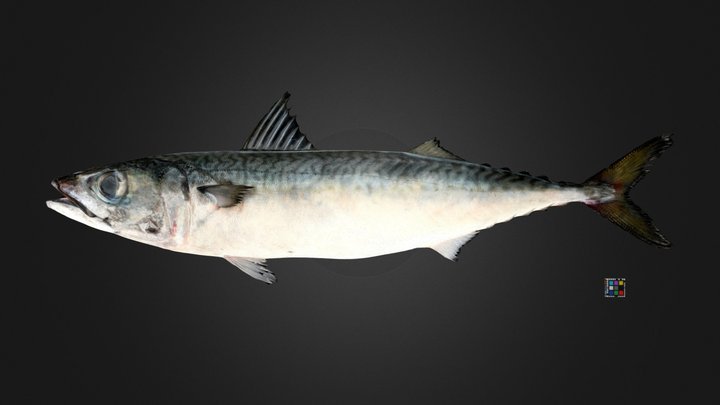
3D model
- Source
- Sketchfab
- Licence
- CC0 Public Domain
- Commercial use
- the licence allows it
Smithsonian Open Access was not reached for this taxon, so this list is what the others held rather than everything there is.
The description on this site
- Source
- Wikipedia, “Scomber”
- Licence
- CC BY-SA 4.0
This is what the site found, which is not the same as what exists.
Keep going
What may have been alongside itScombridae through timeFormations of the MioceneThe world it lived on
Occurrence data from the Paleobiology Database, CC BY 4.0. Linnaeus 1758