Sequoiadendron
Sequoiadendron is a genus of evergreen trees, with three species, only one of which survives to the present:Sequoiadendron giganteum, extant, commonly known as wellingtonia, giant redwood and giant sequoia, growing naturally in the Sierra Nevada mountains of California † Sequoiadendron chaneyi, the predecessor of Sequoiadendron giganteum, found mostly in the Nevada area of the Tertiary Colorado Plateau until the late Miocene †Sequoiadendron tchucoticum Late Cretaceous; Enmyvaam River Basin, Russia

Tuxyso · CC BY-SA 3.0 · via Wikipedia/Commons. May be a photograph of a specimen, or an artist’s reconstruction — an interpretation of a skeleton, since colour and soft tissue are almost never preserved.
On record
Recorded, not inferred- Sits inside
- CupressaceaePBDB
- Diet
- "photoautotroph"PBDB, for Streptophyta
Time the record covers
At least 66 million years on record.
The record covers at least 72.2 Mya to 5.333 Mya. No occurrence read is dated outside 83.6 Mya to 2.58 Mya.
22 occurrences of Sequoiadendron on record, most of them in the Miocene. The Paleobiology Database records this as a living group, and the chart stops with its fossils rather than at the present. Bar height is expected occurrences, not a count: each fossil is spread across the span it is dated to, so a tall narrow bar means tight dating and a low wide one means loose.
When
22 occurrences- Late Cretaceous9%
- Eocene18%
- Miocene68%
- Pliocene5%
These are dates about fossils, not the animal: the record can only begin after it arose and end before it died out, so either end may reach further. Shares are expected occurrences: a fossil dated to a span is counted partly in each period it straddles. More on what this infers.
Found in
9 formations
- Chloropagus Formation7
- Middlegate Formation2
- Aldrich Station Formation2
- Horseshoe Canyon Formation1
- Disaster Peak Formation1
- Beaverdam Formation1
Loading coastlines…
The named rock units Sequoiadendron has been recovered from, largest first. Drawn where the rock is now, not where it formed. 5 occurrences have no formation on record, which is common for older literature.
Sequoiadendron and its relatives
MioceneWhere Sequoiadendron and its relatives were recorded in the Miocene.
Found in the same rock
289 taxa- Actinidia crassisperma3 sites
- Calamus daemonorops3 sites
- Caricoidea obscura3 sites
- Cupressistrobus gardneri3 sites
- Eomastixia rugosa3 sites
- Eurya (Cleyera) stigmosa3 sites
- Mastixicarpum crassum3 sites
- Palaeolythrum bournense3 sites
- Potamogeton pygmaeus3 sites
- Rhamnospermum bilobatum3 sites
- Sequoia couttsiae3 sites
- Stratiotes hantonensis3 sites
- Abies concoloroides2 sites
- Acrostichum lanzaeanum2 sites
- Actinidia eocenica2 sites
- Brasenia ovula2 sites
- Caricoidea angulata2 sites
- Carpinus boveyanus2 sites
- Carpolithus2 sites
- Cornus glandulosa2 sites
- Cryptomeria2 sites
- Cunninghamia2 sites
- Epacridicarpum headonense2 sites
- Fabaceae2 sites
The Paleobiology Database records 8 sites for Sequoiadendron, and this reads all of them. The number is how many of those sites it was catalogued from too. The 24 sharing the most are listed.
This is not a list of everything alive at the time. It is only what has come out of the same ground as this animal and been written down.
Entered from
11 references- The Miocene Purple Mountain Flora of Western Nevada7
- Chandler, 19633
- Mio-Pliocene floras from west-central Nevada3
- Miocene Floras From the Middlegate Basin, West-Central Nevada2
- Taxodium wallisii sp. nov.: First occurence of Taxodium from the Upper Cretaceous1
- A first find of net-winged midges (Blephariceridae, Diptera) in the Mesozoic1
- Contributions to the Neogene Paleobotany of Central California1
- The Miocene Trapper Creek Flora of Southern Idaho1
- A Pliocene sequoiadendron forest from western Nevada1
- Plant Remains of the Hengistbury and Barton Beds1
- Ricerche sui Pesci Fossili di Chiavòn (Strati di Sotzka -- Miocene Inferiore)1
Each of the 22 occurrences read was entered from one of these publications, ordered by how many each accounts for. This is not a search for papers mentioning the name. Entries link to doi.org where the Paleobiology Database holds an identifier, and to its own record where it does not. Relayed as the Paleobiology Database holds them, not checked against what they resolve to.
Media and terms
Media content2

Picture of Sequoiadendron
- Source
- Wikipedia/Commons
- Credit
- Tuxyso
- Licence
- CC BY-SA 3.0
- Commercial use
- the licence allows it
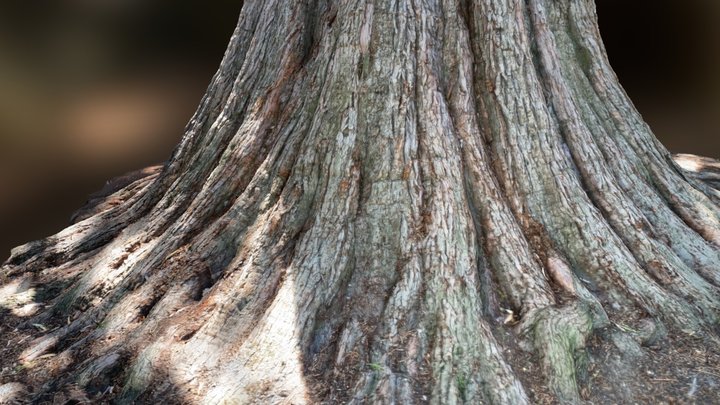
3D model
- Source
- Sketchfab
- Credit
- MattMakesSwords
- Licence
- CC Attribution
- Commercial use
- cannot be read from the licence given — check the record
Smithsonian Open Access and MorphoSource were not reached for this taxon, so this list is what the others held rather than everything there is.
The description on this site
- Licence
- CC BY-SA 4.0
This is what the site found, which is not the same as what exists.
Keep going
What may have been alongside itCupressaceae through timeFormations of the MioceneThe world it lived on
Occurrence data from the Paleobiology Database, CC BY 4.0. Buchholz