Spatangus

Hans Hillewaert · CC BY-SA 4.0 · via Wikidata/Commons. May be a photograph of a specimen, or an artist’s reconstruction — an interpretation of a skeleton, since colour and soft tissue are almost never preserved.
On record
Recorded, not inferred- Sits inside
- SpatangidaePBDB
- Diet
- deposit feeder, detritivorePBDB, for Spatangoida
- Life habit
- shallow infaunalPBDB, for Spatangoida
- Motility
- slow-movingPBDB, for Spatangoida
- Vision
- limitedPBDB, for Echinoidea
- Environment
- marinePBDB, for Spatangoida
Time the record covers
At least 81 million years on record.
The record covers at least 83.6 Mya to 2.58 Mya. No occurrence read is dated outside 85.7 Mya to 11.7 ka.
29 occurrences of Spatangus on record, most of them in the Miocene. The Paleobiology Database records this as a living group. Bar height is expected occurrences, not a count: each fossil is spread across the span it is dated to, so a tall narrow bar means tight dating and a low wide one means loose.
When
29 occurrences- Late Cretaceous3%
- Eocene14%
- Oligocene3%
- Miocene48%
- Pliocene21%
- Pleistocene10%
These are dates about fossils, not the animal: the record can only begin after it arose and end before it died out, so either end may reach further. Shares are expected occurrences: a fossil dated to a span is counted partly in each period it straddles. More on what this infers.
Found in
14 formations
- Uggiano La Chiesa Formation2
- Pietra Leccese Formation2
- Yorktown Formation2
- Barton Clay Formation1
- Kattendijk, Lillo Formation1
- Barton Beds Formation1
Loading coastlines…
The named rock units Spatangus has been recovered from, largest first. Drawn where the rock is now, not where it formed. 12 occurrences have no formation on record, which is common for older literature.
Spatangus and its relatives
MioceneWhere Spatangus and its relatives were recorded in the Miocene.
Found in the same rock
415 taxa- Schizaster9 sites
- Brissopsis7 sites
- Clypeaster6 sites
- Echinolampas6 sites
- Pecten6 sites
- Aequipecten5 sites
- Echinocyamus5 sites
- Genocidaris5 sites
- Lovenia4 sites
- Ostrea4 sites
- Cerithium3 sites
- Dentalium3 sites
- Modiolus3 sites
- Pectinida3 sites
- Pinna3 sites
- Prionocidaris3 sites
- Spondylus3 sites
- Tylocidaris (Sardocidaris)3 sites
- Acteon2 sites
- Arbacia improcera2 sites
- Arctica islandica2 sites
- Bryozoa2 sites
- Cheilostomata2 sites
- Chlamys2 sites
The Paleobiology Database records 29 sites for Spatangus, and this reads all of them. The number is how many of those sites it was catalogued from too. The 24 sharing the most are listed.
This is not a list of everything alive at the time. It is only what has come out of the same ground as this animal and been written down.
Entered from
18 references- Echinoid assemblages from the early Miocene of Funtanazza (Sardinia): A tool for reconstructing depositional environments along a shelf gradient7
- Neogene echinoids from Salento (Apulia, Southern Italy)4
- Upper Miocene Echinoids from the Yorktown Formation of Virginia and their environmental significance2
- The echinoid fauna from Japan and adjacent regions, Part II2
- Observations paléontologiques réalisées dans les terrains néogènes belges de 1971 à 2004 entre Kallo et Doël, Port d'Anvers, rive gauche (Flandre-Orientale, Belgique). Le Miocène du Deurgangkdok à Doël1
- Pliocene echinoid faunules from Kallo (Antwerp area, NW Belgium)1
- Echinoid assemblages as a tool for palaeoenvironmental reconstruction - an example from the Early Miocene of Egypt1
- Preliminary biostratigraphy and molluscan fauna of the Goose Creek Limestone of eastern South Carolina1
- Mesocetus aff. agrami (Mysticeti, Cetotheriidae) iz srednjomicenskih naslaga sjeverne bosne1
- Fossil Echinoidea from the Barton Beds (Eocene, Bartonian) of the type locality at Barton-on-Sea in the Hampshire Basin, England1
- Faziesverteilung und Fossilvergesellschaftungen im karbonatischen Flachwassser-Milieu der alpinen Oberkreide (Gosau-Formation) [Facies and fossils from the Upper Cretaceous carbonate shallow water deposits of the Eastern Alps (Gosau Formation)]1
- Macrofauna del Pleistocene inferiore di Cinisi (Sicilia)1
Each of the 29 occurrences read was entered from one of these publications, ordered by how many each accounts for. This is not a search for papers mentioning the name. 6 further references are not listed. Entries link to doi.org where the Paleobiology Database holds an identifier, and to its own record where it does not. Relayed as the Paleobiology Database holds them, not checked against what they resolve to.
Media and terms
Media content2
Picture of Spatangus
- Source
- Wikidata/Commons
- Credit
- Hans Hillewaert
- Licence
- CC BY-SA 4.0
- Commercial use
- the licence allows it
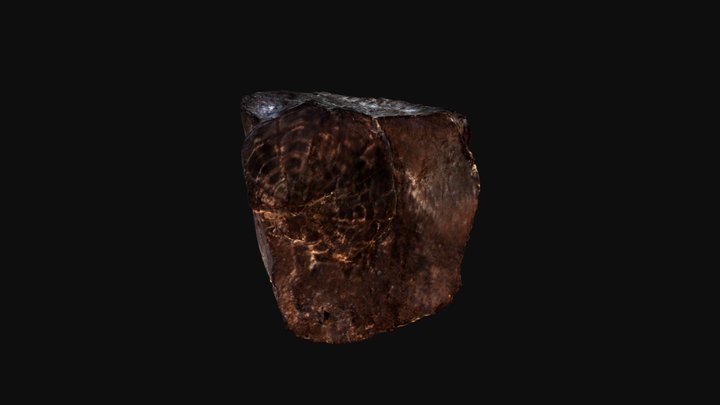
3D model
- Source
- Sketchfab
- Licence
- CC Attribution
- Commercial use
- cannot be read from the licence given — check the record
Smithsonian Open Access was not reached for this taxon, so this list is what the others held rather than everything there is.
This is what the site found, which is not the same as what exists.
Keep going
What may have been alongside itSpatangidae through timeFormations of the MioceneThe world it lived on
Occurrence data from the Paleobiology Database, CC BY 4.0. Gray 1825