Sphaeroidinella
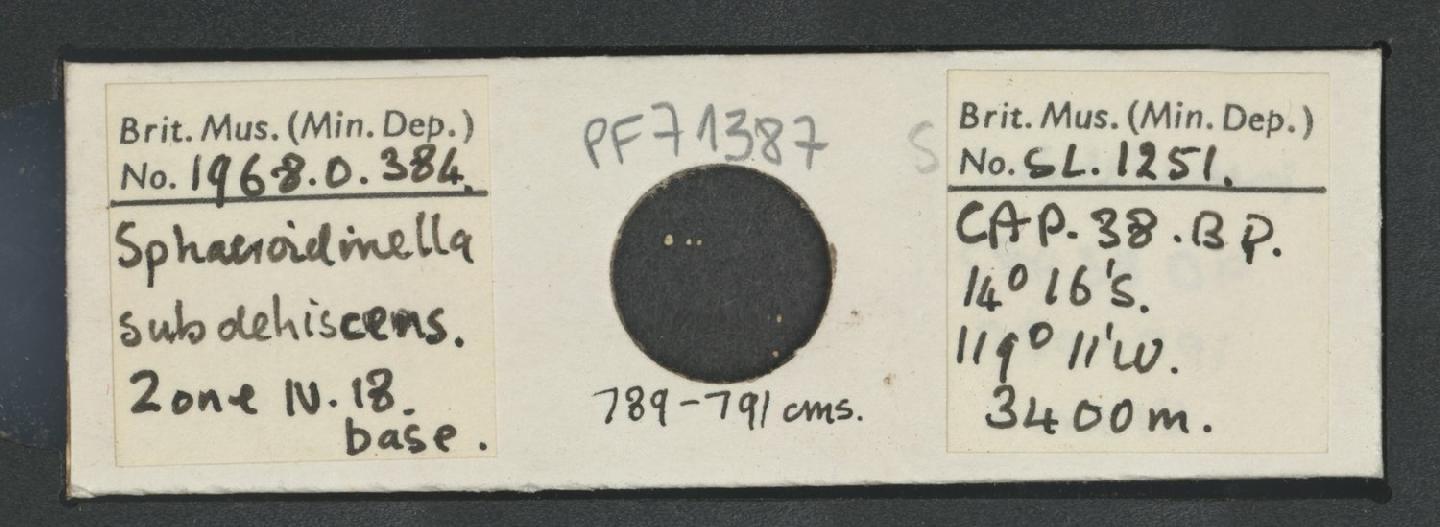
via iDigBio · CC BY · via iDigBio. May be a photograph of a specimen, or an artist’s reconstruction — an interpretation of a skeleton, since colour and soft tissue are almost never preserved.
On record
Recorded, not inferred- Sits inside
- GlobigerinidaePBDB
- Diet
- omnivorePBDB, for Foraminifera
- Life habit
- semi-infaunalPBDB, for Foraminifera
- Motility
- stationaryPBDB, for Foraminifera
Time the record covers
At least 27 million years on record.
The record covers at least 27.3 Mya to 11.7 ka. No occurrence read is dated outside 66 Mya to 0 Mya.
1,008 occurrences of Sphaeroidinella on record, most of them in the Pleistocene. The Paleobiology Database records this as a living group. Bar height is expected occurrences, not a count: each fossil is spread across the span it is dated to, so a tall narrow bar means tight dating and a low wide one means loose.
When
1,008 occurrencesThese are dates about fossils, not the animal: the record can only begin after it arose and end before it died out, so either end may reach further. Shares are expected occurrences: a fossil dated to a span is counted partly in each period it straddles. More on what this infers.
Found in
2 formations
- Escudo de Veraguas Formation · Bocas del Toro Group1
- Highlands Formation1
Loading coastlines…
The named rock units Sphaeroidinella has been recovered from, largest first. Drawn where the rock is now, not where it formed. 1,006 occurrences have no formation on record, which is common for older literature.
Sphaeroidinella and its relatives
PleistoceneWhere Sphaeroidinella and its relatives were recorded in the Pleistocene.
Found in the same rock
172 taxa- Globorotalia (Globorotalia) tumida134 sites
- Trilobatus sacculifer129 sites
- Globigerinoides ruber119 sites
- Orbulina universa109 sites
- Globigerinoides conglobatus108 sites
- Pulleniatina obliquiloculata99 sites
- Globigerinella siphonifera90 sites
- Globorotalia (Menardella) menardii90 sites
- Globigerina bulloides89 sites
- Sphaeroidinellopsis seminulina86 sites
- Neogloboquadrina dutertrei83 sites
- Globorotalia crassaformis79 sites
- Globigerinita glutinata76 sites
- Globigerinoides extremus76 sites
- Globorotalia75 sites
- Globorotalia (Truncorotalia) tosaensis70 sites
- Neogloboquadrina acostaensis70 sites
- Globoconella inflata68 sites
- Globorotalia (Menardella) limbata68 sites
- Dentoglobigerina altispira67 sites
- Globorotalia (Hirsutella) scitula60 sites
- Globorotalia (Menardella) pseudomiocenica60 sites
- Globorotalia truncatulinoides60 sites
- Globoturborotalita apertura54 sites
The Paleobiology Database records 985 sites for Sphaeroidinella, and this reads 240 of them. The number is how many of those sites it was catalogued from too. The 24 sharing the most are listed.
This is not a list of everything alive at the time. It is only what has come out of the same ground as this animal and been written down.
Entered from
80 references- Site U1474100
- Site U147675
- Site U147866
- Site U148056
- Site U148241
- Site U144740
- Site U144529
- Site U144825
- Site U143725
- Site U147524
- Site U147924
- Site U145024
Each of the 1,008 occurrences read was entered from one of these publications, ordered by how many each accounts for. This is not a search for papers mentioning the name. 68 further references are not listed. Each entry links to doi.org. Relayed as the Paleobiology Database holds them, not checked against what they resolve to.
Media and terms
Media content2
Picture of Sphaeroidinella
- Source
- iDigBio
- Credit
- via iDigBio
- Licence
- CC BY
- Commercial use
- the licence allows it
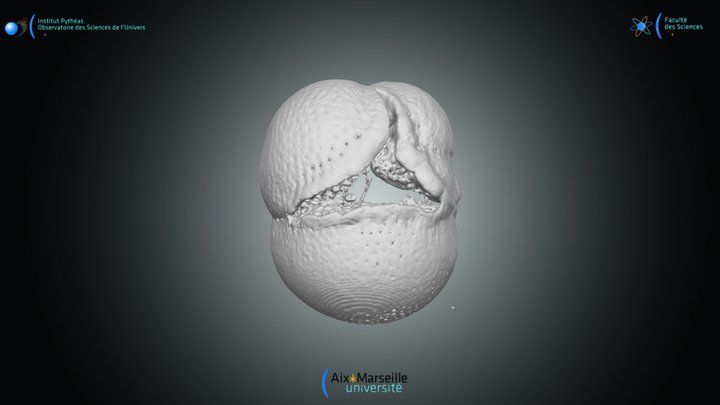
3D model
- Source
- Sketchfab
- Licence
- CC Attribution-NonCommercial-ShareAlike
- Commercial use
- the licence does not allow it
Smithsonian Open Access and MorphoSource were not reached for this taxon, so this list is what the others held rather than everything there is.
This is what the site found, which is not the same as what exists.
Keep going
What may have been alongside itGlobigerinidae through timeFormations of the PleistoceneThe world it lived on
Occurrence data from the Paleobiology Database, CC BY 4.0. Cushman 1927