Sterculia
Sterculia is a genus of about 180 species of flowering plants in the hibiscus family Malvaceae, subfamily Sterculioideae. It was formerly placed in the now obsolete family Sterculiaceae. Members of the genus are colloquially known as tropical chestnuts. Sterculia may be monoecious or dioecious, and its flowers unisexual or bisexual.

Uncredited · Public Domain · via Wikipedia/Commons. May be a photograph of a specimen, or an artist’s reconstruction — an interpretation of a skeleton, since colour and soft tissue are almost never preserved.
On record
Recorded, not inferred- Also called
- tropical chestnutPBDB
- Sits inside
- MalvaceaePBDB
- Diet
- "photoautotroph"PBDB, for Angiospermae
Time the record covers
At least 97 million years on record.
The record covers at least 100.5 Mya to 2.58 Mya. No occurrence read is dated outside 143.1 Mya to 0 Mya.
36 occurrences of Sterculia on record. The Paleobiology Database records this as a living group. Bar height is expected occurrences, not a count: each fossil is spread across the span it is dated to, so a tall narrow bar means tight dating and a low wide one means loose.
When
36 occurrences- Early Cretaceous31%
- Late Cretaceous11%
- Paleocene9%
- Eocene13%
- Oligocene3%
- Miocene27%
- Pliocene1%
- Pleistocene6%
- Holoceneunder 1%
These are dates about fossils, not the animal: the record can only begin after it arose and end before it died out, so either end may reach further. Shares are expected occurrences: a fossil dated to a span is counted partly in each period it straddles. More on what this infers.
Found in
10 formations
- Cheyenne Sandstone Formation7
- Salamanca Formation2
- Green River Formation1
- Fall River Sandstone Formation1
- Frontier Formation1
- Dunvegan Formation1
Loading coastlines…
The named rock units Sterculia has been recovered from, largest first. Drawn where the rock is now, not where it formed. 19 occurrences have no formation on record, which is common for older literature.
Found in the same rock
1,114 taxa- Astronium4 sites
- Cedrela4 sites
- Fabaceae4 sites
- Maytenus4 sites
- Pinus4 sites
- Banaraphyllum ovatum3 sites
- Bryophyta3 sites
- Cardiospermum3 sites
- Carpolithus3 sites
- Celastrus3 sites
- Dicotyledoneae3 sites
- Dipterocarpus siwalicus3 sites
- Dodonaea3 sites
- Dryophyllum australis3 sites
- Ephedra3 sites
- Euphorbia3 sites
- Fagophyllum duseni3 sites
- Hydrangea3 sites
- Laurophyllum chubutensis3 sites
- Laurophyllum piatnitzkyi3 sites
- Leguminosites3 sites
- Malvaceae3 sites
- Mitrephora siwalika3 sites
- Myrica premira3 sites
The Paleobiology Database records 21 sites for Sterculia, and this reads all of them. The number is how many of those sites it was catalogued from too. The 24 sharing the most are listed.
This is not a list of everything alive at the time. It is only what has come out of the same ground as this animal and been written down.
Entered from
22 references- The flora of the Cheyenne Sandstone of Kansas6
- Angiospermous fossil leaves from the Siwalik foreland basins and their palaeoclimatic implications4
- Tertiary flora from the Rio Pichileufu, Argentina3
- A Paleocene lowland macroflora from Patagonia reveals signifcantly greater richness than North American analogs2
- Evolutionary and Paleoecological Implications of Fossil Plants from the Lower Cretaceous Cheyenne Sandstone of the Western Interior2
- A Catalogue of Fossil Plants from India Part 6: Cenozoic (Quaternary) Palynology and Palaeobotany2
- Flora cretacica de la serie del Castillo al S del Cerro Cachetaman, Chubut2
- Fossil Leaf Impressions from Siwalik Bed of Bhutan1
- The Pesciara-Monte Postale Fossil-Lagerstätte: 3. Flora1
- Upper Cretaceous floras of King George Island, West Antarctica, and their palaeoenvironmental and phytogeographic implications1
- A catalogue of Cenozoic megafossil plants in China1
- A Catalogue of Fossil Plants from India Part 4: Cenozoic (Tertiary) Megafossils1
Each of the 36 occurrences read was entered from one of these publications, ordered by how many each accounts for. This is not a search for papers mentioning the name. 10 further references are not listed. Entries link to doi.org where the Paleobiology Database holds an identifier, and to its own record where it does not. Relayed as the Paleobiology Database holds them, not checked against what they resolve to.
Media and terms
Media content2

Picture of Sterculia
- Source
- Wikipedia/Commons
- Credit
- nobody named on the record
- Licence
- Public Domain
- Commercial use
- the licence allows it
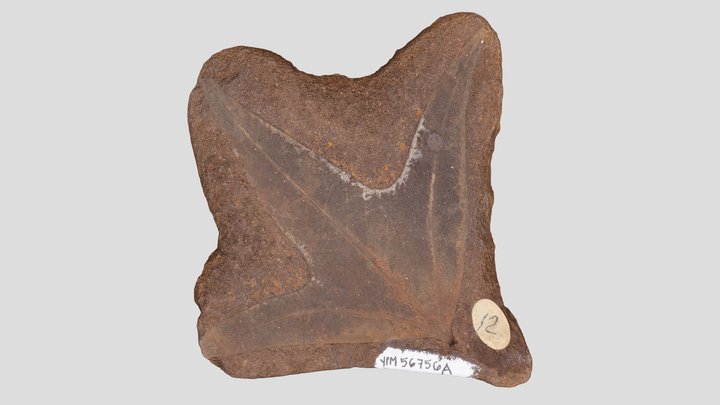
3D model
- Source
- Sketchfab
- Credit
- Yale Peabody Museum
- Licence
- CC Attribution
- Commercial use
- cannot be read from the licence given — check the record
Smithsonian Open Access and MorphoSource were not reached for this taxon, so this list is what the others held rather than everything there is.
The description on this site
- Source
- Wikipedia, “Sterculia”
- Licence
- CC BY-SA 4.0
This is what the site found, which is not the same as what exists.
Keep going
What may have been alongside itMalvaceae through timeThe world it lived on
Occurrence data from the Paleobiology Database, CC BY 4.0. Linnaeus 1753