Tetrao urogallus
The western capercaillie, also known as the Eurasian capercaillie, wood grouse, heather cock, cock-of-the-woods, or simply capercaillie, is a heavy member of the grouse tribe and the largest of all extant grouse species. Found across Europe and the Palearctic, this primarily-ground-dwelling forest grouse is renowned for its courtship display. The bird shows extreme sexual dimorphism, with males nearly twice the size of females. The global population is listed as "least concern" under the IUCN, although the populations of central Europe are declining and fragmented, or possibly extirpated.

David Palmer · CC BY 2.0 · via Wikipedia/Commons. May be a photograph of a specimen, or an artist’s reconstruction — an interpretation of a skeleton, since colour and soft tissue are almost never preserved.
On record
Recorded, not inferred- Also called
- western capercailliePBDB
- Sits inside
- TetraoPBDB
- Diet
- granivorePBDB, for Phasianidae
- Life habit
- volantPBDB, for Phasianidae
- Motility
- actively mobilePBDB, for Theropoda
- Environment
- terrestrialPBDB, for Phasianidae
- Mass
- 53 gWikidata
Time the record covers
At least 117 thousand years on record.
The record covers at least 129 ka to 11.7 ka. No occurrence read is dated outside 2.58 Mya to 0 Mya.
20 occurrences of Tetrao urogallus on record. The Paleobiology Database records this as a living group. Bar height is expected occurrences, not a count: each fossil is spread across the span it is dated to, so a tall narrow bar means tight dating and a low wide one means loose.
When
20 occurrences- Pleistocene45%
- Holocene55%
These are dates about fossils, not the animal: the record can only begin after it arose and end before it died out, so either end may reach further. Shares are expected occurrences: a fossil dated to a span is counted partly in each period it straddles. More on what this infers.
Found in the same rock
107 taxa- Lyrurus tetrix9 sites
- Anatidae6 sites
- Lagopus lagopus5 sites
- Perdix perdix5 sites
- Pyrrhocorax graculus5 sites
- Crex crex4 sites
- Galliformes4 sites
- Passeriformes4 sites
- Accipitridae3 sites
- Asio flammeus3 sites
- Corvidae3 sites
- Corvus corax3 sites
- Corvus monedula3 sites
- Coturnix coturnix3 sites
- Erithacus rubecula3 sites
- Gavia3 sites
- Lagopus muta3 sites
- Phasianidae3 sites
- Tetraonidae3 sites
- Turdus3 sites
- Anas crecca2 sites
- Anas platyrhynchos2 sites
- Aythya ferina2 sites
- Falco2 sites
The Paleobiology Database records 20 sites for Tetrao urogallus, and this reads all of them. The number is how many of those sites it was catalogued from too. The 24 sharing the most are listed.
This is not a list of everything alive at the time. It is only what has come out of the same ground as this animal and been written down.
Entered from
7 references- Birds in Finnish prehistory11
- Late Pleistocene fossil birds from Buso Doppio del Broion Cave (North-Eastern Italy): implications for palaeoecology, palaeoenvironment and palaeoclimate2
- Avian fossil assemblages at the onset of the LGM in the eastern Alps: A palaecological contribution from the Rio Secco Cave (Italy)2
- Bird remains from Curata and Bordu Mare caves (Romania)2
- A catalogue of British Pleistocene birds identified by Colin JO Harrison and stored in the Natural History Museum, London, (Department of Palaeontology)1
- The birds of the late Quaternary of the Altai Mts1
- The Pleistocene birds of south-eastern England1
Each of the 20 occurrences read was entered from one of these publications, ordered by how many each accounts for. This is not a search for papers mentioning the name. Entries link to doi.org where the Paleobiology Database holds an identifier, and to its own record where it does not. Relayed as the Paleobiology Database holds them, not checked against what they resolve to.
Media and terms
Media content2

Picture of Tetrao urogallus
- Source
- Wikipedia/Commons
- Credit
- David Palmer
- Licence
- CC BY 2.0
- Commercial use
- the licence allows it
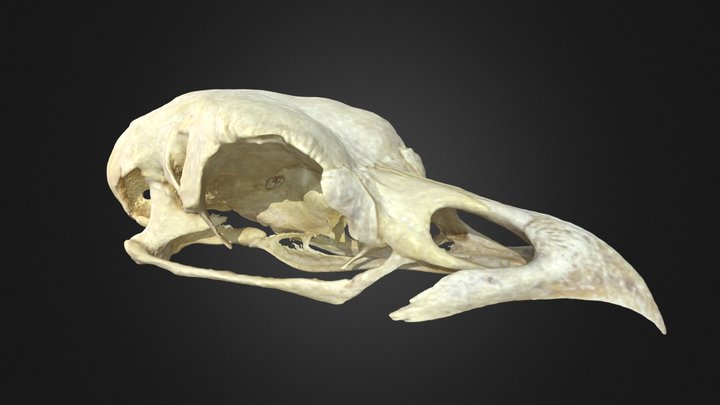
3D model
- Source
- Sketchfab
- Licence
- CC Attribution
- Commercial use
- cannot be read from the licence given — check the record
Smithsonian Open Access and MorphoSource were not reached for this taxon, so this list is what the others held rather than everything there is.
The description on this site
- Licence
- CC BY-SA 4.0
This is what the site found, which is not the same as what exists.
Keep going
What may have been alongside itTetrao through timeThe world it lived on
Occurrence data from the Paleobiology Database, CC BY 4.0. Linnaeus 1758