Thecosmilia

Ghedoghedo · CC BY-SA 3.0 · via Wikidata/Commons. May be a photograph of a specimen, or an artist’s reconstruction — an interpretation of a skeleton, since colour and soft tissue are almost never preserved.
On record
Recorded, not inferred- Sits inside
- ThecosmiliidaePBDB
- Diet
- microcarnivore, photosymbioticPBDB, for Scleractinia
- Life habit
- intermediate-level epifaunal, colonial, clonalPBDB, for Scleractinia
- Motility
- stationary, attachedPBDB, for Scleractinia
- Vision
- blindPBDB, for Anthozoa
- Environment
- marinePBDB, for Scleractinia
Time the record covers
At least 191 million years on record.
The record covers at least 239.48 Mya to 48.07 Mya. No occurrence read is dated outside 243.43 Mya to 37.71 Mya.
360 occurrences of Thecosmilia on record, most of them in the Late Jurassic. Bar height is expected occurrences, not a count: each fossil is spread across the span it is dated to, so a tall narrow bar means tight dating and a low wide one means loose.
When
360 occurrences- Middle Triassic1%
- Late Triassic9%
- Early Jurassic4%
- Middle Jurassic13%
- Late Jurassic60%
- Early Cretaceous12%
- Late Cretaceousunder 1%
- Eoceneunder 1%
These are dates about fossils, not the animal: the record can only begin after it arose and end before it died out, so either end may reach further. Shares are expected occurrences: a fossil dated to a span is counted partly in each period it straddles. More on what this infers.
Found in
73 formations
- Korallenoolith Formation12
- Stramberk Limestone Formation9
- Oolithe corallienne de Pagnoz Formation7
- Steeple Ashton Coral Bed Formation5
- White Limestone Formation5
- Langshan Formation5
Loading coastlines…
The named rock units Thecosmilia has been recovered from, largest first. Drawn where the rock is now, not where it formed. 49 further formations hold fewer occurrences each and are not listed. 191 occurrences have no formation on record, which is common for older literature.
Thecosmilia and its relatives
Late JurassicWhere Thecosmilia and its relatives were recorded in the Late Jurassic.
Found in the same rock
2,035 taxa- Isastrea49 sites
- Thamnasteria49 sites
- Actinaraea40 sites
- Montlivaltia38 sites
- Microsolena37 sites
- Dimorpharaea31 sites
- Comoseris28 sites
- Thamnasteria concinna28 sites
- Microsolena agariciformis27 sites
- Stylina27 sites
- Fungiastraea25 sites
- Dendraraea23 sites
- Stylosmilia23 sites
- Fungiastraea arachnoides19 sites
- Plagiostoma19 sites
- Solenocoenia sexradiata19 sites
- Adelocoenia limbata17 sites
- Calamophylliopsis17 sites
- Cladophyllia16 sites
- Heliocoenia (Decaheliocoenia) variabilis16 sites
- Serpula16 sites
- Bivalvia15 sites
- Adelocoenia14 sites
- Lithophaga14 sites
The Paleobiology Database records 200 sites for Thecosmilia, and this reads all of them. The number is how many of those sites it was catalogued from too. The 24 sharing the most are listed.
This is not a list of everything alive at the time. It is only what has come out of the same ground as this animal and been written down.
Entered from
124 references- Etude stratigraphique et paléontologique des formations à madréporaires du Jurassique supérieur du Jura et de l'est du Bassin de Paris26
- Pozdneyurskiye korally rifogennykh otlozheniy Kavkaza i Kryma [Upper Jurassic corals from the reef deposits of the Caucasus and Crimea]20
- New biological zonation of a late Jurassic coral reef complex (Lorraine, France)11
- Paleoecology, structure, and distribution of Triassic coral buildups in western North America11
- Coral zonation of an Oxfordian reef tract in the northern French Jura9
- Coraux constructeurs du Bajocien inférieur de France. 1ère Partie9
- Beiträge zur Korallenfauna des Stramberger Tithon9
- Unpublished data8
- Distribution of the British Jurassic corals7
- Scleractinian corals from the upper Berriasian of central Europe and comparison with contemporaneous coral assemblages6
- Jurassic corals of east-central Iran6
- Riffkorallen im norddeutschen Oberjura - Taxonomie, Ökologie, Verteilung6
Each of the 360 occurrences read was entered from one of these publications, ordered by how many each accounts for. This is not a search for papers mentioning the name. 112 further references are not listed. Entries link to doi.org where the Paleobiology Database holds an identifier, and to its own record where it does not. Relayed as the Paleobiology Database holds them, not checked against what they resolve to.
Media and terms
Media content2
Picture of Thecosmilia
- Source
- Wikidata/Commons
- Credit
- Ghedoghedo
- Licence
- CC BY-SA 3.0
- Commercial use
- the licence allows it
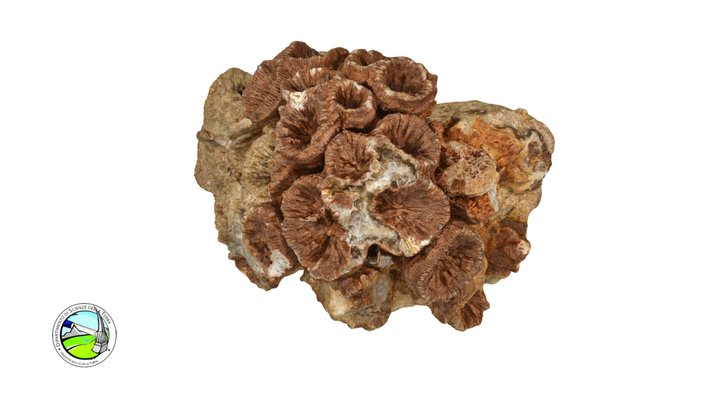
3D model
- Source
- Sketchfab
- Licence
- CC Attribution
- Commercial use
- cannot be read from the licence given — check the record
Smithsonian Open Access was not reached for this taxon, so this list is what the others held rather than everything there is.
This is what the site found, which is not the same as what exists.
Keep going
What may have been alongside itThecosmiliidae through timeFormations of the Late JurassicThe world it lived on
Occurrence data from the Paleobiology Database, CC BY 4.0. Milne-Edwards and Haime 1848