Trochus
Trochus is a genus of medium-to large-sized, top-shaped sea snails with an operculum, of the family Trochidae, the top snails.

H. Zell · CC BY-SA 3.0 · via Wikipedia/Commons. May be a photograph of a specimen, or an artist’s reconstruction — an interpretation of a skeleton, since colour and soft tissue are almost never preserved.
On record
Recorded, not inferred- Sits inside
- TrochidaePBDB
- Diet
- grazerPBDB, for Trochidae
- Life habit
- epifaunalPBDB, for Trochidae
- Motility
- actively mobilePBDB, for Trochidae
- Vision
- limitedPBDB, for Gastropoda
Time the record covers
At least 358 million years on record.
The record covers at least 358.86 Mya to 11.7 ka. No occurrence read is dated outside 372.15 Mya to 0 Mya.
366 occurrences of Trochus on record, most of them in the Pleistocene. The Paleobiology Database records this as a living group. Bar height is expected occurrences, not a count: each fossil is spread across the span it is dated to, so a tall narrow bar means tight dating and a low wide one means loose.
When
366 occurrences- Devonianunder 1%
- Permian1%
- Middle Triassicunder 1%
- Late Triassic7%
- Early Jurassic3%
- Middle Jurassic4%
- Late Jurassic2%
- Early Cretaceous14%
- Late Cretaceous5%
- Paleocene3%
- Eocene12%
- Oligoceneunder 1%
- Miocene14%
- Pliocene6%
- Pleistocene26%
- Holoceneunder 1%
These are dates about fossils, not the animal: the record can only begin after it arose and end before it died out, so either end may reach further. Shares are expected occurrences: a fossil dated to a span is counted partly in each period it straddles. More on what this infers.
Found in
96 formations
- Cassian Formation16
- Koronia Formation9
- Perte du Rhône Formation8
- Red Crag Formation6
- Waimanalo Formation6
- Tuwaiq Mt.Lst. Formation · Shaqra Group5
Loading coastlines…
The named rock units Trochus has been recovered from, largest first. Drawn where the rock is now, not where it formed. 72 further formations hold fewer occurrences each and are not listed. 181 occurrences have no formation on record, which is common for older literature.
Trochus and its relatives
PleistoceneWhere Trochus and its relatives were recorded in the Pleistocene.
Found in the same rock
5,375 taxa- Cerithium39 sites
- Natica35 sites
- Dentalium28 sites
- Ostrea26 sites
- Pecten26 sites
- Arca25 sites
- Cardium25 sites
- Turbo25 sites
- Conus23 sites
- Lima23 sites
- Pleurotomaria23 sites
- Turritella23 sites
- Aporrhais22 sites
- Chlamys22 sites
- Glycymeris22 sites
- Cardita20 sites
- Chama19 sites
- Pholadomya19 sites
- Spondylus19 sites
- Mytilus18 sites
- Nerinea18 sites
- Astarte17 sites
- Corbula16 sites
- Modiolus16 sites
The Paleobiology Database records 188 sites for Trochus, and this reads all of them. Of that, one read hit the database's own return limit, so every count below is a floor rather than a total. The number is how many of those sites it was catalogued from too. The 24 sharing the most are listed.
This is not a list of everything alive at the time. It is only what has come out of the same ground as this animal and been written down.
Entered from
144 references- Jura Vaudois et Neuchatelois45
- Suite des mémoires sur les fossiles des environs de Paris17
- Late Pleistocene molluscan assemblages from the coral reefs of the Kenya coast13
- Skwarko, 199412
- Recherches sur le Neogene et le Quaternaire marins de la cote Atlantique du Maroc11
- Tertiary and Quaternary Gastropoda of Okinawa: A comparison of the late Miocene, Pliocene, and Pleistocene Gastropoda of Okinawa with related faunas of East Asia together with a resume of the geological setting of the fossiliferous deposits10
- Le Jurassique D`Arabie Centrale9
- Chitons and Gastropods (Haliotidae through Adeorbidae) from Western Pacific Islands9
- Beschreibung neuer Versteinerungen von St. Cassian und einiger anderer Localitäten, Erster Abschnitt. Mollusken9
- Notes on the Neogene faunas of Cyprus, II.8
- Molluschi delle spiagge emerse del Mar Rosso e dell'Oceano Indiano, introduzione e parte I (gasteropodi) [Mollusks from raised beaches bordering the Red Sea and the Indian Ocean, introduction and part I (gastropods)]8
- Mollusques Pleistocenes de la Cote Francaise des Somalis [Pleistocene molluscs from French Somaliland]7
Each of the 366 occurrences read was entered from one of these publications, ordered by how many each accounts for. This is not a search for papers mentioning the name. 132 further references are not listed. Entries link to doi.org where the Paleobiology Database holds an identifier, and to its own record where it does not. Relayed as the Paleobiology Database holds them, not checked against what they resolve to.
Media and terms
Media content3

Picture of Trochus
- Source
- Wikipedia/Commons
- Credit
- H. Zell
- Licence
- CC BY-SA 3.0
- Commercial use
- the licence allows it
Structured light scan
- Source
- MorphoSource
- Licence
- not stated by the source
- Commercial use
- cannot be read from the licence given — check the record
- Specimen
- Trochus maculatus · PSAL:ARCH:1
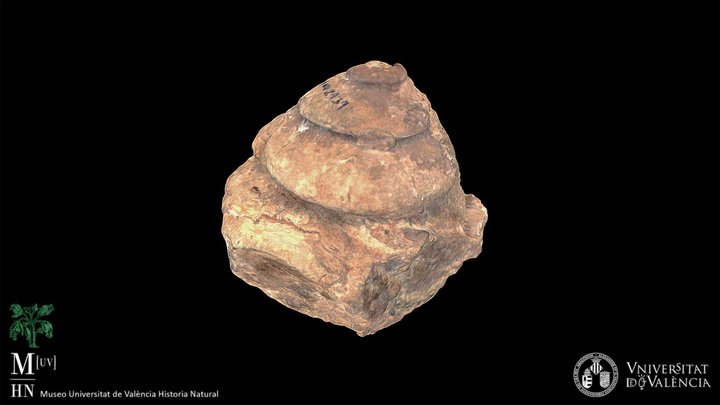
3D model
- Source
- Sketchfab
- Licence
- CC Attribution
- Commercial use
- cannot be read from the licence given — check the record
The description on this site
- Source
- Wikipedia, “Trochus”
- Licence
- CC BY-SA 4.0
This is what the site found, which is not the same as what exists.
Keep going
What may have been alongside itTrochidae through timeFormations of the PleistoceneThe world it lived on
Occurrence data from the Paleobiology Database, CC BY 4.0. Linnaeus 1758