Acanthocardia (Acanthocardia) echinata
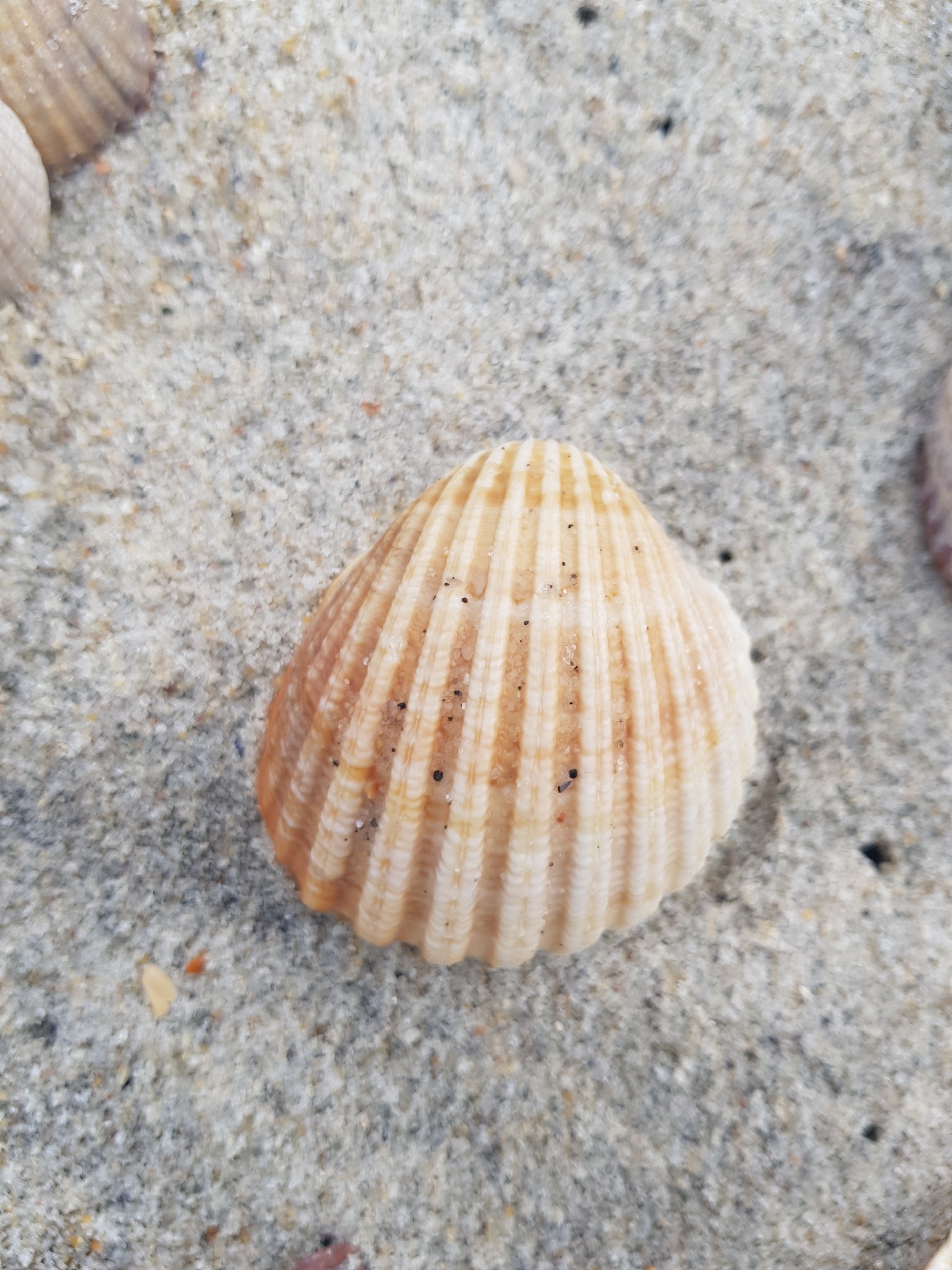
Charcos Companhia · CC BY-NC 4.0 · via GBIF. May be a photograph of a specimen, or an artist’s reconstruction — an interpretation of a skeleton, since colour and soft tissue are almost never preserved.
On record
Recorded, not inferred- Sits inside
- Acanthocardia (Acanthocardia)PBDB
- Diet
- suspension feederPBDB, for Cardiidae
- Life habit
- infaunalPBDB, for Cardiidae
- Motility
- facultatively mobilePBDB, for Cardiidae
- Vision
- blindPBDB, for Bivalvia
Time the record covers
At least 5.2 million years on record.
The record covers at least 5.333 Mya to 129 ka. No occurrence read is dated outside 11.63 Mya to 11.7 ka.
16 occurrences of Acanthocardia (Acanthocardia) echinata on record, most of them in the Pliocene. The Paleobiology Database records this as a living group. Bar height is expected occurrences, not a count: each fossil is spread across the span it is dated to, so a tall narrow bar means tight dating and a low wide one means loose.
When
16 occurrences- Miocene25%
- Pliocene50%
- Pleistocene25%
These are dates about fossils, not the animal: the record can only begin after it arose and end before it died out, so either end may reach further. Shares are expected occurrences: a fossil dated to a span is counted partly in each period it straddles. More on what this infers.
Found in
6 formations
- Red Crag Formation2
- Nicosia Formation1
- Lecze Formation1
- Kourtes Formation1
- Capo San Marco Formation1
- Wexford Gravels Formation1
Loading coastlines…
The named rock units Acanthocardia (Acanthocardia) echinata has been recovered from, largest first. Drawn where the rock is now, not where it formed. 9 occurrences have no formation on record, which is common for older literature.
Acanthocardia (Acanthocardia) echinata and its relatives
PlioceneWhere Acanthocardia (Acanthocardia) echinata and its relatives were recorded in the Pliocene.
Found in the same rock
447 taxa- Aequipecten opercularis5 sites
- Arca noae5 sites
- Arctica islandica5 sites
- Cerastoderma edule5 sites
- Diodora (Diodora) italica5 sites
- Glycymeris5 sites
- Talochlamys pusio5 sites
- Anomia ephippium4 sites
- Aporrhais pespelecani4 sites
- Chama4 sites
- Chlamys (Chlamys) varia4 sites
- Clausinella fasciata4 sites
- Mytilus edulis4 sites
- Nassarius incrassatus4 sites
- Ostrea4 sites
- Ostrea edulis4 sites
- Petaloconchus intortus4 sites
- Serpulidae4 sites
- Talochlamys multistriata4 sites
- Arca lactea3 sites
- Arcopagia (Arcopagia) crassa3 sites
- Astarte3 sites
- Bolma rugosus3 sites
- Boreotrophon clathratus3 sites
The Paleobiology Database records 14 sites for Acanthocardia (Acanthocardia) echinata, and this reads all of them. The number is how many of those sites it was catalogued from too. The 24 sharing the most are listed.
This is not a list of everything alive at the time. It is only what has come out of the same ground as this animal and been written down.
Entered from
15 references- Biozonation of the Neogene invertebrate megafauna of the Hellenic area2
- Paleobiology from Museum collections: comparing historical and novel data on Upper Miocene molluscs of the Livorno Hills1
- A new axiid (Crustacea: Decapoda: Axiidea) from the Neogene of Belgium and the Netherlands1
- The Girvanella-like remains from Messinian marine deposits (Sardinia, Italy): Lagerstätten paradigm for microbial biota?1
- First Emilian record of the boreal-affinity bivalve Portlandia impressa Perri, 1975 from Montefiore dell'Aso (Marche, Italy)1
- Paleoecology of a Pliocene coral reef in Cyprus: recovery of a marine community from the Messinian Salinity Crisis1
- Occurence and taphonomy of bivalves from the Nijar reef (Messinian, Late Miocene, SE Spain)1
- Les formations recifales coralliennes du Miocene superieur d'Algerie et du Maroc [Upper Miocene coral reef formations from Algeria and Morocco]1
- Morza plejstocenskie w Polsce; osady, wiek i paleogeografia [Pleistocene seas in Poland; sediments, age and paleogeography]1
- Unpublished census data for the Mollusca of the Tjornes sequence, Iceland1
- The Mollusca of the Wexford Gravels (Pleistocene), South-East Ireland1
- Recherches sur le Neogene et le Quaternaire marins de la cote Atlantique du Maroc1
Each of the 16 occurrences read was entered from one of these publications, ordered by how many each accounts for. This is not a search for papers mentioning the name. 3 further references are not listed. Entries link to doi.org where the Paleobiology Database holds an identifier, and to its own record where it does not. Relayed as the Paleobiology Database holds them, not checked against what they resolve to.
Media and terms
Media content3
Picture of Acanthocardia (Acanthocardia) echinata
- Source
- GBIF
- Credit
- Charcos Companhia
- Licence
- CC BY-NC 4.0
- Commercial use
- the licence does not allow it
CT scan
- Source
- MorphoSource
- Licence
- In Copyright
- Commercial use
- cannot be read from the licence given — check the record
- Specimen
- Acanthocardia aculeata · fmnh:invertebrate zoology:8411
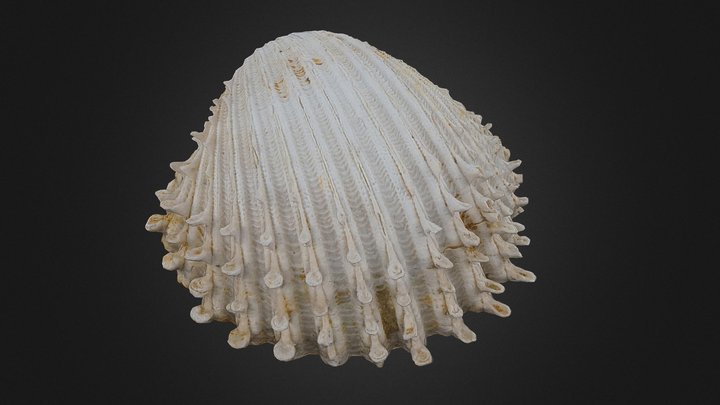
3D model
- Source
- Sketchfab
- Credit
- Elio Lippolis
- Licence
- CC Attribution
- Commercial use
- cannot be read from the licence given — check the record
This is what the site found, which is not the same as what exists.
Keep going
What may have been alongside itAcanthocardia (Acanthocardia) through timeFormations of the PlioceneThe world it lived on
Occurrence data from the Paleobiology Database, CC BY 4.0. (Linnaeus 1767)