Ostrea edulis
Ostrea edulis, commonly known as the European flat oyster, is a species of oyster native to Europe. In Great Britain and Ireland, localized names include Colchester native oyster, mud oyster, or edible oyster. In France, Ostrea edulis are known as huîtres plates except for those that come from the Belon River estuary in Brittany, France, which are known as Belons.

[H. Zell] · CC BY-SA 3.0 · via Wikipedia/Commons. May be a photograph of a specimen, or an artist’s reconstruction — an interpretation of a skeleton, since colour and soft tissue are almost never preserved.
On record
Recorded, not inferred- Sits inside
- OstreaPBDB
- Diet
- suspension feederPBDB, for Ostreidae
- Life habit
- epifaunalPBDB, for Ostreidae
- Motility
- stationary, attachedPBDB, for Ostreidae
- Vision
- blindPBDB, for Bivalvia
- Environment
- hypersaline,marine,brackishPBDB, for Ostreidae
Time the record covers
At least 15 million years on record.
The record covers at least 15.98 Mya to 11.7 ka. No occurrence read is dated outside 23.04 Mya to 0 Mya.
86 occurrences of Ostrea edulis on record, most of them in the Miocene. The Paleobiology Database records this as a living group. Bar height is expected occurrences, not a count: each fossil is spread across the span it is dated to, so a tall narrow bar means tight dating and a low wide one means loose.
When
86 occurrences- Miocene37%
- Pliocene29%
- Pleistocene25%
- Holocene9%
These are dates about fossils, not the animal: the record can only begin after it arose and end before it died out, so either end may reach further. Shares are expected occurrences: a fossil dated to a span is counted partly in each period it straddles. More on what this infers.
Found in
21 formations
- Lillo Formation6
- Termofourà Formation4
- Finikia Formation3
- Coralline Crag Formation3
- Rhodes Formation3
- Burgeschleinitz Formation2
Loading coastlines…
The named rock units Ostrea edulis has been recovered from, largest first. Drawn where the rock is now, not where it formed. 49 occurrences have no formation on record, which is common for older literature.
Ostrea edulis and its relatives
MioceneWhere Ostrea edulis and its relatives were recorded in the Miocene.
Found in the same rock
1,689 taxa- Anomia ephippium25 sites
- Chlamys22 sites
- Pecten17 sites
- Aequipecten opercularis16 sites
- Aequipecten14 sites
- Glycymeris14 sites
- Nassarius14 sites
- Turritella14 sites
- Scapharca (Scapharca) diluvii13 sites
- Spondylus gaederopus13 sites
- Varicorbula gibba13 sites
- Chlamys (Chlamys) varia12 sites
- Talochlamys multistriata12 sites
- Barbatia (Barbatia) barbata11 sites
- Cerithium (Thericium) vulgatum11 sites
- Venus11 sites
- Venus (Ventricoloidea) multilamella11 sites
- Arca noae10 sites
- Cerastoderma edule10 sites
- Conus10 sites
- Hiatella arctica10 sites
- Mytilus edulis10 sites
- Bolma rugosus9 sites
- Gibbula9 sites
The Paleobiology Database records 58 sites for Ostrea edulis, and this reads all of them. The number is how many of those sites it was catalogued from too. The 24 sharing the most are listed.
This is not a list of everything alive at the time. It is only what has come out of the same ground as this animal and been written down.
Entered from
42 references- Les formations recifales coralliennes du Miocene superieur d'Algerie et du Maroc [Upper Miocene coral reef formations from Algeria and Morocco]7
- The Neogene Amphineura and Bivalvia (Protobranchia and Pteriomorphia) from Kallo and Doel (Oost Vlaanderen, Belgium)6
- Biozonation of the Neogene invertebrate megafauna of the Hellenic area6
- Stratigraphical notes on Macoma (Bivalvia) in the southern part of the North Sea Basin and some remarks on the arrival of Pacific species6
- Biodiversity and taphonomy of bivalve assemblages of the Pliocene of Algeria (Bas Chelif Basin)4
- Lower to Middle Miocene Mollusc assemblages from the Torino Hills (NW Italy): Synthesis of new data and chronostratigraphical arrangement4
- An Account of Some Kjoekkenmoeddings, or Shell-Heaps, in Maine and Massachusetts4
- Biostratigraphical observations in Plicoene deposits of Heraklion Province3
- Wood, 18503
- Ambergris cololites of Pleistocene sperm whales from central Italy and description of the new ichnogenus and ichnospecies Ambergrisichnus alleronae2
- Ecospace variability along a carbonate platform at the northern boundary of the Miocene reef belt (Upper Langhian, Austria)2
- The bivalvia (Mollusca) from the Upper Miocene of the Sais Basin (Southern Rifian Corridor, Morocco). Palaeobiogeography and paleoecology2
Each of the 86 occurrences read was entered from one of these publications, ordered by how many each accounts for. This is not a search for papers mentioning the name. 30 further references are not listed. Entries link to doi.org where the Paleobiology Database holds an identifier, and to its own record where it does not. Relayed as the Paleobiology Database holds them, not checked against what they resolve to.
Media and terms
Media content2

Picture of Ostrea edulis
- Source
- Wikipedia/Commons
- Credit
- [H. Zell]
- Licence
- CC BY-SA 3.0
- Commercial use
- the licence allows it
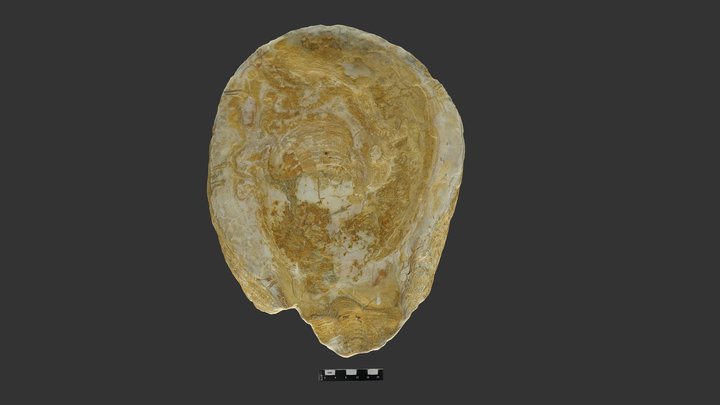
3D model
- Source
- Sketchfab
- Credit
- PALEOV-UJA
- Licence
- CC Attribution-NonCommercial-ShareAlike
- Commercial use
- the licence does not allow it
The description on this site
- Licence
- CC BY-SA 4.0
This is what the site found, which is not the same as what exists.
Keep going
What may have been alongside itOstrea through timeFormations of the MioceneThe world it lived on
Occurrence data from the Paleobiology Database, CC BY 4.0. (Linnaeus 1758)