Avicula

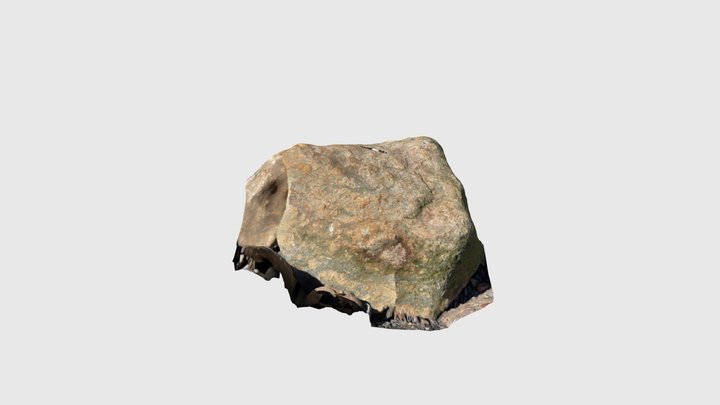
via iDigBio · CC0 · via iDigBio. May be a photograph of a specimen, or an artist’s reconstruction — an interpretation of a skeleton, since colour and soft tissue are almost never preserved.
On record
Recorded, not inferred- Sits inside
- AviculidaePBDB
- Diet
- suspension feederPBDB, for Bivalvia
- Life habit
- infaunalPBDB, for Bivalvia
- Motility
- facultatively mobilePBDB, for Bivalvia
- Vision
- blindPBDB, for Bivalvia
Time the record covers
At least 379 million years on record.
The record covers at least 382.31 Mya to 2.58 Mya. No occurrence read is dated outside 387.95 Mya to 11.7 ka.
162 occurrences of Avicula on record, most of them in the Late Triassic. The Paleobiology Database records this as a living group. Bar height is expected occurrences, not a count: each fossil is spread across the span it is dated to, so a tall narrow bar means tight dating and a low wide one means loose.
When
162 occurrences- Devonianunder 1%
- Carboniferousunder 1%
- Permian1%
- Early Triassic2%
- Middle Triassic17%
- Late Triassic52%
- Early Jurassic8%
- Middle Jurassic1%
- Late Jurassic2%
- Early Cretaceous3%
- Late Cretaceous5%
- Eocene5%
- Oligoceneunder 1%
- Mioceneunder 1%
- Plioceneunder 1%
- Pleistoceneunder 1%
These are dates about fossils, not the animal: the record can only begin after it arose and end before it died out, so either end may reach further. Shares are expected occurrences: a fossil dated to a span is counted partly in each period it straddles. More on what this infers.
Found in
39 formations
- Cassian Formation · Wegen Group22
- Calcare di Zu Formation6
- Tejon Formation4
- Kapp Toscana Formation4
- Raibl Formation3
- Sedrina Formation1
Loading coastlines…
The named rock units Avicula has been recovered from, largest first. Drawn where the rock is now, not where it formed. 15 further formations hold fewer occurrences each and are not listed. 89 occurrences have no formation on record, which is common for older literature.
Avicula and its relatives
Late TriassicWhere Avicula and its relatives were recorded in the Late Triassic.
Found in the same rock
2,438 taxa- Pecten13 sites
- Pinna12 sites
- Gervillia11 sites
- Lima11 sites
- Atreta intusstriata10 sites
- Echinoidea8 sites
- Palaeocardita austriaca8 sites
- Fimbria mellingi7 sites
- Gruenewaldia woehrmanni7 sites
- Ostrea7 sites
- Pleurotomaria7 sites
- Turbo7 sites
- Astarte6 sites
- Cardium6 sites
- Cassianella angusta6 sites
- Coelostylina conica6 sites
- Modiolus6 sites
- Myophoria inflata6 sites
- Natica6 sites
- Pleuromya6 sites
- Serpula6 sites
- Anisactinella quadriplecta5 sites
- Callista (Costacallista) hornii5 sites
- Cardita5 sites
The Paleobiology Database records 99 sites for Avicula, and this reads all of them. The number is how many of those sites it was catalogued from too. The 24 sharing the most are listed.
This is not a list of everything alive at the time. It is only what has come out of the same ground as this animal and been written down.
Entered from
62 references- Die Cardita-Schichten von Launsdorf in Mittelkärnten und ihre Fauna. V. Lamellibranchiaten25
- Lamellibranchiaten aus der Trias des Bakonyer Waldes [Bivalves from the Triassic of the Bakony Forest]14
- Géologie et paléontologie des couches à Avicula contorta en Lombardie14
- Die Fauna Pachycardientuffe der Seiser Alp (mit Ausschluss der Gastropoden und Cephalopoden)8
- Revision der Lamellibranchiaten von St. Cassian8
- Das Westliche Süd-Tirol: geologisch dargestellt5
- Fauna of the Type Tejon: Its relation to the Cowlitz Phase of the Tejon Group of Washington4
- Uber die Obertriadische fauna der Bäreninsel4
- Die Fauna der sogenannten Cardita- und Raibler-Schichten in den Nordtiroler und bayerischen Alpen.4
- Paléontologie de l’étage inférieur de la Formation Liasique de la Province de Luxembourg (Grand-Duché) et de Hettange, Département de la Moselle [Paleontology of the lower stage of the Liassic Formation of the Province of Luxembourg (Grand Duchy) and Hettange, Moselle Department]4
- Beiträge zur Geognosie und Petrefacten-Kunde des südöstlichen Tirols vorzüglich der Schichten von St. Cassian4
- Das Grödener-, Fassa- und Enneberggebiet in den Südtiroler Dolomiten: Geologische Beschreibung mit besonderer Berücksichtigung der Überschiebungserscheinungen. Teil III. Paläontologie3
Each of the 162 occurrences read was entered from one of these publications, ordered by how many each accounts for. This is not a search for papers mentioning the name. 50 further references are not listed. Each entry links to the Paleobiology Database's own record for the work.
Media and terms
Keep going
What may have been alongside itAviculidae through timeFormations of the Late TriassicThe world it lived on
Occurrence data from the Paleobiology Database, CC BY 4.0. Bruguière 1791