Gervillia
Gervillia is an extinct genus of prehistoric bivalves belonging to the family Bakevelliidae.

Hectonichus · CC BY-SA 3.0 · via Wikipedia/Commons. May be a photograph of a specimen, or an artist’s reconstruction — an interpretation of a skeleton, since colour and soft tissue are almost never preserved.
On record
Recorded, not inferred- Sits inside
- BakevelliidaePBDB
- Diet
- suspension feederPBDB
- Life habit
- semi-infaunalPBDB
- Motility
- stationary, attachedPBDB
- Vision
- blindPBDB, for Bivalvia
- Environment
- marine,brackishPBDB, for Ostreida
Time the record covers
At least 264 million years on record.
The record covers at least 306 Mya to 41.03 Mya. No occurrence read is dated outside 323.4 Mya to 37.71 Mya.
537 occurrences of Gervillia on record, most of them in the Late Triassic. Bar height is expected occurrences, not a count: each fossil is spread across the span it is dated to, so a tall narrow bar means tight dating and a low wide one means loose.
When
537 occurrences- Carboniferous1%
- Permian4%
- Early Triassic4%
- Middle Triassic16%
- Late Triassic31%
- Early Jurassic10%
- Middle Jurassic5%
- Late Jurassic5%
- Early Cretaceous11%
- Late Cretaceous12%
- Paleoceneunder 1%
- Eoceneunder 1%
These are dates about fossils, not the animal: the record can only begin after it arose and end before it died out, so either end may reach further. Shares are expected occurrences: a fossil dated to a span is counted partly in each period it straddles. More on what this infers.
Found in
155 formations
- Cassian Formation · Wegen Group27
- Kossen Formation26
- Koessen Formation15
- Qingyan Formation12
- Chari Formation12
- Aberhan Sinemur Formation10
Loading coastlines…
The named rock units Gervillia has been recovered from, largest first. Drawn where the rock is now, not where it formed. 131 further formations hold fewer occurrences each and are not listed. 168 occurrences have no formation on record, which is common for older literature.
Gervillia and its relatives
Late TriassicWhere Gervillia and its relatives were recorded in the Late Triassic.
Found in the same rock
2,559 taxa- Modiolus45 sites
- Plagiostoma37 sites
- Pteria36 sites
- Nuculana35 sites
- Bivalvia34 sites
- Parallelodon32 sites
- Gastropoda31 sites
- Cucullaea28 sites
- Lima27 sites
- Plicatula27 sites
- Placunopsis24 sites
- Protocardia24 sites
- Astarte23 sites
- Corbula23 sites
- Pinna23 sites
- Ostrea22 sites
- Pholadomya22 sites
- Panopea21 sites
- Nucula20 sites
- Cassianella19 sites
- Cidaris18 sites
- Eucycloscala18 sites
- Granocardium18 sites
- Pecten18 sites
The Paleobiology Database records 418 sites for Gervillia, and this reads 240 of them. Of that, one read hit the database's own return limit, so every count below is a floor rather than a total. The number is how many of those sites it was catalogued from too. The 24 sharing the most are listed.
This is not a list of everything alive at the time. It is only what has come out of the same ground as this animal and been written down.
Entered from
186 references- Stratigraphie und Biofacies der Koessener Formation (Obertrias, Nordliche Kalkalpen)40
- A systematic survey of the Mesozoic Bivalvia from Japan17
- Unpublished data from Kachchh14
- Unpublished data on Cretaceous-Paleocene molluscan assemblages13
- Primary collection data of Cassian Formation used for publication of Fürsich and Wendt (1977) (ref. 9188)12
- Karroo Lamellibranchia from Tanganyika Territory and Madagascar12
- Géologie et paléontologie des couches à Avicula contorta en Lombardie12
- Fossilvergesellschaftungen, Paläoökologie und paläosynökologische Entwicklung im Oberen Anisium (Mittlere Trias) von Qingyan, insbesondere Bangtoupo, Provinz Guizhou, Südwestchina11
- Palokologie und zeitliche Verbreitung benthischer Faunengemeinschaften im Unterjura von Chile11
- Lamellibranchiaten aus der Trias des Bakonyer Waldes [Bivalves from the Triassic of the Bakony Forest]10
- Recovery and diversification of marine communities following the late Permian mass extinction event in the western Palaeotethys9
- Das Westliche Süd-Tirol: geologisch dargestellt9
Each of the 537 occurrences read was entered from one of these publications, ordered by how many each accounts for. This is not a search for papers mentioning the name. 174 further references are not listed. Entries link to doi.org where the Paleobiology Database holds an identifier, and to its own record where it does not. Relayed as the Paleobiology Database holds them, not checked against what they resolve to.
Media and terms
Media content2

Picture of Gervillia
- Source
- Wikipedia/Commons
- Credit
- Hectonichus
- Licence
- CC BY-SA 3.0
- Commercial use
- the licence allows it
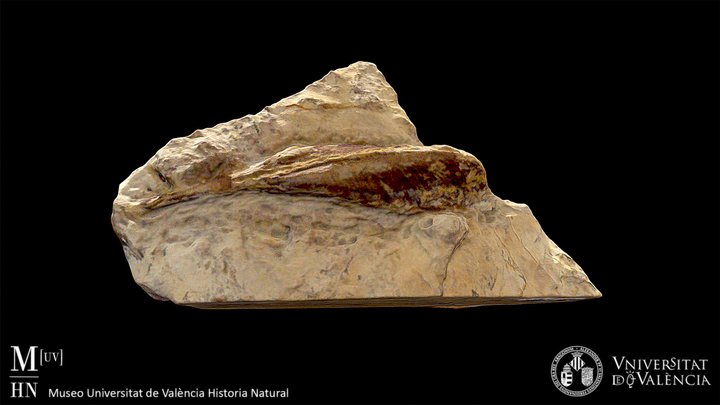
3D model
- Source
- Sketchfab
- Licence
- CC Attribution
- Commercial use
- cannot be read from the licence given — check the record
The description on this site
- Source
- Wikipedia, “Gervillia”
- Licence
- CC BY-SA 4.0
This is what the site found, which is not the same as what exists.
Keep going
What may have been alongside itBakevelliidae through timeFormations of the Late TriassicThe world it lived on
Occurrence data from the Paleobiology Database, CC BY 4.0. Defrance 1820