Baena
Baena is an extinct genus of baenid turtles that inhabited North America during the Late Cretaceous and early Paleogene. The genus name is thought to originate from a Native American language, possibly the Arapaho word for turtle, be’enoo.

Jonathan Chen · CC BY-SA 4.0 · via Wikipedia/Commons. May be a photograph of a specimen, or an artist’s reconstruction — an interpretation of a skeleton, since colour and soft tissue are almost never preserved.
On record
Recorded, not inferred- Sits inside
- EubaeninaePBDB
- Diet
- carnivorePBDB
- Life habit
- aquaticPBDB
- Motility
- actively mobilePBDB, for Osteichthyes
- Environment
- freshwaterPBDB
Time the record covers
At least 26 million years on record.
The record covers at least 72.2 Mya to 45.9 Mya. No occurrence read is dated outside 83.6 Mya to 37.71 Mya.
56 occurrences of Baena on record, most of them in the Eocene. Bar height is expected occurrences, not a count: each fossil is spread across the span it is dated to, so a tall narrow bar means tight dating and a low wide one means loose.
When
56 occurrences- Late Cretaceous16%
- Paleocene2%
- Eocene82%
These are dates about fossils, not the animal: the record can only begin after it arose and end before it died out, so either end may reach further. Shares are expected occurrences: a fossil dated to a span is counted partly in each period it straddles. More on what this infers.
Found in
13 formations
- Uinta Formation24
- Bridger Formation11
- Lance Formation3
- Frenchman Formation2
- Willwood Formation2
- Wasatch Formation2
Loading coastlines…
The named rock units Baena has been recovered from, largest first. Drawn where the rock is now, not where it formed. 3 occurrences have no formation on record, which is common for older literature.
Baena and its relatives
EoceneWhere Baena and its relatives were recorded in the Eocene.
Found in the same rock
608 taxa- Bridgeremys pusilla9 sites
- Trionychidae8 sites
- Chisternon undatum7 sites
- Echmatemys wyomingensis7 sites
- Baptemys wyomingensis6 sites
- Anosteira ornata5 sites
- Anosteira pulchra5 sites
- Crocodylia5 sites
- Echmatemys callopyge5 sites
- Glyptosaurus5 sites
- Protoreodon5 sites
- Testudinidae5 sites
- Amynodon advenus4 sites
- Crocodylus affinis4 sites
- Echmatemys4 sites
- Echmatemys stevensoniana4 sites
- Epihippus gracilis4 sites
- Hadrianus corsoni4 sites
- Hyrachyus modestus4 sites
- Isectolophus annectens4 sites
- Pantrionychidae4 sites
- Protoreodon pumilus4 sites
- Adocus3 sites
- Baenidae3 sites
The Paleobiology Database records 51 sites for Baena, and this reads all of them. The number is how many of those sites it was catalogued from too. The 24 sharing the most are listed.
This is not a list of everything alive at the time. It is only what has come out of the same ground as this animal and been written down.
Entered from
22 references- Morphological variation, phylogenetic relationships, and geographic distribution of the Baenidae (Testudines), based on new specimens from the Uinta Formation (Uinta Basin), Utah (USA)12
- The fossil turtles of North America9
- The fossil turtles of the Uinta Formation7
- The systematics of the North American family Baenidae (Reptilia, Cryptodira)4
- Early Eocene fossil vertebrates from the southwestern Green River Basin, Lincoln and Uinta counties, Wyoming3
- Geometric morphometrics and anatomical network analyses reveal ecospace partitioning among geoemydid turtles from the Uinta Formation, Utah2
- Fossil vertebrates from the Late Cretaceous Lance Formation, eastern Wyoming2
- Report on a collection of vertebrates from Wood Mountain, southern Saskatchewan, collected by C. M. Sternberg, 19212
- Part I. Contributions to the extinct vertebrate fauna of the western territories2
- Turtles of the lower Eocene San Jose Formation, San Juan Basin, New Mexico1
- Charles Hazelius Sternberg and his San Juan Basin Cretaceous dinosaur collections: correspondence and photographs (1920–1925)1
- Basin margins, biodiversity, evolutionary innovation, and the origin of new taxa1
Each of the 56 occurrences read was entered from one of these publications, ordered by how many each accounts for. This is not a search for papers mentioning the name. 10 further references are not listed. Entries link to doi.org where the Paleobiology Database holds an identifier, and to its own record where it does not. Relayed as the Paleobiology Database holds them, not checked against what they resolve to.
Media and terms
Media content3

Picture of Baena
- Source
- Wikipedia/Commons
- Credit
- Jonathan Chen
- Licence
- CC BY-SA 4.0
- Commercial use
- the licence allows it
Structured light scan
- Source
- MorphoSource
- Licence
- not stated by the source
- Commercial use
- cannot be read from the licence given — check the record
- Specimen
- Baena hatcheri · dmnh:135983
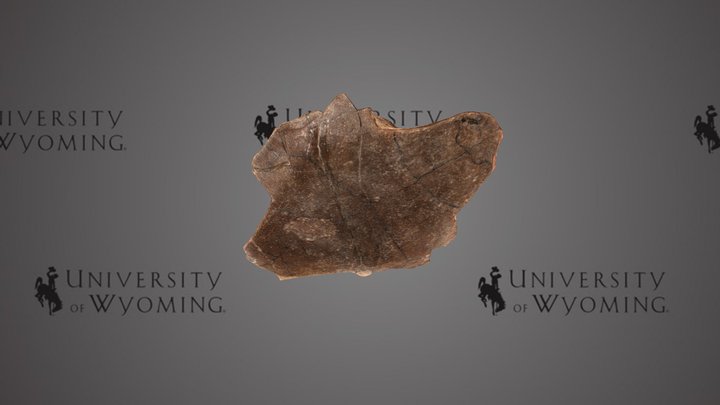
3D model
- Source
- Sketchfab
- Licence
- CC Attribution-NonCommercial
- Commercial use
- the licence does not allow it
The description on this site
- Licence
- CC BY-SA 4.0
This is what the site found, which is not the same as what exists.
Keep going
What may have been alongside itEubaeninae through timeFormations of the EoceneThe world it lived on
Occurrence data from the Paleobiology Database, CC BY 4.0. Leidy 1870