Boehmeria sp.
Boehmeria is a genus of 47 species of flowering plants in the nettle family Urticaceae. Of the species, 33 are indigenous to the Old World and 14 to the New World; no species is indigenous to both the Old and New Worlds. The species include herbaceous perennials, shrubs and small trees. Although related to the similar-looking species of the stinging nettles of genus Urtica, species of Boehmeria do not have stinging hairs. Because of the similarity in appearance, some species are commonly called "false nettles".

Forest & Kim Starr · CC BY 3.0 · via Wikipedia/Commons. May be a photograph of a specimen, or an artist’s reconstruction — an interpretation of a skeleton, since colour and soft tissue are almost never preserved.
Time the record covers
At least 12 million years on record.
The record covers at least 15.98 Mya to 3.6 Mya. No occurrence read is dated outside 23.04 Mya to 11.7 ka.
15 occurrences of Boehmeria sp. on record, most of them in the Miocene. Bar height is expected occurrences, not a count: each fossil is spread across the span it is dated to, so a tall narrow bar means tight dating and a low wide one means loose.
When
15 occurrences- Miocene60%
- Pliocene37%
- Pleistocene3%
These are dates about fossils, not the animal: the record can only begin after it arose and end before it died out, so either end may reach further. Shares are expected occurrences: a fossil dated to a span is counted partly in each period it straddles. More on what this infers.
Found in
1 formation
Loading coastlines…
The named rock units Boehmeria sp. has been recovered from, largest first. Drawn where the rock is now, not where it formed. 14 occurrences have no formation on record, which is common for older literature.
Boehmeria sp. and its relatives
MioceneWhere Boehmeria sp. and its relatives were recorded in the Miocene.
Found in the same rock
24 taxa- Acer1 site
- Ajuga reptans1 site
- Azolla1 site
- Cornus1 site
- Cyperus1 site
- Hypericum1 site
- Ilex aquifolium1 site
- Juglans1 site
- Liriodendron1 site
- Melissa1 site
- Nigella1 site
- Picea1 site
- Pterocarya1 site
- Pyracantha sp.1 site
- Quercus1 site
- Ranunculus aquatilis1 site
- Ranunculus flammula1 site
- Rubus1 site
- Scirpus1 site
- Selaginella1 site
- Sparganium1 site
- Stratiotes1 site
- Taxus baccata1 site
- Vitis1 site
The Paleobiology Database records 1 site for Boehmeria sp., and this reads all of them. The number is how many of those sites it was catalogued from too.
This is not a list of everything alive at the time. It is only what has come out of the same ground as this animal and been written down.
Entered from
4 references- Die mittelmiozaenen und obermiozaenen Floren aus der Meuroer und Raunoer Folge in der Lausitz. III. Fundstellen und Palaeobiologie6
- Die pliozaenen Floren von Thueringen, Deutsche Demokratische Republik5
- Tretichnye Flory Zapadnoi Sibiri3
- The section of Torre Picchio (Terni, Umbria, Central Italy): A Villafranchian site rich in vertebrates, molluscs, ostracods and plants.1
Each of the 15 occurrences read was entered from one of these publications, ordered by how many each accounts for. This is not a search for papers mentioning the name. Entries link to doi.org where the Paleobiology Database holds an identifier, and to its own record where it does not. Relayed as the Paleobiology Database holds them, not checked against what they resolve to.
Media and terms
Media content2
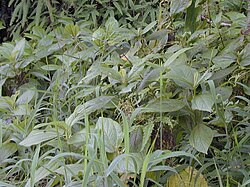
Picture of Boehmeria sp.
- Source
- Wikipedia/Commons
- Credit
- Forest & Kim Starr
- Licence
- CC BY 3.0
- Commercial use
- the licence allows it
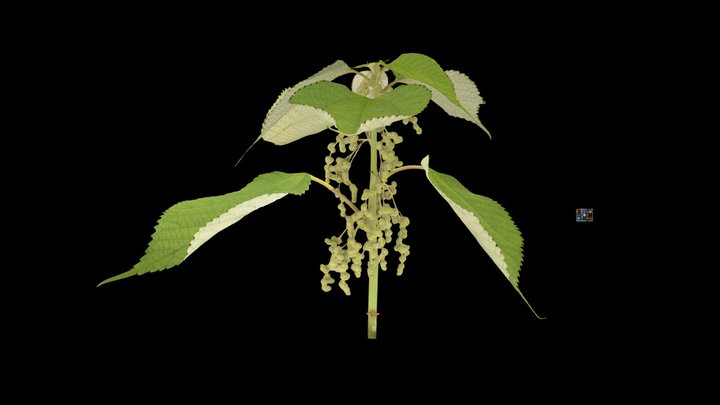
3D model
- Source
- Sketchfab
- Licence
- CC0 Public Domain
- Commercial use
- the licence allows it
Smithsonian Open Access and MorphoSource were not reached for this taxon, so this list is what the others held rather than everything there is.
The description on this site
- Source
- Wikipedia, “Boehmeria”
- Licence
- CC BY-SA 4.0
This is what the site found, which is not the same as what exists.
Keep going
What may have been alongside itFormations of the MioceneThe world it lived on
Occurrence data from the Paleobiology Database, CC BY 4.0.