Cameroceras
Cameroceras, from Ancient Greek καμάρα (kamára), meaning "chamber", and κέρας (kéras), meaning "horn", is an extinct genus of endocerid cephalopod which lived in equatorial oceans during the entire Ordovician period. Like other endocerids, it was an orthocone, meaning that its shell was fairly straight and pointed. It was particularly abundant and widespread in the Late Ordovician, inhabiting the shallow tropical seas in and around Laurentia, Baltica and Siberia.

James St. John · CC BY 2.0 · via Wikidata/Commons. May be a photograph of a specimen, or an artist’s reconstruction — an interpretation of a skeleton, since colour and soft tissue are almost never preserved.
On record
Recorded, not inferred- Sits inside
- EndoceratidaePBDB
- Diet
- carnivorePBDB, for Endocerida
- Life habit
- nektobenthicPBDB, for Endocerida
- Motility
- actively mobilePBDB, for Endocerida
- Vision
- well-developedPBDB, for Cephalopoda
- Environment
- marinePBDB, for Cephalopoda
Time the record covers
At least 27 million years on record.
The record covers at least 477.1 Mya to 449.5 Mya. No occurrence read is dated outside 486.85 Mya to 443.1 Mya.
89 occurrences of Cameroceras on record, most of them in the Ordovician. Bar height is expected occurrences, not a count: each fossil is spread across the span it is dated to, so a tall narrow bar means tight dating and a low wide one means loose.
When
89 occurrences- Ordovician100%
These are dates about fossils, not the animal: the record can only begin after it arose and end before it died out, so either end may reach further. Shares are expected occurrences: a fossil dated to a span is counted partly in each period it straddles. More on what this infers.
Found in
43 formations
- Honghuayuan Formation8
- Dunleith Formation · Galena Group8
- St. Peter Sandstone Formation5
- Boda Limestone Formation5
- Denley Limestone Formation · Lower Trenton Group4
- Lianjiashan Formation4
Loading coastlines…
The named rock units Cameroceras has been recovered from, largest first. Drawn where the rock is now, not where it formed. 19 further formations hold fewer occurrences each and are not listed. 2 occurrences have no formation on record, which is common for older literature.
Cameroceras and its relatives
OrdovicianWhere Cameroceras and its relatives were recorded in the Ordovician.
Found in the same rock
1,040 taxa- Michelinoceras16 sites
- Diestoceras15 sites
- Isorthoceras junceum14 sites
- Manitoulinoceras14 sites
- Oncoceras14 sites
- Whitfieldoceras14 sites
- Tripteroceras13 sites
- Centrocyrtoceras12 sites
- Metaspyroceras12 sites
- Ophileta12 sites
- Cyrtocerina11 sites
- Endoceras proteiforme11 sites
- Orthoceras11 sites
- Illaenus10 sites
- Probillingsites10 sites
- Ecculiomphalus9 sites
- Endoceras9 sites
- Probillingsites welleri9 sites
- Teichertoceras9 sites
- Westonoceras9 sites
- Beloitoceras8 sites
- Geisonoceras8 sites
- Gorbyoceras8 sites
- Kionoceras decorahense8 sites
The Paleobiology Database records 80 sites for Cameroceras, and this reads all of them. The number is how many of those sites it was catalogued from too. The 24 sharing the most are listed.
This is not a list of everything alive at the time. It is only what has come out of the same ground as this animal and been written down.
Entered from
36 references- Biostratigraphy of the Middle and Late Ordovician cephalopods of the Upper Mississippi Valley area22
- The cephalopods of Boda Limestone, Late Ordovocian, of Dalarna, Sweden5
- Estudio bioestratigrafico del Llanvirn y Llandeilo (Dobrotiviense) en la parte meridional de la zona Centroiberica (España)5
- The cephalopods of the Kullsberg Limestone Formation, Upper Ordovician, central Sweden and the effects of reef diversification on cephalopod diversity4
- Regional Stratigraphic Table of North China4
- Regional stratigraphic data of central South China4
- Middle and Upper Ordovician nautiloid cephalopods of the Cincinnati Arch region of Kentucky, Indiana, and Ohio3
- The paleoecology of a Late Ordovician shale unit from southwest Ohio and southeastern Indiana3
- The Cephalopod Fauna of the Bardahessaigh Formation (Caradoc Series) of Pomeroy, County Tyrone2
- Regional stratigraphic table of northern China: LiaoNing and HeNan Provinces2
- The St. Peter Sandstone of Southeastern Minnesota: Fauna2
- Fossil Communities of the Middle Trenton Group (Ordovician) of New York State2
Each of the 89 occurrences read was entered from one of these publications, ordered by how many each accounts for. This is not a search for papers mentioning the name. 24 further references are not listed. Entries link to doi.org where the Paleobiology Database holds an identifier, and to its own record where it does not. Relayed as the Paleobiology Database holds them, not checked against what they resolve to.
Media and terms
Media content2
Picture of Cameroceras
- Source
- Wikidata/Commons
- Credit
- James St. John
- Licence
- CC BY 2.0
- Commercial use
- the licence allows it
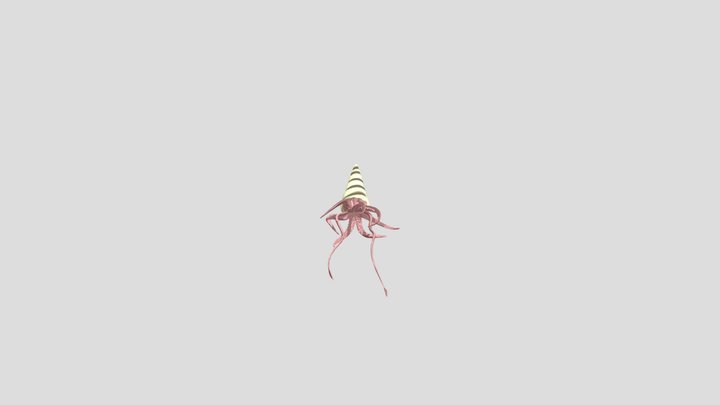
3D model
- Source
- Sketchfab
- Credit
- An Evil Sonic
- Licence
- CC Attribution
- Commercial use
- cannot be read from the licence given — check the record
The description on this site
- Source
- Wikipedia, “Cameroceras”
- Licence
- CC BY-SA 4.0
This is what the site found, which is not the same as what exists.
Keep going
What may have been alongside itEndoceratidae through timeFormations of the OrdovicianThe world it lived on
Occurrence data from the Paleobiology Database, CC BY 4.0. Conrad 1842