Carcharhinus amblyrhynchos
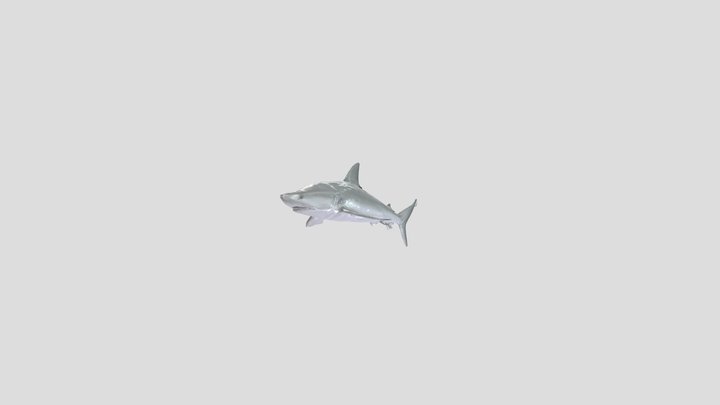
The grey reef shark or gray reef shark is a species of requiem shark, in the family Carcharhinidae. One of the most common reef sharks in the Indo-Pacific, it is found as far east as Easter Island and as far west as South Africa. This species is most often seen in shallow water near the drop-offs of coral reefs. It has the typical "reef shark" shape, with a broad, round snout and large eyes. It can be distinguished from similar species by the plain or white-tipped first dorsal fin, the dark tips on the other fins, the broad, black rear margin on the tail fin, and the lack of a ridge between the dorsal fins. Most individuals are less than 1.88 m (6.2 ft) long.

NOAA Photo Library · CC BY 2.0 · via Wikipedia/Commons. May be a photograph of a specimen, or an artist’s reconstruction — an interpretation of a skeleton, since colour and soft tissue are almost never preserved.
On record
Recorded, not inferred- Also called
- grey reef sharkPBDB
- Sits inside
- CarcharhinusPBDB
- Diet
- carnivorePBDB, for Carcharhiniformes
- Life habit
- nektonicPBDB, for Carcharhiniformes
- Motility
- actively mobilePBDB, for Carcharhiniformes
Time the record covers
At most 8.5 million years on record.
Every occurrence read is dated to somewhere between 13.82 Mya and 5.333 Mya, and nothing in the dating separates them, so that window is what the record shows rather than a span.
3 occurrences of Carcharhinus amblyrhynchos on record, most of them in the Miocene. The Paleobiology Database records this as a living group, and the chart stops with its fossils rather than at the present. Bar height is expected occurrences, not a count: each fossil is spread across the span it is dated to, so a tall narrow bar means tight dating and a low wide one means loose.
When
3 occurrences- Miocene100%
These are dates about fossils, not the animal: the record can only begin after it arose and end before it died out, so either end may reach further. Shares are expected occurrences: a fossil dated to a span is counted partly in each period it straddles. More on what this infers.
Found in
2 formations
Loading coastlines…
The named rock units Carcharhinus amblyrhynchos has been recovered from, largest first. Drawn where the rock is now, not where it formed.
Carcharhinus amblyrhynchos and its relatives
MioceneWhere Carcharhinus amblyrhynchos and its relatives were recorded in the Miocene.
Found in the same rock
58 taxa- Carcharhiniformes2 sites
- Carcharhinus amboinensis2 sites
- Carcharhinus brachyurus2 sites
- Hemipristis serra2 sites
- Otodus megalodon2 sites
- Sphyrna mokarran2 sites
- Advenasciaena bruneiana1 site
- Aetobatus1 site
- Aetomylaeus1 site
- Apogonidae1 site
- Ariidae1 site
- Ariosoma1 site
- Atrobucca borneensis1 site
- Boesemania obesa1 site
- Bregmaceros1 site
- Bruneisciaena schwarzhansi1 site
- Carcharhinidae1 site
- Carcharhinus amblyrhynchoides1 site
- Carcharhinus falciformis1 site
- Carcharhinus melanopterus1 site
- Carcharhinus plumbeus1 site
- Carcharhinus sealei1 site
- Carcharodon hastalis1 site
- Cetorhinus huddlestoni1 site
The Paleobiology Database records 3 sites for Carcharhinus amblyrhynchos, and this reads all of them. The number is how many of those sites it was catalogued from too. The 24 sharing the most are listed.
This is not a list of everything alive at the time. It is only what has come out of the same ground as this animal and been written down.
Entered from
2 references- First report on a diverse Neogene cartilaginous fish fauna from Borneo (Ambug Hill, Brunei Darussalam)2
- Miocene Elasmobranchii from the Duho Formation, South Korea1
Each of the 3 occurrences read was entered from one of these publications, ordered by how many each accounts for. This is not a search for papers mentioning the name. Each entry links to doi.org. Relayed as the Paleobiology Database holds them, not checked against what they resolve to.
Media and terms
Media content2

Picture of Carcharhinus amblyrhynchos
- Source
- Wikipedia/Commons
- Credit
- NOAA Photo Library
- Licence
- CC BY 2.0
- Commercial use
- the licence allows it
Smithsonian Open Access and MorphoSource were not reached for this taxon, so this list is what the others held rather than everything there is.
The description on this site
- Licence
- CC BY-SA 4.0
This is what the site found, which is not the same as what exists.
Keep going
What may have been alongside itCarcharhinus through timeFormations of the MioceneThe world it lived on
Occurrence data from the Paleobiology Database, CC BY 4.0. (Bleeker 1856)