Carcharhinus falciformis
The silky shark, also known by numerous names such as blackspot shark, gray whaler shark, olive shark, ridgeback shark, sickle shark, sickle-shaped shark and sickle silk shark, is a species of requiem shark, in the family Carcharhinidae, named for the smooth texture of its skin. It is one of the most abundant sharks in the pelagic zone, and can be found around the world in tropical waters. Highly mobile and migratory, this shark is most often found over the edge of the continental shelf down to 50 m (164 ft). The silky shark has a slender, streamlined body and typically grows to a length of 2.5 m. It can be distinguished from other large requiem sharks by its relatively small first dorsal fin with a curving rear margin, its tiny second dorsal fin with a long free rear tip, and its long, sickle-shaped pectoral fins. It is a deep, metallic bronze-gray above and white below.

Alex Chernikh · CC BY 2.5 · via Wikipedia/Commons. May be a photograph of a specimen, or an artist’s reconstruction — an interpretation of a skeleton, since colour and soft tissue are almost never preserved.
On record
Recorded, not inferred- Also called
- silky sharkPBDB
- Sits inside
- CarcharhinusPBDB
- Diet
- carnivorePBDB, for Carcharhiniformes
- Life habit
- nektonicPBDB, for Carcharhiniformes
- Motility
- actively mobilePBDB, for Carcharhiniformes
Time the record covers
At least 17 million years on record.
The record covers at least 20.45 Mya to 2.58 Mya. No occurrence read is dated outside 23.04 Mya to 0 Mya.
23 occurrences of Carcharhinus falciformis on record, most of them in the Miocene. The Paleobiology Database records this as a living group. Bar height is expected occurrences, not a count: each fossil is spread across the span it is dated to, so a tall narrow bar means tight dating and a low wide one means loose.
When
23 occurrences- Miocene68%
- Pliocene28%
- Pleistocene4%
These are dates about fossils, not the animal: the record can only begin after it arose and end before it died out, so either end may reach further. Shares are expected occurrences: a fossil dated to a span is counted partly in each period it straddles. More on what this infers.
Found in
12 formations
- Globigerina Limestone Formation3
- Gatun Formation2
- Chucunaque Formation2
- Pungo River Formation1
- Castillo Formation1
- Tirabuzón Formation1
Loading coastlines…
The named rock units Carcharhinus falciformis has been recovered from, largest first. Drawn where the rock is now, not where it formed. 7 occurrences have no formation on record, which is common for older literature.
Carcharhinus falciformis and its relatives
MioceneWhere Carcharhinus falciformis and its relatives were recorded in the Miocene.
Found in the same rock
308 taxa- Hemipristis serra14 sites
- Otodus megalodon12 sites
- Isurus oxyrinchus10 sites
- Carcharias taurus9 sites
- Carcharhinus brachyurus8 sites
- Carcharodon hastalis7 sites
- Galeocerdo aduncus7 sites
- Galeocerdo cuvier6 sites
- Carcharhinus leucas5 sites
- Negaprion brevirostris5 sites
- Negaprion eurybathrodon5 sites
- Rhizoprionodon5 sites
- Sphyrna zygaena5 sites
- Alopias4 sites
- Carcharhinus obscurus4 sites
- Carcharhinus plumbeus4 sites
- Hexanchus griseus4 sites
- Isurus4 sites
- Mobula4 sites
- Physogaleus contortus4 sites
- Scyliorhinus4 sites
- Aetobatus narinari3 sites
- Alopias superciliosus3 sites
- Carcharhinus perezi3 sites
The Paleobiology Database records 20 sites for Carcharhinus falciformis, and this reads all of them. The number is how many of those sites it was catalogued from too. The 24 sharing the most are listed.
This is not a list of everything alive at the time. It is only what has come out of the same ground as this animal and been written down.
Entered from
17 references- Additions to, and review of, the Miocene shark and ray fauna of Malta4
- Lamniform and Carcharhiniform Sharks from the Pungo River and Yorktown Formations (Miocene-Pliocene) of the submerged continental shelf, Onslow Bay, North Carolina, USA2
- Late Miocene chondrichthyans from Lago Bayano, Panama: Functional diversity, environment and biogeography2
- Sharks and Rays (Chondrichthyes, Elasmobranchii) from the late Miocene Gatun Formation of Panama2
- Sharks and rays (Chondrichthyes: Elasmobranchii) from the Peace River and Tamiami formations (Late Miocene–Early Pliocene) on the submerged continental shelf1
- New remains of Casatia termophila (Cetacea, Monodontidae) from the Lower Pliocene marine vertebrate-bearing locality of Arcille (Tuscany, Italy)1
- Remarkable multicuspid teeth in a new elusive skate (Chondrichthyes, Rajiformes) from the Mediterranean Pliocene1
- Another thermophilic "Miocene survivor" from the Italian Pliocene: A geologically young occurrence of the pelagic eagle ray Aetobatus in the Euro-Mediterranean region1
- First report on a diverse Neogene cartilaginous fish fauna from Borneo (Ambug Hill, Brunei Darussalam)1
- A new Early Miocene (Aquitanian) Elasmobranchii assemblage from the la Guajira Peninsula, Colombia1
- Two shark-bitten whale skeletons from Coastal Plain Deposits of South Carolina1
- Seláceos del Mioceno superior de Quebrada Pajaritos (Piura, Perú)1
Each of the 23 occurrences read was entered from one of these publications, ordered by how many each accounts for. This is not a search for papers mentioning the name. 5 further references are not listed. Entries link to doi.org where the Paleobiology Database holds an identifier, and to its own record where it does not. Relayed as the Paleobiology Database holds them, not checked against what they resolve to.
Media and terms
Media content3
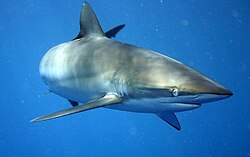
Picture of Carcharhinus falciformis
- Source
- Wikipedia/Commons
- Credit
- Alex Chernikh
- Licence
- CC BY 2.5
- Commercial use
- the licence allows it

CT scan
- Source
- MorphoSource
- Credit
- MCZ Ichthyology
- Licence
- In Copyright
- Commercial use
- cannot be read from the licence given — check the record
- Specimen
- Carcharhinus falciformis · MCZ:Ich:153592
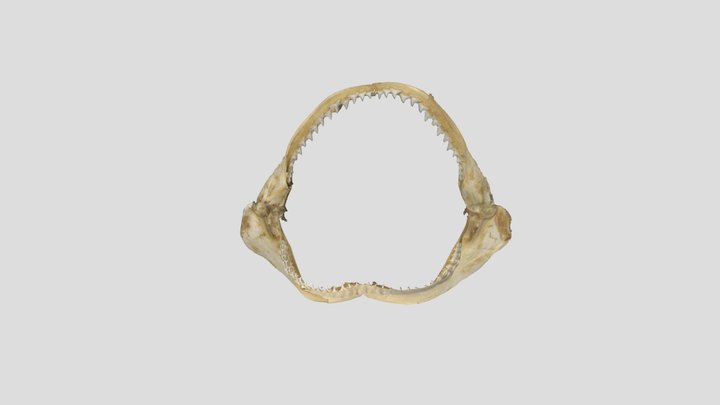
3D model
- Source
- Sketchfab
- Licence
- CC Attribution-NonCommercial
- Commercial use
- the licence does not allow it
The description on this site
- Source
- Wikipedia, “Silky shark”
- Licence
- CC BY-SA 4.0
This is what the site found, which is not the same as what exists.
Keep going
What may have been alongside itCarcharhinus through timeFormations of the MioceneThe world it lived on
Occurrence data from the Paleobiology Database, CC BY 4.0. (Muller and Henle 1839)