Isurus
Mako sharks are predatory mackerel sharks of the genus Isurus. They are largely pelagic, and are fast, predatory fish capable of swimming at speeds of up to 50 km/h (31 mph). The two species of mako sharks are sexually dimorphic, with females being larger than males, and are large sharks. Both species are classified as "Endangered" by the IUCN.

NOAA-SWFSC · Public Domain · via Wikipedia/Commons. May be a photograph of a specimen, or an artist’s reconstruction — an interpretation of a skeleton, since colour and soft tissue are almost never preserved.
On record
Recorded, not inferred- Sits inside
- LamnidaePBDB
- Diet
- carnivorePBDB, for Lamniformes
- Life habit
- nektonicPBDB, for Lamniformes
- Motility
- actively mobilePBDB, for Lamniformes
Time the record covers
At least 110 million years on record.
The record covers at least 110.1 Mya to 11.7 ka. No occurrence read is dated outside 143.1 Mya to 0 Mya.
467 occurrences of Isurus on record, most of them in the Miocene. The Paleobiology Database records this as a living group. Bar height is expected occurrences, not a count: each fossil is spread across the span it is dated to, so a tall narrow bar means tight dating and a low wide one means loose.
When
467 occurrences- Early Cretaceousunder 1%
- Late Cretaceous2%
- Paleoceneunder 1%
- Eocene18%
- Oligocene10%
- Miocene54%
- Pliocene10%
- Pleistocene4%
- Holoceneunder 1%
These are dates about fossils, not the animal: the record can only begin after it arose and end before it died out, so either end may reach further. Shares are expected occurrences: a fossil dated to a span is counted partly in each period it straddles. More on what this infers.
Found in
185 formations
- Calvert Formation · Chesapeake Group13
- Jan Juc Formation10
- Berchem Formation9
- Black Rock Sandstone Formation8
- Port Campbell Limestone Formation7
- Batesford Limestone Formation6
Loading coastlines…
The named rock units Isurus has been recovered from, largest first. Drawn where the rock is now, not where it formed. 161 further formations hold fewer occurrences each and are not listed. 119 occurrences have no formation on record, which is common for older literature.
Isurus and its relatives
MioceneWhere Isurus and its relatives were recorded in the Miocene.
Found in the same rock
3,530 taxa- Otodus megalodon78 sites
- Carcharodon hastalis71 sites
- Hemipristis serra55 sites
- Myliobatis55 sites
- Carcharhinus53 sites
- Galeocerdo aduncus51 sites
- Carcharias cuspidatus33 sites
- Carcharias31 sites
- Squatina30 sites
- Notorynchus primigenius29 sites
- Aetobatus28 sites
- Dasyatis28 sites
- Squalus25 sites
- Lamna24 sites
- Scyliorhinus24 sites
- Carcharhinus priscus23 sites
- Galeocerdo23 sites
- Odontaspis23 sites
- Striatolamia macrota23 sites
- Cetacea22 sites
- Carcharias acutissimus21 sites
- Carcharias taurus21 sites
- Carcharodon carcharias21 sites
- Sphyrna zygaena21 sites
The Paleobiology Database records 363 sites for Isurus, and this reads 240 of them. The number is how many of those sites it was catalogued from too. The 24 sharing the most are listed.
This is not a list of everything alive at the time. It is only what has come out of the same ground as this animal and been written down.
Entered from
222 references- A review of the Tertiary fossil Cetacea (Mammalia) localities in Australia21
- Late Mesozoic and Cenozoic fish faunas of Japan15
- Fossil fish remains from the Tertiaries of Australia12
- New or little-known fossils in the National Museum, Part XXVII.-Some Cainozoic fish remains, with a revision of the group11
- Additions to, and review of, the Miocene shark and ray fauna of Malta9
- Les poissons fossiles du Bas-Congo et des régions voisines9
- Descriptions and Revisions of the Cretaceous and Tertiary Fish-remains of New Zealand8
- Revision of Neogene Mackerel Shark of Genus Isurus from Japan7
- Miocene vertebrates from the coastal Tertiary rocks of peninsular india and Sri Lanka7
- Sharks' teeth and cetacean bones7
- Les chondrichthyens du Miocène moyen (Serravallien) de Salles (Gironde, France)6
- Late Cenozoic elasmobranchs from the Hokuriku district, central Japan6
Each of the 467 occurrences read was entered from one of these publications, ordered by how many each accounts for. This is not a search for papers mentioning the name. 210 further references are not listed. Entries link to doi.org where the Paleobiology Database holds an identifier, and to its own record where it does not. Relayed as the Paleobiology Database holds them, not checked against what they resolve to.
Media and terms
Media content3
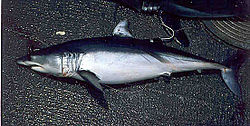
Picture of Isurus
- Source
- Wikipedia/Commons
- Credit
- NOAA-SWFSC
- Licence
- Public Domain
- Commercial use
- the licence allows it
CT scan
- Source
- MorphoSource
- Credit
- MCZ Ichthyology
- Licence
- In Copyright
- Commercial use
- cannot be read from the licence given — check the record
- Specimen
- Isurus oxyrinchus · MCZ:Ich:37994
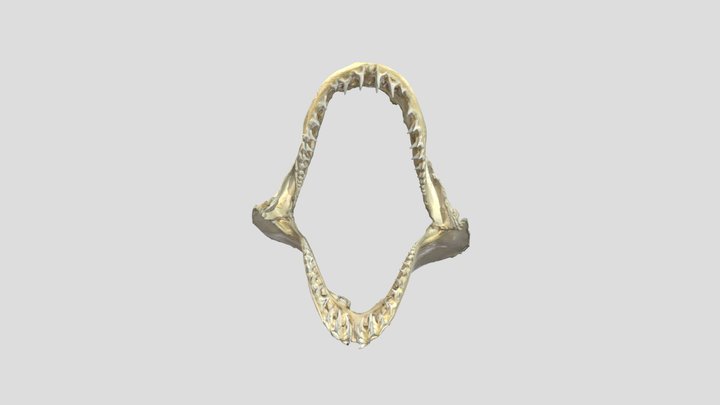
3D model
- Source
- Sketchfab
- Licence
- CC Attribution-NonCommercial
- Commercial use
- the licence does not allow it
The description on this site
- Source
- Wikipedia, “Mako shark”
- Licence
- CC BY-SA 4.0
This is what the site found, which is not the same as what exists.
Keep going
What may have been alongside itLamnidae through timeFormations of the MioceneThe world it lived on
Occurrence data from the Paleobiology Database, CC BY 4.0. Rafinesque 1810