Caseidae
Caseidae are an extinct family of basal synapsids that lived from the Late Carboniferous to Middle Permian between about 300 and 265 million years ago. Fossils of these animals come from the south-central part of the United States, and various parts of Europe, with a possible presence in Gondwana based on paleolatitude reconstructions. Caseids show great taxonomic and morphological diversity. The most basal taxa were small insectivorous and omnivorous forms that lived mainly in the Upper Carboniferous and Lower Permian, such as Eocasea, Callibrachion, and Martensius. This type of caseid persists until the middle Permian with Phreatophasma. During the early Permian, the clade is mainly represented by many species that adopted a herbivorous diet. Some have evolved into gigantic forms that can reach 6–7 metres (20–23 ft) in length, such as Cotylorhynchus hancocki and Alierasaurus ronchii, making them the largest Permian synapsids. Caseids are considered important components of early terrestrial ecosystems in vertebrate history because the numerous herbivorous species in this family are among the first terrestrial tetrapods to occupy the role of primary consumer. The caseids experienced a significant evolutionary radiation at the end of the early Permian, becoming, with the captorhinid eureptiles, the dominant herbivores of terrestrial ecosystems in place of the edaphosaurids and diadectids.

Ryan Somma · CC BY-SA 2.0 · via Wikipedia/Commons. May be a photograph of a specimen, or an artist’s reconstruction — an interpretation of a skeleton, since colour and soft tissue are almost never preserved.
On record
Recorded, not inferred- Sits inside
- CaseasauriaPBDB
- Motility
- actively mobilePBDB, for Osteichthyes
- Environment
- terrestrialPBDB, for Amniota
Time the record covers
At least 185 million years on record.
The record covers at least 298.9 Mya to 113.2 Mya. No occurrence read is dated outside 358.86 Mya to 100.5 Mya.
60 occurrences of Caseidae on record, most of them in the Permian. Bar height is expected occurrences, not a count: each fossil is spread across the span it is dated to, so a tall narrow bar means tight dating and a low wide one means loose.
When
60 occurrencesThese are dates about fossils, not the animal: the record can only begin after it arose and end before it died out, so either end may reach further. Shares are expected occurrences: a fossil dated to a span is counted partly in each period it straddles. More on what this infers.
Found in
21 formations
- San Angelo Formation · Pease River Group17
- Chickasha Formation · El Reno Group10
- Corncockle Sandstone Formation · Stewartry Group5
- Arroyo Formation · Clear Fork Group2
- M1-M2 Formation · Grès Rouge Group2
- Vale Formation · Clear Fork Group2
Loading coastlines…
The named rock units Caseidae has been recovered from, largest first. Drawn where the rock is now, not where it formed. 6 occurrences have no formation on record, which is common for older literature.
Caseidae and its relatives
PermianWhere Caseidae and its relatives were recorded in the Permian.
Found in the same rock
152 taxa- Captorhinus aguti4 sites
- Cotylorhynchus bransoni4 sites
- Diadectes3 sites
- Rothianiscus robusta3 sites
- Xenacanthus3 sites
- Acheloma cumminsi2 sites
- Angelosaurus romeri2 sites
- Arthropoda2 sites
- Brachydectes newberryi2 sites
- Cacops aspidephorus2 sites
- Captorhinus2 sites
- Chelichnus2 sites
- Chelichnus bucklandi2 sites
- Chelichnus duncani2 sites
- Dimetrodon2 sites
- Diplocaulus magnicornis2 sites
- Dissorophidae2 sites
- Edaphosaurus2 sites
- Eryops2 sites
- Eryops megacephalus2 sites
- Ophiacodon2 sites
- Seymouria2 sites
- Seymouria baylorensis2 sites
- Sphenacodontidae2 sites
The Paleobiology Database records 23 sites for Caseidae, and this reads all of them. The number is how many of those sites it was catalogued from too. The 24 sharing the most are listed.
This is not a list of everything alive at the time. It is only what has come out of the same ground as this animal and been written down.
Entered from
30 references- Late Permian terrestrial vertebrates, U.S.A. and U.S.S.R16
- New Permian vertebrates from the Chickasha Formation in Oklahoma8
- Pelycosauria4
- Note to Mr. Harkness's paper on "The position of the impressions of footsteps in the Bunter Sandstone of Dumfries-shire"3
- The Tracks of Triassic Vertebrates: Fossil Evidence from North-West England2
- Permian vertebrates from Oklahoma and Texas. Part I.—Vertebrates from the Flowerpot Formation, Permian of Oklahoma2
- Fauna of the Vale and Choza: 7. Pelycosauria: family Caseidae2
- New primitive caseid (Synapsida, Caseasauria) from the early Permian of Germany1
- The basal Sphenacodontia: Systematic revision and evolutionary implications1
- The oldest caseid synapsid from the Late Pennsylvanian of Kansas, and the evolution of herbivory in terrestrial vertebrates1
- Alierasaurus ronchii, gen. et sp. nov., a caseid from the Permian of Sardinia, Italy1
- Fossil footprints from the Late Permian of Brazil: An example of hidden biodiversity1
Each of the 60 occurrences read was entered from one of these publications, ordered by how many each accounts for. This is not a search for papers mentioning the name. 18 further references are not listed. Entries link to doi.org where the Paleobiology Database holds an identifier, and to its own record where it does not. Relayed as the Paleobiology Database holds them, not checked against what they resolve to.
Media and terms
Media content2

Picture of Caseidae
- Source
- Wikipedia/Commons
- Credit
- Ryan Somma
- Licence
- CC BY-SA 2.0
- Commercial use
- the licence allows it
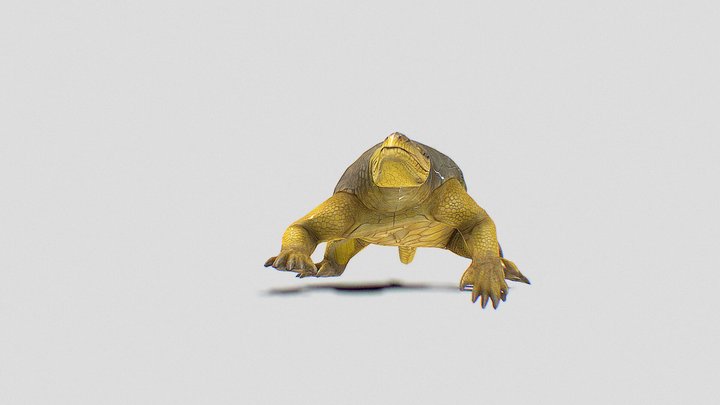
3D model
- Source
- Sketchfab
- Credit
- alessio.langella
- Licence
- CC Attribution
- Commercial use
- cannot be read from the licence given — check the record
Smithsonian Open Access and MorphoSource were not reached for this taxon, so this list is what the others held rather than everything there is.
The description on this site
- Source
- Wikipedia, “Caseidae”
- Licence
- CC BY-SA 4.0
This is what the site found, which is not the same as what exists.
Keep going
What may have been alongside itCaseasauria through timeFormations of the PermianThe world it lived on
Occurrence data from the Paleobiology Database, CC BY 4.0. Williston 1911