Cerorhinca
Cerorhinca is a genus of auk containing the rhinoceros auklet and several fossil species.

Tokumi · Copyrighted free use · via Wikipedia/Commons. May be a photograph of a specimen, or an artist’s reconstruction — an interpretation of a skeleton, since colour and soft tissue are almost never preserved.
On record
Recorded, not inferred- Sits inside
- AlcinaePBDB
- Diet
- carnivorePBDB, for Coelurosauria
- Life habit
- ground dwelling, solitaryPBDB, for Theropoda
- Motility
- actively mobilePBDB, for Theropoda
- Environment
- marinePBDB, for Charadriiformes
Time the record covers
At least 11 million years on record.
The record covers at least 11.63 Mya to 11.7 ka. No occurrence read is dated outside 15.98 Mya to 0 Mya.
16 occurrences of Cerorhinca on record, most of them in the Pliocene. The Paleobiology Database records this as a living group. Bar height is expected occurrences, not a count: each fossil is spread across the span it is dated to, so a tall narrow bar means tight dating and a low wide one means loose.
When
16 occurrences- Miocene19%
- Pliocene37%
- Pleistocene31%
- Holocene13%
These are dates about fossils, not the animal: the record can only begin after it arose and end before it died out, so either end may reach further. Shares are expected occurrences: a fossil dated to a span is counted partly in each period it straddles. More on what this infers.
Found in
4 formations
- San Diego Formation5
- Almejas Formation2
- Monterey Formation2
- Yorktown Formation · Chesapeake Group1
Loading coastlines…
The named rock units Cerorhinca has been recovered from, largest first. Drawn where the rock is now, not where it formed. 6 occurrences have no formation on record, which is common for older literature.
Cerorhinca and its relatives
PlioceneWhere Cerorhinca and its relatives were recorded in the Pliocene.
Found in the same rock
731 taxa- Ptychoramphus aleuticus8 sites
- Fratercula cirrhata5 sites
- Melospiza melodia5 sites
- Phoebastria albatrus5 sites
- Synthliboramphus antiquus5 sites
- Aves4 sites
- Branta canadensis4 sites
- Buteo jamaicensis4 sites
- Cepphus columba4 sites
- Falco sparverius4 sites
- Hydrobates leucorhous4 sites
- Larus occidentalis4 sites
- Mysticeti4 sites
- Panalcidae4 sites
- Phalacrocorax4 sites
- Puffinus4 sites
- Zonotrichia leucophrys4 sites
- Asio priscus3 sites
- Athene cunicularia3 sites
- Calidris mauri3 sites
- Catharus guttatus3 sites
- Catharus ustulatus3 sites
- Chendytes lawi3 sites
- Chondestes grammacus3 sites
The Paleobiology Database records 15 sites for Cerorhinca, and this reads all of them. The number is how many of those sites it was catalogued from too. The 24 sharing the most are listed.
This is not a list of everything alive at the time. It is only what has come out of the same ground as this animal and been written down.
Entered from
9 references- Fossil birds of the San Diego Formation, Late Pliocene, Blancan, San Diego County, California5
- Terminal Pleistocene–Holocene Avifauna of San Miguel and Santa Rosa Islands: Identifications of Previously Unidentified Avian Remains Recovered from Fossil Sites and Prehistoric Cave Deposits3
- A zooarchaeological study at Buldir Island, Western Aleutians, Alaska2
- First Atlantic record of the puffin Cerorhinca (Aves, Alcidae) from the Pliocene of North Carolina1
- The fossil marine vertebrate fauna of the latest Miocene Almejas Formation, Isla Cedros, Baja California, Mexico1
- A catalogue of late Quaternary vertebrates from California: Part One, nonmarine lower vertebrate and avian taxa1
- Pliocene avian remains from Baja California1
- Tertiary birds from Laguna Hills, Orange County, California1
- Avian remains from the Miocene of Lompoc, California1
Each of the 16 occurrences read was entered from one of these publications, ordered by how many each accounts for. This is not a search for papers mentioning the name. Entries link to doi.org where the Paleobiology Database holds an identifier, and to its own record where it does not. Relayed as the Paleobiology Database holds them, not checked against what they resolve to.
Media and terms
Media content2

Picture of Cerorhinca
- Source
- Wikipedia/Commons
- Credit
- Tokumi
- Licence
- Copyrighted free use
- Commercial use
- cannot be read from the licence given — check the record
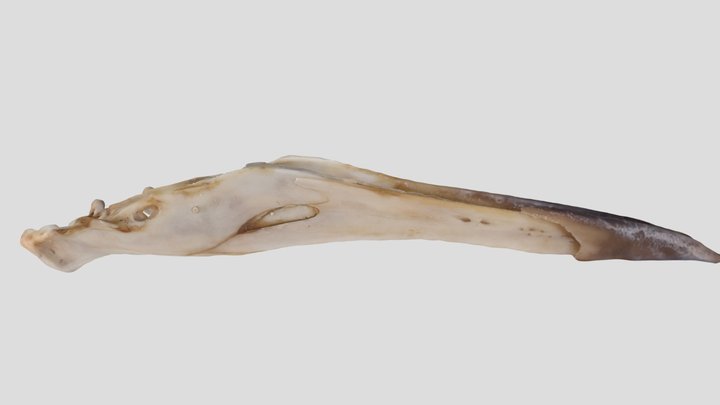
3D model
- Source
- Sketchfab
- Licence
- CC Attribution
- Commercial use
- cannot be read from the licence given — check the record
Smithsonian Open Access and MorphoSource were not reached for this taxon, so this list is what the others held rather than everything there is.
The description on this site
- Source
- Wikipedia, “Cerorhinca”
- Licence
- CC BY-SA 4.0
This is what the site found, which is not the same as what exists.
Keep going
What may have been alongside itAlcinae through timeFormations of the PlioceneThe world it lived on
Occurrence data from the Paleobiology Database, CC BY 4.0. Bonaparte 1828