Chancelloria
Chancelloria is a genus of early animals known from the Middle Cambrian Burgess Shale, the Comley limestone, the Wheeler Shale, the Bright Angel Shale and elsewhere. It is named after Chancellor Peak. It was first described in 1920 by Charles Doolittle Walcott, who regarded them as one of the most primitive groups of sponges. However, they are currently thought to be member of the group Chancelloriidae. 178 specimens of Chancelloria are known from the Greater Phyllopod bed, where they comprise 0.34% of the community.

Jaleigh Q. Pier · CC BY-SA 4.0 · via Wikipedia/Commons. May be a photograph of a specimen, or an artist’s reconstruction — an interpretation of a skeleton, since colour and soft tissue are almost never preserved.
On record
Recorded, not inferred- Sits inside
- ChancelloriidaePBDB
- Diet
- suspension feederPBDB
- Life habit
- epifaunalPBDB
- Motility
- stationary, attachedPBDB
- Vision
- blindPBDB, for Coeloscleritophora
Time the record covers
At least 33 million years on record.
The record covers at least 530.7 Mya to 497 Mya. No occurrence read is dated outside 538.8 Mya to 486.85 Mya.
309 occurrences of Chancelloria on record, most of them in the Cambrian. Bar height is expected occurrences, not a count: each fossil is spread across the span it is dated to, so a tall narrow bar means tight dating and a low wide one means loose.
When
309 occurrences- Cambrian100%
These are dates about fossils, not the animal: the record can only begin after it arose and end before it died out, so either end may reach further. Shares are expected occurrences: a fossil dated to a span is counted partly in each period it straddles. More on what this infers.
Found in
90 formations
- Parara Formation33
- Burgess Shale Formation · Chancellor Group19
- Dengying Formation15
- Parara Limestone Formation14
- Pestrotsvet Formation13
- Zhujiaqing Formation · Meishucunian Group11
Loading coastlines…
The named rock units Chancelloria has been recovered from, largest first. Drawn where the rock is now, not where it formed. 66 further formations hold fewer occurrences each and are not listed. 6 occurrences have no formation on record, which is common for older literature.
Chancelloria and its relatives
CambrianWhere Chancelloria and its relatives were recorded in the Cambrian.
Found in the same rock
1,290 taxa- Archiasterella43 sites
- Pelagiella subangulata40 sites
- Sinosachites40 sites
- Pojetaia runnegari39 sites
- Eiffelia araniformis37 sites
- Cupitheca36 sites
- Hyolithellus micans36 sites
- Hippopharangites dailyi35 sites
- Brachiopoda32 sites
- Hyptiotheca karraculum32 sites
- Lingulella32 sites
- Eremactis mawsoni31 sites
- Hyolithellus31 sites
- Conotheca australiensis28 sites
- Echinodermata28 sites
- Halkieria27 sites
- Davidonia rostrata26 sites
- Hyolitha26 sites
- Microcornus petilus26 sites
- Torellella26 sites
- Trilobita26 sites
- Allonnia tripodophora25 sites
- Micromitra25 sites
- Triplicatella disdoma25 sites
The Paleobiology Database records 243 sites for Chancelloria, and this reads 240 of them. The number is how many of those sites it was catalogued from too. The 24 sharing the most are listed.
This is not a list of everything alive at the time. It is only what has come out of the same ground as this animal and been written down.
Entered from
90 references- The Cambrian biostratigraphy of the Stansbury Basin, South Australia47
- Early Cambrian fossils from South Australia33
- Paleoecology of the Greater Phyllopod Bed community, Burgess Shale17
- Stratigrafiya i fauna pogranichnykh sloyev Kembriya i Dokembriya Malogo Karatau [Stratigraphy and fauna of the Precambrian-Cambrian boundary beds of the Malyy Karatau]14
- Brachiopods and associated skeletal taxa from the early Cambrian of southeastern Shaanxi, South China12
- Terreneuvian small shelly faunas of East Yunnan (South China) and their biostratigraphic implication8
- Shelly fossils from the Early Cambrian (Toyonian) Wirrealpa, Arrona Creek, and Ramsay Limestones of South Australia7
- Biostratigraphy of the Vendian-Cambrian beds and the lower Cambrian boundary in Siberia7
- Tommotskiu jarus i problema nizhney granisty kembriya [The Tommotian Stage and the Cambrian lower Boundary problem]7
- Oldest shelly fossils from the Taconic Allochthon and late Early Cambrian sea-levels in eastern Laurentia6
- The Lower Cambrian microfauna of Comley and Rushton, Shropshire, England6
- The diverse radiodont fauna from the Marjum Formation of Utah, USA (Cambrian: Drumian)4
Each of the 309 occurrences read was entered from one of these publications, ordered by how many each accounts for. This is not a search for papers mentioning the name. 78 further references are not listed. Entries link to doi.org where the Paleobiology Database holds an identifier, and to its own record where it does not. Relayed as the Paleobiology Database holds them, not checked against what they resolve to.
Media and terms
Media content2

Picture of Chancelloria
- Source
- Wikipedia/Commons
- Credit
- Jaleigh Q. Pier
- Licence
- CC BY-SA 4.0
- Commercial use
- the licence allows it
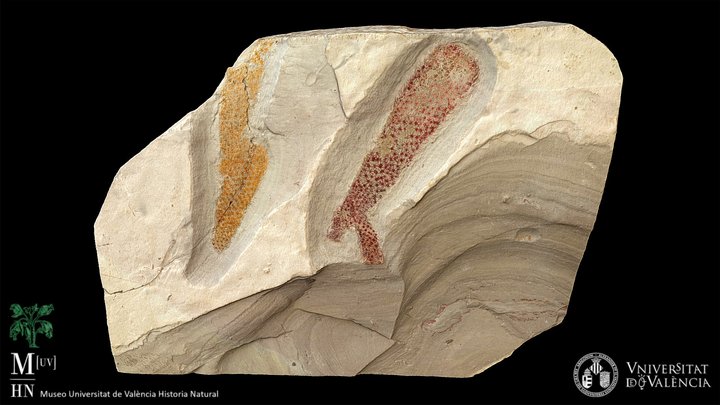
3D model
- Source
- Sketchfab
- Licence
- CC Attribution
- Commercial use
- cannot be read from the licence given — check the record
The description on this site
- Licence
- CC BY-SA 4.0
This is what the site found, which is not the same as what exists.
Keep going
What may have been alongside itChancelloriidae through timeFormations of the CambrianThe world it lived on
Occurrence data from the Paleobiology Database, CC BY 4.0. Walcott 1920