Trilobita
Trilobites are extinct marine arthropods that form the class Trilobita. One of the earliest groups of arthropods to appear in the fossil record, trilobites were among the most successful of all early animals, existing in oceans for almost 270 million years, with over 22,000 species having been described.

PaleoNeolitic (montage creator) · CC BY 4.0 · via Wikipedia/Commons. May be a photograph of a specimen, or an artist’s reconstruction — an interpretation of a skeleton, since colour and soft tissue are almost never preserved.
On record
Recorded, not inferred- Also called
- trilobitePBDB
- Sits inside
- ArtiopodaPBDB
- Diet
- carnivorePBDB
- Life habit
- low-level epifaunalPBDB
- Motility
- fast-movingPBDB
- Environment
- marinePBDB
Time the record covers
At least 244 million years on record.
The record covers at least 521 Mya to 276.8 Mya. No occurrence read is dated outside 538.8 Mya to 264.9 Mya.
12,000+ occurrences of Trilobita on record. Bar height is expected occurrences, not a count: each fossil is spread across the span it is dated to, so a tall narrow bar means tight dating and a low wide one means loose.
When
12,000 occurrences read- Cambrian21%
- Ordovician44%
- Silurian17%
- Devonian15%
- Carboniferous2%
- Permianunder 1%
These are dates about fossils, not the animal: the record can only begin after it arose and end before it died out, so either end may reach further. Shares are expected occurrences: a fossil dated to a span is counted partly in each period it straddles. The read hit its cap, so every figure above is a floor and the shares are of the occurrences read. More on what this infers.
Found in
at least 818 formations
- Deadwood Formation593
- Pioche Shale Formation323
- Motol Formation194
- Kopanina Formation190
- Ludlowville Formation · Hamilton Group159
- Whittaker Formation153
Loading coastlines…
The named rock units Trilobita has been recovered from, largest first. Drawn where the rock is now, not where it formed. The read hit its cap, so each count is a floor. 794 further formations hold fewer occurrences each and are not listed. 1,569 occurrences have no formation on record, which is common for older literature.
Found in the same rock
1,867 taxa- Isotelus42 sites
- Crinoidea39 sites
- Hyolithes36 sites
- Lingulella35 sites
- Flexicalymene34 sites
- Rafinesquina33 sites
- Hallopora30 sites
- Strophomena28 sites
- Zygospira28 sites
- Ambonychia27 sites
- Modiolopsis27 sites
- Nuculites27 sites
- Sowerbyella27 sites
- Lingula26 sites
- Leptaena25 sites
- Ctenodonta24 sites
- Pterinea24 sites
- Lophospira22 sites
- Platystrophia22 sites
- Conularia21 sites
- Hormotoma21 sites
- Sinuites20 sites
- Trematis20 sites
- Ostracoda19 sites
The Paleobiology Database records at least 536 sites for Trilobita, and this reads 240 of them. The number is how many of those sites it was catalogued from too. The 24 sharing the most are listed.
This is not a list of everything alive at the time. It is only what has come out of the same ground as this animal and been written down.
Entered from
at least 633 references- The Bohemian Lower Devonian Stages472
- Trilobite assemblages in the Devonian of the Barrandian area and their relations to palaeoenvironments470
- Trilobites, Biostratigraphy, and Lithostratigraphy of the Crepicephalus and Aphelaspis zones, Lower Deadwood formation (Marjuman and Steptoean Stages, Upper Cambrian), Black Hills, South Dakota292
- Trilobites from the Survey Peak, Outram and Skoki Formations (Upper Cambrian-Lower Ordovician) at Wilcox Pass, Jasper National Park, Alberta)284
- Early Middle Cambrian Albertella biozone trilobites of the Pioche Shale, southeastern Nevada242
- Stratigraphic Summary of the Southwestern Region of China240
- Silurian field excursions: Prague Basin (Barrandian), Bohemia217
- The biostratigraphy of the Ordovician of Bohemia199
- Ordovician formations and faunas, southern Mackenzie Mountains195
- Silurian and Lochkovian communities in the Prague basin (Barrandian area, Czech Republic)178
- On the Early Ordovician of Sweden stratigraphy and fauna159
- A trilobite zonation of Middle Ordovician rocks, southwestern District of Mackenzie158
Each of the 12,000 occurrences read was entered from one of these publications, ordered by how many each accounts for. This is not a search for papers mentioning the name. That read hit its cap, so each count is a floor. 621 further references are not listed. Entries link to doi.org where the Paleobiology Database holds an identifier, and to its own record where it does not. Relayed as the Paleobiology Database holds them, not checked against what they resolve to.
Media and terms
Media content3
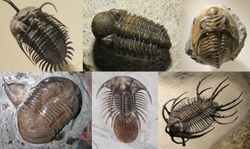
Picture of Trilobita
- Source
- Wikipedia/Commons
- Credit
- PaleoNeolitic (montage creator)
- Licence
- CC BY 4.0
- Commercial use
- the licence allows it
Structured light scan
- Source
- MorphoSource
- Licence
- not stated by the source
- Commercial use
- cannot be read from the licence given — check the record
- Specimen
- Trilobita indet. · PSAL:ARCH
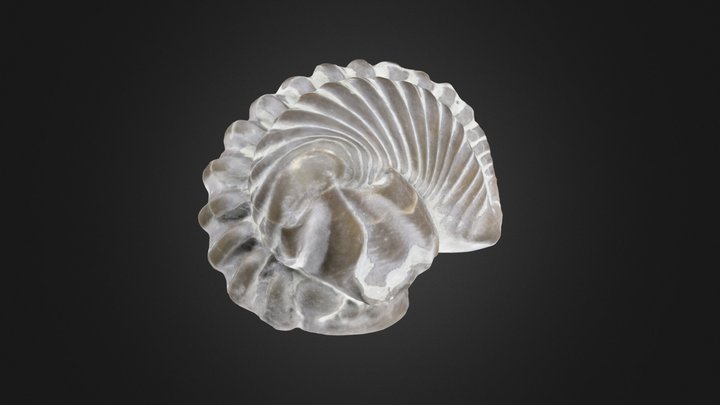
3D model
- Source
- Sketchfab
- Licence
- CC0 Public Domain
- Commercial use
- the licence allows it
The description on this site
- Source
- Wikipedia, “Trilobite”
- Licence
- CC BY-SA 4.0
This is what the site found, which is not the same as what exists.
Keep going
What may have been alongside itArtiopoda through timeThe world it lived on
Occurrence data from the Paleobiology Database, CC BY 4.0. (Walch 1771)