Chelonia mydas
The green sea turtle, also known as the green turtle, black sea turtle, and Pacific green turtle, is a species of large sea turtle of the family Cheloniidae. It is the only species in the genus Chelonia. Its range extends throughout tropical and subtropical seas around the world, with two distinct populations in the Atlantic and Pacific Oceans, but it is also found in the Indian Ocean. The common name refers to the usually green fat found beneath its carapace, due to its diet strictly being seagrass, not to the color of its carapace, which is olive to black.

Charles J. Sharp · CC BY-SA 4.0 · via Wikipedia/Commons. May be a photograph of a specimen, or an artist’s reconstruction — an interpretation of a skeleton, since colour and soft tissue are almost never preserved.
On record
Recorded, not inferred- Also called
- green turtlePBDB
- Sits inside
- CheloniaPBDB
- Diet
- omnivorePBDB, for Cryptodira
- Life habit
- aquaticPBDB, for Cryptodira
- Motility
- actively mobilePBDB, for Osteichthyes
- Environment
- marinePBDB, for Chelonioidea
Time the record covers
At least 388 thousand years on record.
The record covers at least 400 ka to 11.7 ka. No occurrence read is dated outside 1.75 Mya to 0 Mya.
6 occurrences of Chelonia mydas on record, most of them in the Pleistocene. The Paleobiology Database records this as a living group. Bar height is expected occurrences, not a count: each fossil is spread across the span it is dated to, so a tall narrow bar means tight dating and a low wide one means loose.
When
6 occurrences- Pleistocene50%
- Holocene50%
These are dates about fossils, not the animal: the record can only begin after it arose and end before it died out, so either end may reach further. Shares are expected occurrences: a fossil dated to a span is counted partly in each period it straddles. More on what this infers.
Found in
1 formation
Loading coastlines…
The named rock units Chelonia mydas has been recovered from, largest first. Drawn where the rock is now, not where it formed. 5 occurrences have no formation on record, which is common for older literature.
Chelonia mydas and its relatives
PleistoceneWhere Chelonia mydas and its relatives were recorded in the Pleistocene.
Found in the same rock
291 taxa- Aenocyon dirus2 sites
- Caretta caretta2 sites
- Equus2 sites
- Larus2 sites
- Macropus (Osphranter) robustus2 sites
- Macropus (Petrogale)2 sites
- Pseudomys2 sites
- Rattus2 sites
- Acanthopleura1 site
- Acar domingensis1 site
- Acer rubrum1 site
- Aechmophorus occidentalis1 site
- Aepyprymnus rufescens1 site
- Aetobatus1 site
- Alligator mississippiensis1 site
- Amia1 site
- Amphiuma means1 site
- Anadara1 site
- Anadara (Larkinia) transversa1 site
- Anadara (Lunarca)1 site
- Anaxyrus boreas1 site
- Aneides lugubris1 site
- Anomalocardia cuneimeris1 site
- Anomia simplex1 site
The Paleobiology Database records 6 sites for Chelonia mydas, and this reads all of them. The number is how many of those sites it was catalogued from too. The 24 sharing the most are listed.
This is not a list of everything alive at the time. It is only what has come out of the same ground as this animal and been written down.
Entered from
6 references- Occurrence of a Quaternary cheloniid sea turtle from the Southern Argentine Pampas1
- Remains of Leatherback turtles, Dermochelys coriacea, at Mid-Late Holocene archaeological sites in coastal Oman: clues of past worlds1
- A catalogue of late Quaternary vertebrates from California: Part One, nonmarine lower vertebrate and avian taxa1
- Mandu Mandu Creek Rockshelter: Pleistocene Human Coastal Occupation of North West Cape, Western Australia1
- Tropical Rainforests of North Queensland: Their Conservation Significance1
- Vertebrata mostly from Stratum No. 3, at Vero, Florida, together with descriptions of new species1
Each of the 6 occurrences read was entered from one of these publications, ordered by how many each accounts for. This is not a search for papers mentioning the name. Entries link to doi.org where the Paleobiology Database holds an identifier, and to its own record where it does not. Relayed as the Paleobiology Database holds them, not checked against what they resolve to.
Media and terms
Media content2

Picture of Chelonia mydas
- Source
- Wikipedia/Commons
- Credit
- Charles J. Sharp
- Licence
- CC BY-SA 4.0
- Commercial use
- the licence allows it
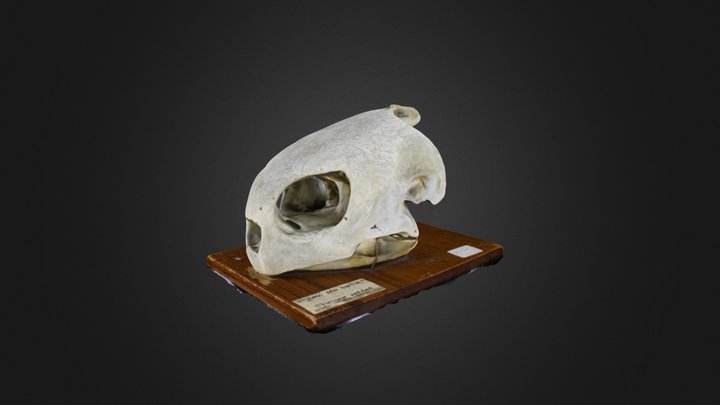
3D model
- Source
- Sketchfab
- Licence
- CC0 Public Domain
- Commercial use
- the licence allows it
Smithsonian Open Access and MorphoSource were not reached for this taxon, so this list is what the others held rather than everything there is.
The description on this site
- Licence
- CC BY-SA 4.0
This is what the site found, which is not the same as what exists.
Keep going
What may have been alongside itChelonia through timeFormations of the PleistoceneThe world it lived on
Occurrence data from the Paleobiology Database, CC BY 4.0. (Linnaeus 1758)