Rattus
Rattus is a genus of muroid rodents, all typically called rats. However, the term rat can also be applied to rodent species outside of this genus.

Charles J. Sharp · CC BY-SA 4.0 · via Wikipedia/Commons. May be a photograph of a specimen, or an artist’s reconstruction — an interpretation of a skeleton, since colour and soft tissue are almost never preserved.
On record
Recorded, not inferred- Also called
- ratPBDB
- Sits inside
- MurinaePBDB
- Diet
- herbivore, insectivorePBDB, for Muridae
- Life habit
- ground dwellingPBDB
- Motility
- actively mobilePBDB, for Osteichthyes
- Environment
- terrestrialPBDB, for Eutheria
Time the record covers
At least 3.5 million years on record.
The record covers at least 3.6 Mya to 11.7 ka. No occurrence read is dated outside 7.246 Mya to 0 Mya.
247 occurrences of Rattus on record. The Paleobiology Database records this as a living group. Bar height is expected occurrences, not a count: each fossil is spread across the span it is dated to, so a tall narrow bar means tight dating and a low wide one means loose.
When
247 occurrences- Mioceneunder 1%
- Pliocene8%
- Pleistocene44%
- Holocene47%
These are dates about fossils, not the animal: the record can only begin after it arose and end before it died out, so either end may reach further. Shares are expected occurrences: a fossil dated to a span is counted partly in each period it straddles. More on what this infers.
Found in
12 formations
- Shungura Formation · Omo Group9
- Koobi Fora Formation5
- Olduvai Formation · Vogel River Series (?) Group5
- Makapansgat Formation5
- Varswater Formation5
- Vogel River Series Formation4
Loading coastlines…
The named rock units Rattus has been recovered from, largest first. Drawn where the rock is now, not where it formed. 204 occurrences have no formation on record, which is common for older literature.
Found in the same rock
1,800 taxa- Epimys (Aethomys)30 sites
- Mus25 sites
- Tatera25 sites
- Mus musculus24 sites
- Crocidura21 sites
- Cyanoramphus21 sites
- Epimys (Mastomys)21 sites
- Otomys19 sites
- Thallomys19 sites
- Hystrix18 sites
- Aves17 sites
- Hipparion17 sites
- Coenocorypha aucklandica16 sites
- Passeriformes16 sites
- Pseudomys16 sites
- Pteropus16 sites
- Squamata16 sites
- Coturnix novaezelandiae15 sites
- Dendromus15 sites
- Hoplodactylus maculatus15 sites
- Aegotheles novaezealandiae14 sites
- Phaethon lepturus14 sites
- Saccostomus14 sites
- Sus scrofa14 sites
The Paleobiology Database records 193 sites for Rattus, and this reads all of them. The number is how many of those sites it was catalogued from too. The 24 sharing the most are listed.
This is not a list of everything alive at the time. It is only what has come out of the same ground as this animal and been written down.
Entered from
99 references- Quaternary fossil fauna of South Canterbury, South Island, New Zealand22
- The prehistory of vertebrates, especially birds, on Tinian, Aguiguan, and Rota, Northern Mariana Islands17
- Fossil vertebrates from Palau, Micronesia: a resource assessment14
- Early and Middle Pleistocene environments and hominid biogeography; micromammalian evidence from Kabwe, Twin Rivers and Mumbwa Caves in central Zambia11
- Pleistocene fossil vertebrate sites of the South East region of South Australia9
- Late Quaternary Small Mammal Faunas of the Naracoorte Caves World Heritage Area8
- Fossil and archaeological avifauna of Niue Island, Pacific Ocean7
- Tropical Rainforests of North Queensland: Their Conservation Significance5
- Pleistocene fossil vertebrate sites of the South East region of South Australia II4
- Life on the edge: prehistoric settlement and economy on Utrōk Atoll, northern Marshall Islands4
- On the reliability of archaeological rat bone for hydrocarbon dating in New Zealand4
- Laetoli: a Pliocene Site in Northern Tanzania4
Each of the 247 occurrences read was entered from one of these publications, ordered by how many each accounts for. This is not a search for papers mentioning the name. 87 further references are not listed. Entries link to doi.org where the Paleobiology Database holds an identifier, and to its own record where it does not. Relayed as the Paleobiology Database holds them, not checked against what they resolve to.
Media and terms
Media content3

Picture of Rattus
- Source
- Wikipedia/Commons
- Credit
- Charles J. Sharp
- Licence
- CC BY-SA 4.0
- Commercial use
- the licence allows it
CT scan
- Source
- MorphoSource
- Licence
- In Copyright
- Commercial use
- cannot be read from the licence given — check the record
- Specimen
- Rattus rattus · ummz:mammals:157599
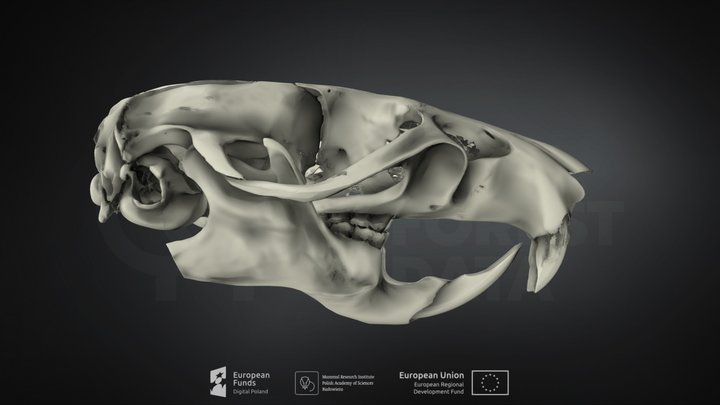
3D model
- Source
- Sketchfab
- Licence
- CC Attribution
- Commercial use
- cannot be read from the licence given — check the record
The description on this site
- Source
- Wikipedia, “Rattus”
- Licence
- CC BY-SA 4.0
This is what the site found, which is not the same as what exists.
Keep going
What may have been alongside itMurinae through timeThe world it lived on
Occurrence data from the Paleobiology Database, CC BY 4.0. Fischer 1803