Clinocardium (Keenocardium)
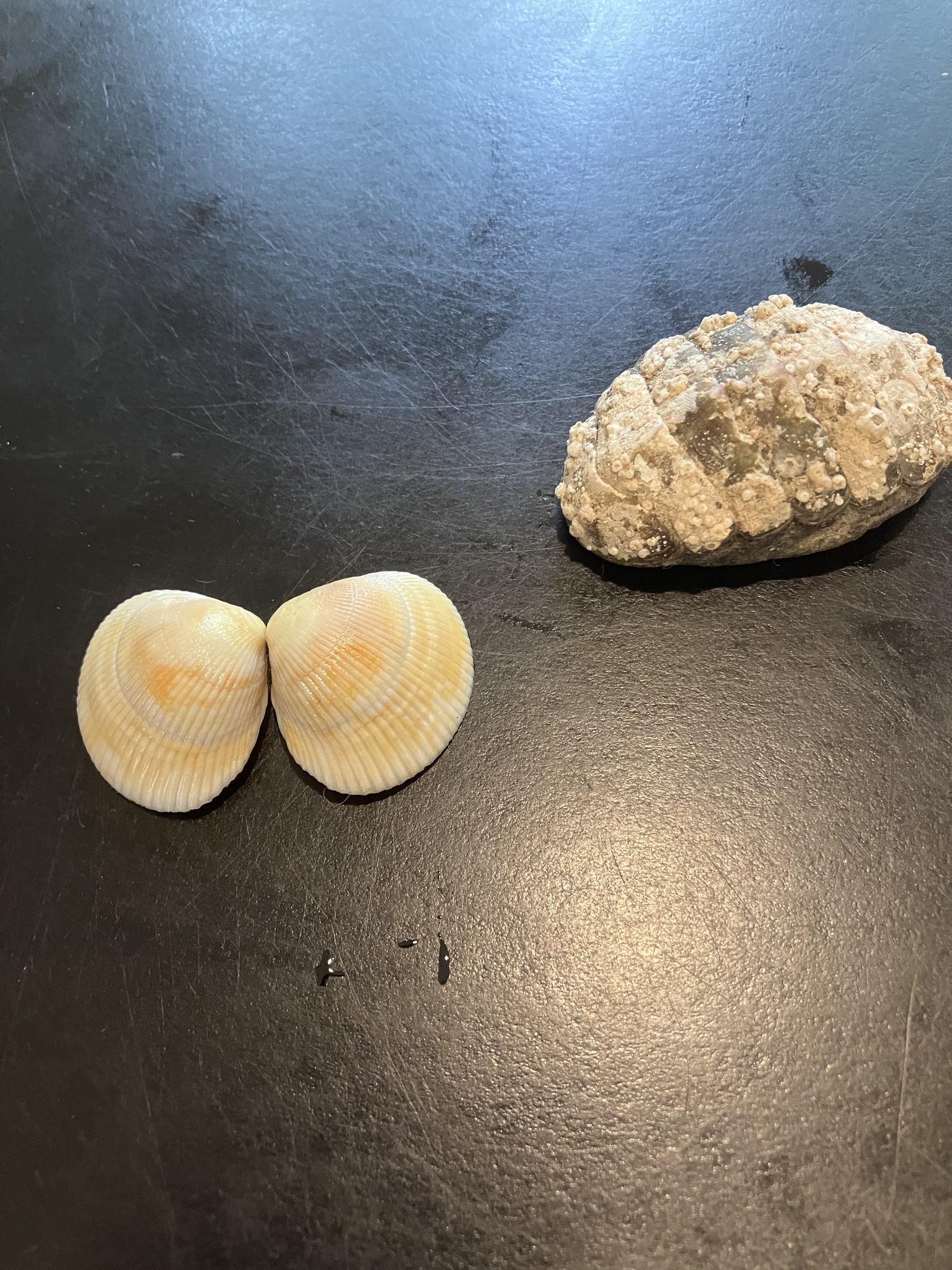
Not Clinocardium (Keenocardium). This is Keenocardium blandum (A.Gould, 1850), a relative — both are Cardiidae.
Steven Rosenthal · CC BY-NC 4.0 · via GBIF. May be a photograph of a specimen, or an artist’s reconstruction — an interpretation of a skeleton, since colour and soft tissue are almost never preserved.
On record
Recorded, not inferred- Sits inside
- ClinocardiumPBDB
- Diet
- suspension feederPBDB, for Cardiidae
- Life habit
- infaunalPBDB, for Cardiidae
- Motility
- facultatively mobilePBDB, for Cardiidae
- Vision
- blindPBDB, for Bivalvia
Time the record covers
At least 27 million years on record.
The record covers at least 27.3 Mya to 129 ka. No occurrence read is dated outside 33.9 Mya to 11.7 ka.
27 occurrences of Clinocardium (Keenocardium) on record, most of them in the Miocene. The Paleobiology Database records this as a living group. Bar height is expected occurrences, not a count: each fossil is spread across the span it is dated to, so a tall narrow bar means tight dating and a low wide one means loose.
When
27 occurrences- Oligocene11%
- Miocene59%
- Pliocene19%
- Pleistocene11%
These are dates about fossils, not the animal: the record can only begin after it arose and end before it died out, so either end may reach further. Shares are expected occurrences: a fossil dated to a span is counted partly in each period it straddles. More on what this infers.
Found in
19 formations
- Undal-Umenskaya Formation3
- Kakertskaya Formation2
- Kuluvenskaya Formation2
- Sertunayskaya Formation2
- Enemtenskaya Formation1
- Ermanovskaya Formation1
Loading coastlines…
The named rock units Clinocardium (Keenocardium) has been recovered from, largest first. Drawn where the rock is now, not where it formed. 3 occurrences have no formation on record, which is common for older literature.
Clinocardium (Keenocardium) and its relatives
MioceneWhere Clinocardium (Keenocardium) and its relatives were recorded in the Miocene.
Found in the same rock
273 taxa- Lucinoma acutilineata8 sites
- Cyclocardia7 sites
- Mactromeris polynyma7 sites
- Yoldia (Yoldia)6 sites
- Chlamys (Chlamys) cosibensis5 sites
- Conchocele bisecta5 sites
- Diplodonta5 sites
- Macoma (Macoma) calcarea5 sites
- Monia macrochisma5 sites
- Acila (Truncacila)4 sites
- Ainicardita4 sites
- Anadara (Anadara)4 sites
- Laevicardium4 sites
- Liocyma fluctuosa4 sites
- Macoma4 sites
- Megangulus pulchrus4 sites
- Mya (Mya) cuneiformis4 sites
- Periploma (Periploma) pulchella4 sites
- Tetrarca boucardi4 sites
- Chlamys (Swiftopecten) swifti3 sites
- Corbicula3 sites
- Eucrassatella3 sites
- Glycymeris3 sites
- Glycymeris (Glycymeris)3 sites
The Paleobiology Database records 11 sites for Clinocardium (Keenocardium), and this reads all of them. The number is how many of those sites it was catalogued from too. The 24 sharing the most are listed.
This is not a list of everything alive at the time. It is only what has come out of the same ground as this animal and been written down.
Entered from
7 references- Neogene and Paleogene Molluscan (Bivalvia) Cenozones of the Russian Northeast.12
- Neogene and Paleogene Molluscan (Bivalvia) Cenozones of Sakhalin and Kurile Islands9
- Geology and Petrology of the Pribilof Islands, Alaska2
- Molluscan fossils associated with the fossil whale from Shiriuchi-machu, Hachinohe City, Northeast Japan1
- Pectinids from the Taga Group of the Joban Coalfield1
- On a new fossil sea-lion from the Uonuma Group (Plio-Pleistocene), Ojiya, Niigata Prefecture, Central Japan1
- The Anomalous Stratigraphy of Deadman's Island, California1
Each of the 27 occurrences read was entered from one of these publications, ordered by how many each accounts for. This is not a search for papers mentioning the name. Entries link to doi.org where the Paleobiology Database holds an identifier, and to its own record where it does not. Relayed as the Paleobiology Database holds them, not checked against what they resolve to.
Media and terms
Media content1
Picture of Keenocardium blandum (A.Gould, 1850)
- Source
- GBIF
- Credit
- Steven Rosenthal
- Licence
- CC BY-NC 4.0
- Commercial use
- the licence does not allow it
No 3D scan was found. Smithsonian Open Access, MorphoSource and Sketchfab were all searched.
This is what the site found, which is not the same as what exists.
Keep going
What may have been alongside itClinocardium through timeFormations of the MioceneThe world it lived on
Occurrence data from the Paleobiology Database, CC BY 4.0.