Collembola
Springtails form the largest of the three lineages of modern hexapods that are no longer considered insects, the others being Protura and Diplura. Although the three lineages are sometimes grouped together in a class called Entognatha because they have internal mouthparts, they do not appear to be any more closely related to one another than they are to insects, which have external mouthparts. There are more than 9,000 species worldwide.

Mvuijlst · CC BY-SA 3.0 · via Wikipedia/Commons. May be a photograph of a specimen, or an artist’s reconstruction — an interpretation of a skeleton, since colour and soft tissue are almost never preserved.
On record
Recorded, not inferred- Also called
- springtailPBDB
- Sits inside
- EllipuraPBDB
- Motility
- actively mobilePBDB, for Arthropoda
- Environment
- terrestrialPBDB
Time the record covers
At least 394 million years on record.
The record covers at least 410.62 Mya to 15.98 Mya. No occurrence read is dated outside 413.02 Mya to 13.82 Mya.
225 occurrences of Collembola on record, most of them in the Eocene. The Paleobiology Database records this as a living group, and the chart stops with its fossils rather than at the present. Bar height is expected occurrences, not a count: each fossil is spread across the span it is dated to, so a tall narrow bar means tight dating and a low wide one means loose.
When
225 occurrences- Devonianunder 1%
- Permianunder 1%
- Early Cretaceous8%
- Late Cretaceous19%
- Eocene42%
- Miocene31%
These are dates about fossils, not the animal: the record can only begin after it arose and end before it died out, so either end may reach further. Shares are expected occurrences: a fossil dated to a span is counted partly in each period it straddles. More on what this infers.
Found in
9 formations
- Escucha Formation15
- Foremost Formation · Belly River Group13
- Mazantic Shale Formation · Simojovel Group4
- Barstow Formation3
- Dryden Flags Formation2
- Dunstan Formation2
Loading coastlines…
The named rock units Collembola has been recovered from, largest first. Drawn where the rock is now, not where it formed. 183 occurrences have no formation on record, which is common for older literature.
Collembola and its relatives
EoceneWhere Collembola and its relatives were recorded in the Eocene.
Found in the same rock
2,849 taxa- Entomobrya14 sites
- Forcipomyia8 sites
- Atriculicoides globosus6 sites
- Culicoides filipalpis6 sites
- Ceratopogonidae5 sites
- Culicoides tyrrelli5 sites
- Mastotermes electromexicus5 sites
- Metopina5 sites
- Peronehelea chrimikalydia5 sites
- Serphites paradoxus5 sites
- Tomocerus taeniatus5 sites
- Arachnida4 sites
- Araneae4 sites
- Berothidae4 sites
- Culicoides canadensis4 sites
- Dasyhelea4 sites
- Diptera4 sites
- Elephantomyia (Elephantomyia) longirostris4 sites
- Entomobrya pilosa4 sites
- Keroplatidae4 sites
- Lepidocyrtus4 sites
- Protoisotoma4 sites
- Scelioninae4 sites
- Trichomyia4 sites
The Paleobiology Database records 48 sites for Collembola, and this reads all of them. The number is how many of those sites it was catalogued from too. The 24 sharing the most are listed.
This is not a list of everything alive at the time. It is only what has come out of the same ground as this animal and been written down.
Entered from
30 references- Revision der Collembolen des baltischen Bernsteins43
- Die "Ur-Insecten" (Thysanura und Collembola im Bernstein)38
- Notes on Miocene amber Collembola from Chiapas29
- Collembola (Arthropoda, Hexapoda) from the mid Cretaceous of Myanmar (Burma)27
- The mid-Miocene Zhangpu biota reveals an outstandingly rich rainforest biome in East Asia19
- Cretaceous Collembola (Arthropoda, Hexapoda) from the Upper Cretaceous of Canada14
- Collembola in amber from the Dominican Republic11
- Springtails from the Early Cretaceous amber of Spain (Collembola: Entomobryomorpha), with an annotated checklist of fossil Collembola9
- Die im Bernstein befindlichen Crustaceen, Myriapoden, Arachniden und Apteren der Vorwelt9
- Long-term stasis in a diverse fauna of Early Cretaceous springtails (Collembola: Symphypleona)6
- Amber inclusions from New Zealand2
- Cretaceous African life captured in amber2
Each of the 225 occurrences read was entered from one of these publications, ordered by how many each accounts for. This is not a search for papers mentioning the name. 16 further references are not listed. Entries link to doi.org where the Paleobiology Database holds an identifier, and to its own record where it does not. Relayed as the Paleobiology Database holds them, not checked against what they resolve to.
Media and terms
Media content2
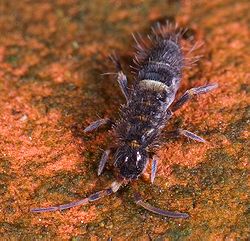
Picture of Collembola
- Source
- Wikipedia/Commons
- Credit
- Mvuijlst
- Licence
- CC BY-SA 3.0
- Commercial use
- the licence allows it
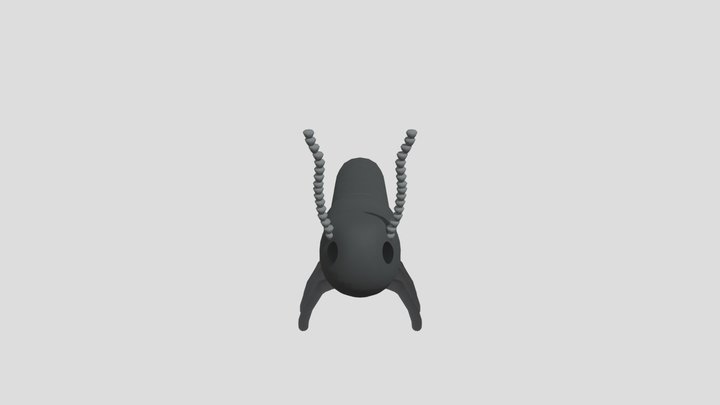
3D model
- Source
- Sketchfab
- Credit
- Lolnyjkamen
- Licence
- CC Attribution
- Commercial use
- cannot be read from the licence given — check the record
Smithsonian Open Access was not reached for this taxon, so this list is what the others held rather than everything there is.
The description on this site
- Source
- Wikipedia, “Springtail”
- Licence
- CC BY-SA 4.0
This is what the site found, which is not the same as what exists.
Keep going
What may have been alongside itEllipura through timeFormations of the EoceneThe world it lived on
Occurrence data from the Paleobiology Database, CC BY 4.0. (Lubbock 1871)