Conostichus
Conostichus is an ichnogenus of cnidarian trace fossil. They are nowadays considered to represent a burrow structure serving as a holdfast for an anemone-like organism.
No picture of Conostichus was found. Wikipedia and Wikidata were searched and had none. iDigBio and GBIF were not searched: the Paleobiology Database does not place Conostichus firmly enough to tell it from something else bearing the same name, and a search on the name alone returns whichever of them was photographed. Smithsonian Open Access did not answer, so this is what the others held rather than everything there is.
On record
Recorded, not inferred- Sits inside
- IchnofossilsPBDB
Time the record covers
At least 164 million years on record.
The record covers at least 477.1 Mya to 312.8 Mya. No occurrence read is dated outside 486.4 Mya to 306 Mya.
2 occurrences of Conostichus on record, most of them in the Ordovician. Bar height is expected occurrences, not a count: each fossil is spread across the span it is dated to, so a tall narrow bar means tight dating and a low wide one means loose.
When
2 occurrences- Ordovician50%
- Carboniferous50%
These are dates about fossils, not the animal: the record can only begin after it arose and end before it died out, so either end may reach further. Shares are expected occurrences: a fossil dated to a span is counted partly in each period it straddles. More on what this infers.
Found in
2 formations
- Beach Formation · Bell Island Group1
- Carbondale Formation1
Loading coastlines…
The named rock units Conostichus has been recovered from, largest first. Drawn where the rock is now, not where it formed.
Conostichus and its relatives
OrdovicianWhere Conostichus and its relatives were recorded in the Ordovician.
Found in the same rock
21 taxa- Anthracomedusa turnbulli1 site
- Bergaueria1 site
- Cruziana1 site
- Cruziana billingsi1 site
- Cruziana semiplicata1 site
- Dimorphichnus obliquus1 site
- Diplichnites1 site
- Diplocraterion parallelum1 site
- Essexella asherae1 site
- Helminthopsis abelli1 site
- Lascoa mesostaurata1 site
- Octomedusa pieckorum1 site
- Palaeophycus heberti1 site
- Planolites terraenovae1 site
- Rusophycus dispar1 site
- Rusophycus latus1 site
- Rusophycus leifeirikssoni1 site
- Skolithos verticalis1 site
- Strobeus1 site
- Teichichnus rectus1 site
- Tullimonstrum gregarium1 site
The Paleobiology Database records 2 sites for Conostichus, and this reads all of them. The number is how many of those sites it was catalogued from too.
This is not a list of everything alive at the time. It is only what has come out of the same ground as this animal and been written down.
Entered from
2 references- An abundant sea anemone from the Carboniferous Mazon Creek Lagerstӓtte, USA1
- Ichnology of the Upper Cambrian? to Lower Ordovician Bell Island and Wabana groups of eastern Newfoundland, Canada1
Each of the 2 occurrences read was entered from one of these publications, ordered by how many each accounts for. This is not a search for papers mentioning the name. Entries link to doi.org where the Paleobiology Database holds an identifier, and to its own record where it does not. Relayed as the Paleobiology Database holds them, not checked against what they resolve to.
Media and terms
Media content1
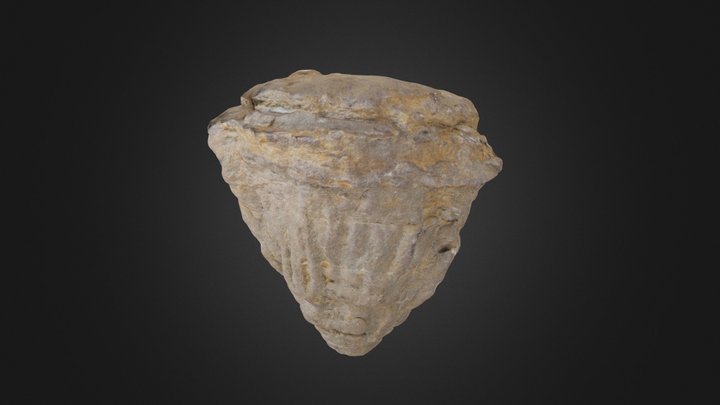
3D model
- Source
- Sketchfab
- Licence
- CC0 Public Domain
- Commercial use
- the licence allows it
No picture of Conostichus was found. Wikipedia and Wikidata were searched and had none.
iDigBio and GBIF were not searched: the Paleobiology Database does not place Conostichus firmly enough to tell it from something else bearing the same name, and a search on the name alone returns whichever of them was photographed.
Smithsonian Open Access did not answer, so this is what the others held rather than everything there is.
Smithsonian Open Access and MorphoSource were not reached for this taxon, so this list is what the others held rather than everything there is.
The description on this site
- Source
- Wikipedia, “Conostichus”
- Licence
- CC BY-SA 4.0
This is what the site found, which is not the same as what exists.
Keep going
What may have been alongside itIchnofossils through timeFormations of the OrdovicianThe world it lived on
Occurrence data from the Paleobiology Database, CC BY 4.0. Lesquereux 1876