Crassostrea
Searched as Crassostrea vaughani insularis. The Paleobiology Database treats Crassostrea as the accepted name.
Crassostrea is a genus of true oysters containing some of the most important oysters used for food.

Andrew C · CC BY 2.0 · via Wikipedia/Commons. May be a photograph of a specimen, or an artist’s reconstruction — an interpretation of a skeleton, since colour and soft tissue are almost never preserved.
On record
Recorded, not inferred- Sits inside
- OstreidaePBDB
- Diet
- suspension feederPBDB
- Life habit
- epifaunalPBDB
- Motility
- stationary, attachedPBDB
- Vision
- blindPBDB, for Bivalvia
- Environment
- hypersaline,marine,brackishPBDB, for Ostreidae
Time the record covers
At most 7.1 million years on record.
The one occurrence read is dated to somewhere between 23.04 Mya and 15.98 Mya, which is a dating window rather than a span.
1 occurrence of Crassostrea on record, most of them in the Miocene. The Paleobiology Database records this as a living group, and the chart stops with its fossils rather than at the present. Bar height is expected occurrences, not a count: each fossil is spread across the span it is dated to, so a tall narrow bar means tight dating and a low wide one means loose.
When
1 occurrences- Miocene100%
These are dates about fossils, not the animal: the record can only begin after it arose and end before it died out, so either end may reach further. Shares are expected occurrences: a fossil dated to a span is counted partly in each period it straddles. More on what this infers.
Found in
1 formation
Loading coastlines…
The named rock units Crassostrea has been recovered from, largest first. Drawn where the rock is now, not where it formed.
Crassostrea and its relatives
MioceneWhere Crassostrea and its relatives were recorded in the Miocene.
Found in the same rock
3,352 taxa- Ostrea50 sites
- Anomia ornata48 sites
- Turritella47 sites
- Bryozoa40 sites
- Trachycardium40 sites
- Glycymeris39 sites
- Corbula34 sites
- Striarca31 sites
- Lucina30 sites
- Bittium29 sites
- Cymbophora29 sites
- Modiolus29 sites
- Calyptraea28 sites
- Polinices28 sites
- Tellina28 sites
- Odostomia27 sites
- Parvilucina26 sites
- Nuculana25 sites
- Parvicardium25 sites
- Pteria25 sites
- Cordiopsis incrassata24 sites
- Granulolabium plicatum24 sites
- Lentidium (Ajanssenium) nitidum24 sites
- Serpula24 sites
The Paleobiology Database records 468 sites for Crassostrea, and this reads 240 of them. Of that, one read hit the database's own return limit, so every count below is a floor rather than a total. The number is how many of those sites it was catalogued from too. The 24 sharing the most are listed.
This is not a list of everything alive at the time. It is only what has come out of the same ground as this animal and been written down.
Entered from
1 referenceEach of the 1 occurrence read was entered from one of these publications, ordered by how many each accounts for. This is not a search for papers mentioning the name. Each entry links to doi.org. Relayed as the Paleobiology Database holds them, not checked against what they resolve to.
Media and terms
Media content2

Picture of Crassostrea
- Source
- Wikipedia/Commons
- Credit
- Andrew C
- Licence
- CC BY 2.0
- Commercial use
- the licence allows it
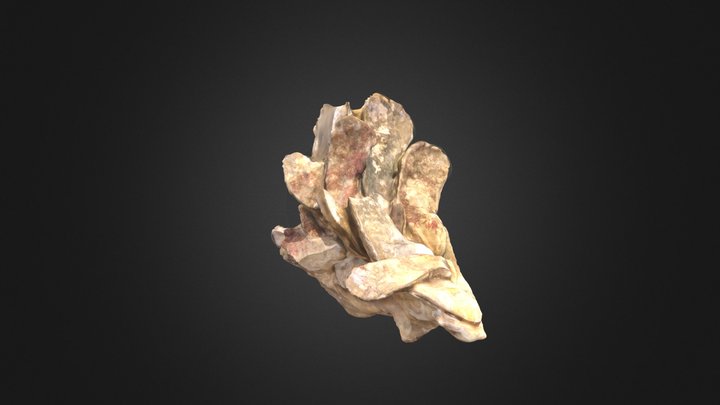
3D model
- Source
- Sketchfab
- Licence
- CC0 Public Domain
- Commercial use
- the licence allows it
Smithsonian Open Access and MorphoSource were not reached for this taxon, so this list is what the others held rather than everything there is.
The description on this site
- Source
- Wikipedia, “Crassostrea”
- Licence
- CC BY-SA 4.0
This is what the site found, which is not the same as what exists.
Keep going
What may have been alongside itOstreidae through timeFormations of the MioceneThe world it lived on
Occurrence data from the Paleobiology Database, CC BY 4.0. (Sacco 1897)