Creodonta
Creodonta is a former order of extinct carnivorous placental mammals that lived from the Early Paleocene to the Late Miocene epochs in North America, Eurasia, and Africa. Originally thought to be a single group of animals ancestral to the modern Carnivora, this order is now usually considered a polyphyletic assemblage of two different groups, the oxyaenids and the hyaenodonts, not a natural group. Oxyaenids are first known from the early Paleocene of North America, while hyaenodonts hail from the late Paleocene, or Late Cretaceous, of Europe.

Mr Fink ( talk ) · CC BY-SA 3.0 · via Wikipedia/Commons. May be a photograph of a specimen, or an artist’s reconstruction — an interpretation of a skeleton, since colour and soft tissue are almost never preserved.
On record
Recorded, not inferred- Also called
- creodontPBDB
- Sits inside
- FeraePBDB
- Diet
- insectivorePBDB, for Theria
- Life habit
- scansorialPBDB, for Eutheria
- Motility
- actively mobilePBDB, for Osteichthyes
- Environment
- terrestrialPBDB, for Eutheria
Time the record covers
At least 50 million years on record.
The record covers at least 66 Mya to 15.98 Mya. No occurrence read is dated outside 72.2 Mya to 11.63 Mya.
51 occurrences of Creodonta on record, most of them in the Eocene. Bar height is expected occurrences, not a count: each fossil is spread across the span it is dated to, so a tall narrow bar means tight dating and a low wide one means loose.
When
51 occurrences- Late Cretaceous20%
- Paleocene8%
- Eocene53%
- Oligocene4%
- Miocene16%
These are dates about fossils, not the animal: the record can only begin after it arose and end before it died out, so either end may reach further. Shares are expected occurrences: a fossil dated to a span is counted partly in each period it straddles. More on what this infers.
Found in
26 formations
- Wasatch Formation5
- Scollard Formation4
- Maboko Formation4
- Hell Creek Formation3
- Wind River Formation3
- Glib Zegdou Formation3
Loading coastlines…
The named rock units Creodonta has been recovered from, largest first. Drawn where the rock is now, not where it formed. 2 further formations hold fewer occurrences each and are not listed. 5 occurrences have no formation on record, which is common for older literature.
Creodonta and its relatives
EoceneWhere Creodonta and its relatives were recorded in the Eocene.
Found in the same rock
939 taxa- Rodentia12 sites
- Altacreodus magnus10 sites
- Didelphodon vorax7 sites
- Cimolodon nitidus6 sites
- Perissodactyla6 sites
- Rhinocerotidae6 sites
- Anthracotheriidae5 sites
- Aves5 sites
- Bovidae5 sites
- Condylarthra5 sites
- Coryphodon5 sites
- Eulipotyphla5 sites
- Insectivora5 sites
- Meniscoessus robustus5 sites
- Pediomys elegans5 sites
- Phenacodus5 sites
- Protolambda hatcheri5 sites
- Alphadon marshi4 sites
- Batodon tenuis4 sites
- Chamops segnis4 sites
- Cimolestes incisus4 sites
- Cimolomys gracilis4 sites
- Crocodylus4 sites
- Didelphodus4 sites
The Paleobiology Database records 50 sites for Creodonta, and this reads all of them. The number is how many of those sites it was catalogued from too. The 24 sharing the most are listed.
This is not a list of everything alive at the time. It is only what has come out of the same ground as this animal and been written down.
Entered from
36 references- Latest Cretaceous mammals of upper part of Edmonton Formation of Alberta, Canada, and review of marsupial-placental dichotomy in mammalian evolution4
- Nouveaux sites à vertébrés paléogènes dans la région des Gour Lazib (Sahara nord-occidental, Algérie)3
- Systematics and Evolution of Early Eocene Hyaenodontidae (Mammalia, Creodonta) in the Clarks Fork Basin, Wyoming3
- Fossil mammals of the type Lance Formation, Wyoming. Part III. Eutheria and summary3
- Small mammal fauna from Wulanhuxiu (Nei Mongol, China) implies the Irdinmanhan–Sharamurunian (Eocene) faunal turnover2
- Synonymies and reidentifications of North American fossil mammals2
- Late Cretaceous and Paleocene mammal localities of southern Alberta2
- Revision of the Wind River faunas, early Eocene of central Wyoming. Part 5. Geology and biostratigraphy of the upper part of the Wind River Formation, northeastern Wind River Basin2
- New Higher Primate Fossils from the Middle Miocene Deposits at Majiwa and Kaloma, Western Kenya2
- The Miocene fossil beds of Maboko Island, Kenya: Geology, age, taphonomy, and palaeontology2
- Vertebrate biostratigraphy of the Hell Creek Formation in southwestern North Dakota and northwestern South Dakota1
- Johnson and Anemone, 20001
Each of the 51 occurrences read was entered from one of these publications, ordered by how many each accounts for. This is not a search for papers mentioning the name. 24 further references are not listed. Entries link to doi.org where the Paleobiology Database holds an identifier, and to its own record where it does not. Relayed as the Paleobiology Database holds them, not checked against what they resolve to.
Media and terms
Media content3
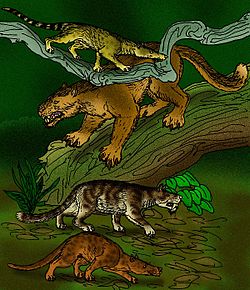
Picture of Creodonta
- Source
- Wikipedia/Commons
- Credit
- Mr Fink ( talk )
- Licence
- CC BY-SA 3.0
- Commercial use
- the licence allows it
CT scan
- Source
- MorphoSource
- Licence
- not stated by the source
- Commercial use
- cannot be read from the licence given — check the record
- Specimen
- Creodonta sp. · dpc:21460
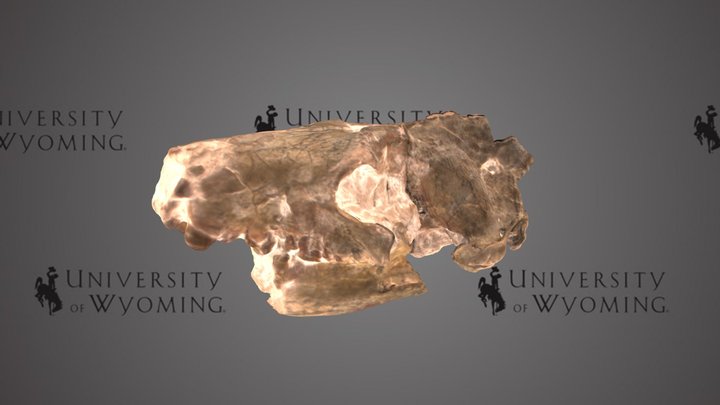
3D model
- Source
- Sketchfab
- Licence
- CC Attribution-NonCommercial
- Commercial use
- the licence does not allow it
The description on this site
- Source
- Wikipedia, “Creodonta”
- Licence
- CC BY-SA 4.0
This is what the site found, which is not the same as what exists.
Keep going
What may have been alongside itFerae through timeFormations of the EoceneThe world it lived on
Occurrence data from the Paleobiology Database, CC BY 4.0. (Cope 1875)