Diplocynodon
Diplocynodon is an extinct genus of eusuchian, either an alligatoroid crocodilian or a stem-group crocodilian, that lived during the Paleocene to Middle Miocene in Europe. Some species may have reached lengths of 3 metres (9.8 ft), while others probably did not exceed 1 metre (3.3 ft). The largest species D.hantoniensis measured 5.9 m in length. They are almost exclusively found in freshwater environments. The various species are thought to have been opportunistic aquatic predators.

Ghedoghedo · CC BY-SA 3.0 · via Wikipedia/Commons. May be a photograph of a specimen, or an artist’s reconstruction — an interpretation of a skeleton, since colour and soft tissue are almost never preserved.
On record
Recorded, not inferred- Sits inside
- AlligatoroideaPBDB
- Diet
- carnivorePBDB, for Crocodylia
- Motility
- actively mobilePBDB, for Osteichthyes
- Environment
- marinePBDB, for Mesoeucrocodylia
Time the record covers
At least 71 million years on record.
The record covers at least 72.2 Mya to 774 ka. No occurrence read is dated outside 83.6 Mya to 129 ka.
130 occurrences of Diplocynodon on record, most of them in the Miocene. Bar height is expected occurrences, not a count: each fossil is spread across the span it is dated to, so a tall narrow bar means tight dating and a low wide one means loose.
When
130 occurrences- Late Cretaceousunder 1%
- Paleocene3%
- Eocene33%
- Oligocene14%
- Miocene48%
- Pleistoceneunder 1%
These are dates about fossils, not the animal: the record can only begin after it arose and end before it died out, so either end may reach further. Shares are expected occurrences: a fossil dated to a span is counted partly in each period it straddles. More on what this infers.
Found in
46 formations
- Tudela Formation18
- Upper Freshwater Molasse Formation · Molasse Group8
- Calcaries de Tàrrega Formation3
- Messel Formation3
- Eibiswald Formation3
- Corrales Formation3
Loading coastlines…
The named rock units Diplocynodon has been recovered from, largest first. Drawn where the rock is now, not where it formed. 22 further formations hold fewer occurrences each and are not listed. 43 occurrences have no formation on record, which is common for older literature.
Diplocynodon and its relatives
MioceneWhere Diplocynodon and its relatives were recorded in the Miocene.
Found in the same rock
1,680 taxa- Trionyx26 sites
- Ophisaurus21 sites
- Testudo20 sites
- Trionychidae17 sites
- Chelydropsis apellanizi15 sites
- Aves12 sites
- Trionychinae12 sites
- Iberosuchus11 sites
- Lacerta11 sites
- Geochelone10 sites
- Lacertidae10 sites
- Neochelys10 sites
- Prolagus oeningensis10 sites
- Ptychogaster10 sites
- Asiatosuchus9 sites
- Brachypotherium brachypus9 sites
- Colubrinae9 sites
- Osteichthyes9 sites
- Procervulus dichotomus9 sites
- Salamandridae9 sites
- Soricidae9 sites
- Anguinae8 sites
- Bunolistriodon8 sites
- Democricetodon mutilus8 sites
The Paleobiology Database records 120 sites for Diplocynodon, and this reads all of them. The number is how many of those sites it was catalogued from too. The 24 sharing the most are listed.
This is not a list of everything alive at the time. It is only what has come out of the same ground as this animal and been written down.
Entered from
76 references- Restos fósiles del cocodrilo Diplocynodon (Alligatoroidea) en el Mioceno inferior de las Bárdenas Reales de Navarra18
- Crocodyliformes and Testudines from the Eocene of the Duero Basin (northwestern Spain): an update of their diversity and stratigraphic context8
- Stratigraphy and mammal faunas of the Brackwassermolasse in the surroundings of Ulm (Southwest Germany)6
- Neue Ergebnisse zur Stratigraphie der mittleren Serie der Oberen Süßwassermolasse Bayerns (New results on the stratigraphy of the middle series of upper Freshwater Molasse, Bavaria)4
- Updating the fossil record of the alligatoroid crocodylian Diplocynodon from the late Eocene of Transylvanian Basin3
- Revision of the crocodilians from the Oligocene of Monteviale, Italy, and the diversity of European eusuchians across the Eocene-Oligocene boundary3
- Taxonomic clarification of Diplocynodon POMEL, 1847 (Crocodilia) from the Miocene of Styria, Austria3
- Diplocynodon muelleri comb. nov., an Oligocene diplocynodontine alligatoroid from Catalonia (Ebro Basin, Lleida Province, Spain)3
- Basin margins, biodiversity, evolutionary innovation, and the origin of new taxa3
- Baryphracta deponiae n. g. n. sp. (Reptilia, Crocodylia), ein neues Krokodil aus der Grube Messel bey Darmstadt (Hessen, Bundesrepublik Deutschland)3
- Zur Stellung der Wirbeltierfauna des Geiseltals, insbesondere der Mammalier, im europäischen Mitteleozän (Position of the European Middle Eocene vertebrate fauna of the Geisel Valley, with special focus on mammals)3
- Re-evaluation of the morphology and phylogeny of Diplocynodon levantinicum Huene & Nikoloff, 1963 and the stratigraphic age of the West Maritsa coal field (Upper Thrace Basin, Bulgaria)2
Each of the 130 occurrences read was entered from one of these publications, ordered by how many each accounts for. This is not a search for papers mentioning the name. 64 further references are not listed. Entries link to doi.org where the Paleobiology Database holds an identifier, and to its own record where it does not. Relayed as the Paleobiology Database holds them, not checked against what they resolve to.
Media and terms
Media content3

Picture of Diplocynodon
- Source
- Wikipedia/Commons
- Credit
- Ghedoghedo
- Licence
- CC BY-SA 3.0
- Commercial use
- the licence allows it

Photography scan
- Source
- MorphoSource
- Licence
- In Copyright
- Commercial use
- cannot be read from the licence given — check the record
- Specimen
- Diplocynodon hantoniensis · NHMUK:PAL:PV OR 25238
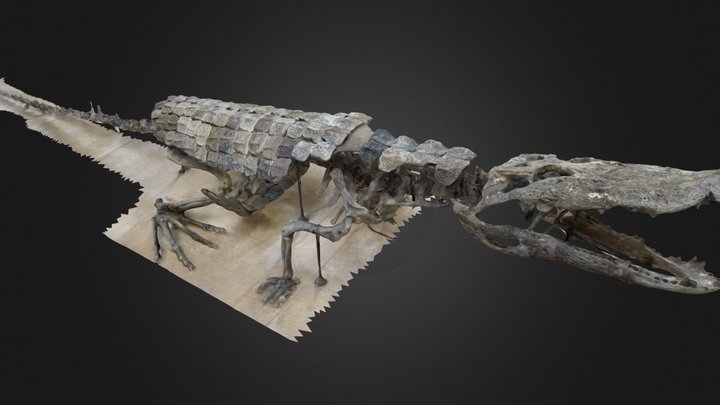
3D model
- Source
- Sketchfab
- Credit
- Tavernier Amaury
- Licence
- CC Attribution-NonCommercial-ShareAlike
- Commercial use
- the licence does not allow it
Smithsonian Open Access was not reached for this taxon, so this list is what the others held rather than everything there is.
The description on this site
- Licence
- CC BY-SA 4.0
This is what the site found, which is not the same as what exists.
Keep going
What may have been alongside itAlligatoroidea through timeFormations of the MioceneThe world it lived on
Occurrence data from the Paleobiology Database, CC BY 4.0. Pomel 1847