Dosinia
Searched as Dosinia (Orbiculus) lupinus austriaca. The Paleobiology Database treats Dosinia as the accepted name.
Dosinia is a genus of saltwater clams, marine bivalve molluscs in the family Veneridae, subfamily Dosiniinae Deshayes, 1853. The shell of Dosinia species is disc-like in shape, usually white, and therefore is reminiscent of the shells of Lucinid bivalves.

Hectonichus · CC BY-SA 3.0 · via Wikipedia/Commons. May be a photograph of a specimen, or an artist’s reconstruction — an interpretation of a skeleton, since colour and soft tissue are almost never preserved.
On record
Recorded, not inferred- Sits inside
- DosiniiniPBDB
- Diet
- suspension feederPBDB
- Life habit
- infaunalPBDB
- Motility
- facultatively mobilePBDB
- Vision
- blindPBDB, for Bivalvia
Time the record covers
At least 8 million years on record.
The record covers at least 11.63 Mya to 3.6 Mya. No occurrence read is dated outside 13.82 Mya to 2.58 Mya.
5 occurrences of Dosinia on record, most of them in the Pliocene. The Paleobiology Database records this as a living group, and the chart stops with its fossils rather than at the present. Bar height is expected occurrences, not a count: each fossil is spread across the span it is dated to, so a tall narrow bar means tight dating and a low wide one means loose.
When
5 occurrencesThese are dates about fossils, not the animal: the record can only begin after it arose and end before it died out, so either end may reach further. Shares are expected occurrences: a fossil dated to a span is counted partly in each period it straddles. More on what this infers.
Found in
3 formations
Loading coastlines…
The named rock units Dosinia has been recovered from, largest first. Drawn where the rock is now, not where it formed. 2 occurrences have no formation on record, which is common for older literature.
Dosinia and its relatives
PlioceneWhere Dosinia and its relatives were recorded in the Pliocene.
Found in the same rock
3,499 taxa- Anadara76 sites
- Turritella44 sites
- Ostrea39 sites
- Diplodonta37 sites
- Chlamys35 sites
- Nassarius33 sites
- Cerithium31 sites
- Anomia simplex30 sites
- Lirophora29 sites
- Calyptraea centralis28 sites
- Cancellaria28 sites
- Dentalium27 sites
- Laevicardium27 sites
- Nuculana27 sites
- Tellina27 sites
- Anomia25 sites
- Crepidula plana24 sites
- Olivella24 sites
- Trachycardium23 sites
- Conus22 sites
- Macrocallista maculata21 sites
- Mercenaria21 sites
- Panopea21 sites
- Solen21 sites
The Paleobiology Database records 614 sites for Dosinia, and this reads 240 of them. Of that, one read hit the database's own return limit, so every count below is a floor rather than a total. The number is how many of those sites it was catalogued from too. The 24 sharing the most are listed.
This is not a list of everything alive at the time. It is only what has come out of the same ground as this animal and been written down.
Entered from
1 referenceEach of the 5 occurrences read was entered from one of these publications, ordered by how many each accounts for. This is not a search for papers mentioning the name. Each entry links to the Paleobiology Database's own record for the work.
Media and terms
Media content3

Picture of Dosinia
- Source
- Wikipedia/Commons
- Credit
- Hectonichus
- Licence
- CC BY-SA 3.0
- Commercial use
- the licence allows it
CT scan
- Source
- MorphoSource
- Licence
- In Copyright
- Commercial use
- cannot be read from the licence given — check the record
- Specimen
- Dosinia concentrica · FMNH:Invertebrate Zoology:77993
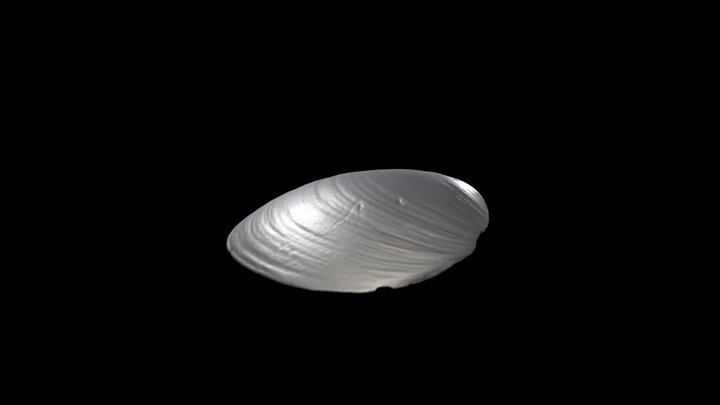
3D model
- Source
- Sketchfab
- Credit
- WesternScienceCenter
- Licence
- CC0 Public Domain
- Commercial use
- the licence allows it
The description on this site
- Source
- Wikipedia, “Dosinia”
- Licence
- CC BY-SA 4.0
This is what the site found, which is not the same as what exists.
Keep going
What may have been alongside itDosiniini through timeFormations of the PlioceneThe world it lived on
Occurrence data from the Paleobiology Database, CC BY 4.0. Scopoli 1777