Nassarius
Nassarius, common name nassa mud snails (USA) or dog whelks (UK), is a genus of minute to medium-sized sea snails, marine gastropod molluscs in the family Nassariidae. They are scavengers.

H. Zell · CC BY-SA 3.0 · via Wikipedia/Commons. May be a photograph of a specimen, or an artist’s reconstruction — an interpretation of a skeleton, since colour and soft tissue are almost never preserved.
On record
Recorded, not inferred- Sits inside
- NassariinaePBDB
- Diet
- carnivorePBDB
- Life habit
- semi-infaunalPBDB
- Motility
- slow-movingPBDB
- Vision
- limitedPBDB, for Gastropoda
Time the record covers
At least 61 million years on record.
The record covers at least 61.66 Mya to 11.7 ka. No occurrence read is dated outside 66 Mya to 0 Mya.
1,701 occurrences of Nassarius on record, most of them in the Miocene. The Paleobiology Database records this as a living group. Bar height is expected occurrences, not a count: each fossil is spread across the span it is dated to, so a tall narrow bar means tight dating and a low wide one means loose.
When
1,701 occurrencesThese are dates about fossils, not the animal: the record can only begin after it arose and end before it died out, so either end may reach further. Shares are expected occurrences: a fossil dated to a span is counted partly in each period it straddles. More on what this infers.
Found in
224 formations
- Shoal River Formation · Alum Bluff Group49
- Gatun Formation47
- Byram Formation · Vicksburg Group34
- Chipola Formation · Alum Bluff Group32
- Oak Grove Formation · Alum Bluff Group31
- Termofourà Formation28
Loading coastlines…
The named rock units Nassarius has been recovered from, largest first. Drawn where the rock is now, not where it formed. 200 further formations hold fewer occurrences each and are not listed. 565 occurrences have no formation on record, which is common for older literature.
Nassarius and its relatives
MioceneWhere Nassarius and its relatives were recorded in the Miocene.
Found in the same rock
3,679 taxa- Anadara49 sites
- Turritella43 sites
- Calyptraea centralis36 sites
- Cerithium31 sites
- Anomia simplex30 sites
- Crepidula plana30 sites
- Lirophora28 sites
- Conus25 sites
- Crepidula fornicata25 sites
- Abra aequalis24 sites
- Chlamys24 sites
- Dentalium24 sites
- Naticarius canrena24 sites
- Nucula (Nucula) proxima24 sites
- Terebra23 sites
- Nuculana acuta22 sites
- Turbonilla22 sites
- Cancellaria21 sites
- Strioterebrum21 sites
- Trachycardium21 sites
- Yoldia21 sites
- Caryocorbula (Caryocorbula)20 sites
- Dentalium (Dentalium)20 sites
- Nuculana20 sites
The Paleobiology Database records 623 sites for Nassarius, and this reads 240 of them. Of that, one read hit the database's own return limit, so every count below is a floor rather than a total. The number is how many of those sites it was catalogued from too. The 24 sharing the most are listed.
This is not a list of everything alive at the time. It is only what has come out of the same ground as this animal and been written down.
Entered from
297 references- Die Fauna des marinen Miozäns von Kevelaer (Niederrhein)128
- The Molluscan Fauna of the Alum Bluff Group of Florida94
- The Early Pliocene Gastropoda (Mollusca) of Estepona, Southern Spain. Part 8: Nassariidae73
- Unpublished census data from Atlantic coastal plain and circum-Caribbean Neogene assemblages and taxonomic opinions56
- Lower to Middle Miocene Mollusc assemblages from the Torino Hills (NW Italy): Synthesis of new data and chronostratigraphical arrangement45
- A paleobiotic survey of Caribbean faunas from the Neogene of the Isthmus of Panama38
- Geology and paleontology of canal zone and adjoing parts of Panama: Description of Tertiary mollusks (gastropods: Columbellidae to Volutidae).34
- Die Mollusken des Pliozäns von Boemiajoe (Java)30
- Testing for patterns of faunal persistence in the early Oligocene Byram Formation of Mississippi29
- Unpublished notes on Caribbean collection of the Naturhistorisches Museum Basel29
- Cenozoic fossil mollusks from Western Pacific Islands; Gastropods (Eratoidae through Harpidae)28
- Miocene and Pliocene mollusks from Trinidad28
Each of the 1,701 occurrences read was entered from one of these publications, ordered by how many each accounts for. This is not a search for papers mentioning the name. 285 further references are not listed. Entries link to doi.org where the Paleobiology Database holds an identifier, and to its own record where it does not. Relayed as the Paleobiology Database holds them, not checked against what they resolve to.
Media and terms
Media content2

Picture of Nassarius
- Source
- Wikipedia/Commons
- Credit
- H. Zell
- Licence
- CC BY-SA 3.0
- Commercial use
- the licence allows it
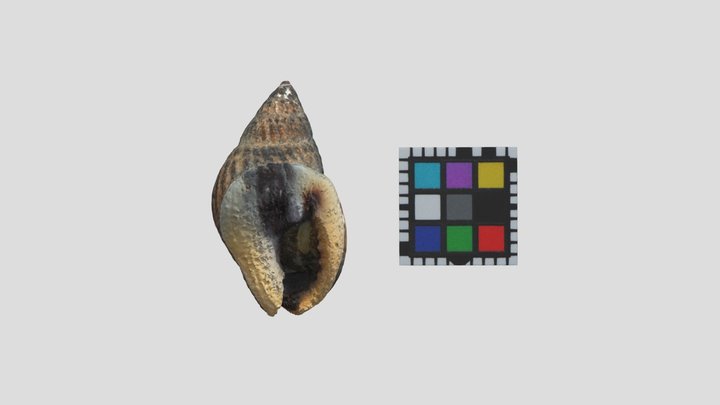
3D model
- Source
- Sketchfab
- Licence
- CC0 Public Domain
- Commercial use
- the licence allows it
Smithsonian Open Access was not reached for this taxon, so this list is what the others held rather than everything there is.
The description on this site
- Source
- Wikipedia, “Nassarius”
- Licence
- CC BY-SA 4.0
This is what the site found, which is not the same as what exists.
Keep going
What may have been alongside itNassariinae through timeFormations of the MioceneThe world it lived on
Occurrence data from the Paleobiology Database, CC BY 4.0. Duméril 1806