Eunectes
Anacondas or water boas are a group of large boas of the genus Eunectes. They are a semiaquatic group of snakes found in tropical South America. Two to four extant and one extinct species are currently recognized, including one of the largest snakes in the world, E. murinus, the green anaconda.

LA Dawson · CC BY-SA 2.5 · via Wikipedia/Commons. May be a photograph of a specimen, or an artist’s reconstruction — an interpretation of a skeleton, since colour and soft tissue are almost never preserved.
On record
Recorded, not inferred- Also called
- anacondaPBDB
- Sits inside
- BoidaePBDB
- Diet
- carnivore, piscivorePBDB
- Life habit
- aquaticPBDB
- Motility
- actively mobilePBDB, for Osteichthyes
- Environment
- freshwaterPBDB
Time the record covers
At least 25 million years on record.
The record covers at least 27.3 Mya to 1.8 Mya. No occurrence read is dated outside 33.9 Mya to 774 ka.
6 occurrences of Eunectes on record, most of them in the Miocene. The Paleobiology Database records this as a living group, and the chart stops with its fossils rather than at the present. Bar height is expected occurrences, not a count: each fossil is spread across the span it is dated to, so a tall narrow bar means tight dating and a low wide one means loose.
When
6 occurrences- Oligocene17%
- Miocene67%
- Pleistocene17%
These are dates about fossils, not the animal: the record can only begin after it arose and end before it died out, so either end may reach further. Shares are expected occurrences: a fossil dated to a span is counted partly in each period it straddles. More on what this infers.
Found in
4 formations
- Villavieja Formation · Honda Group2
- Solimões Formation1
- La Victoria Formation · Honda Group1
- San Gregorio Formation1
Loading coastlines…
The named rock units Eunectes has been recovered from, largest first. Drawn where the rock is now, not where it formed. 1 occurrence has no formation on record, which is common for older literature.
Eunectes and its relatives
MioceneWhere Eunectes and its relatives were recorded in the Miocene.
Found in the same rock
79 taxa- Colubridae2 sites
- Acresuchus pachytemporalis1 site
- Agoutidae1 site
- Anisorhynchus effossus1 site
- Atelidae1 site
- Bibio major1 site
- Bibio marginatus1 site
- Bibionidae1 site
- Caiman brevirostris1 site
- Caiman yacare1 site
- Caimaninae1 site
- Camelidae1 site
- Chapalmalania1 site
- Chelonoidis1 site
- Cleonini1 site
- Colombophis portai1 site
- Colombophis spinosus1 site
- Crocodylia1 site
- Diclidurus1 site
- Dracaena colombiana1 site
- Drytomomys1 site
- Emballonuridae1 site
- Entiminae1 site
- Epicrates1 site
The Paleobiology Database records 6 sites for Eunectes, and this reads all of them. The number is how many of those sites it was catalogued from too. The 24 sharing the most are listed.
This is not a list of everything alive at the time. It is only what has come out of the same ground as this animal and been written down.
Entered from
5 references- Limbless Tetrapods2
- A Pliocene–Pleistocene continental biota from Venezuela1
- Presence of the Genus Eunectes (Serpentes, Boidae) in the Neogene of Southwestern Amazonia, Brazil1
- Le gisement de vertébrés Miocènes de La Venta (Colombie) et sa faune de serpents1
- Recherches sur les insectes fossiles des terrains Tertiaires de la France, première partie, insectes fossiles de l'Auvergne1
Each of the 6 occurrences read was entered from one of these publications, ordered by how many each accounts for. This is not a search for papers mentioning the name. Entries link to doi.org where the Paleobiology Database holds an identifier, and to its own record where it does not. Relayed as the Paleobiology Database holds them, not checked against what they resolve to.
Media and terms
Media content3
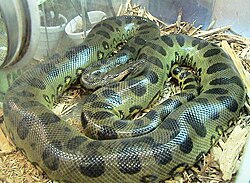
Picture of Eunectes
- Source
- Wikipedia/Commons
- Credit
- LA Dawson
- Licence
- CC BY-SA 2.5
- Commercial use
- the licence allows it
CT scan
- Source
- MorphoSource
- Licence
- In Copyright
- Commercial use
- cannot be read from the licence given — check the record
- Specimen
- Eunectes murinus · UF:Herp:2210
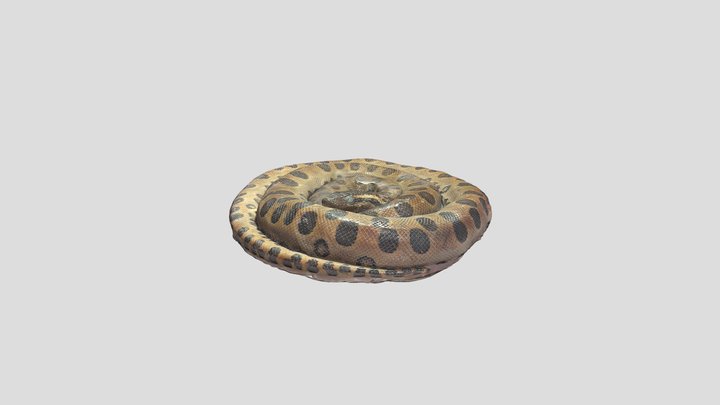
3D model
- Source
- Sketchfab
- Credit
- Do real ao digital
- Licence
- CC Attribution
- Commercial use
- cannot be read from the licence given — check the record
The description on this site
- Source
- Wikipedia, “Anaconda”
- Licence
- CC BY-SA 4.0
This is what the site found, which is not the same as what exists.
Keep going
What may have been alongside itBoidae through timeFormations of the MioceneThe world it lived on
Occurrence data from the Paleobiology Database, CC BY 4.0. Wagler 1830