Fimbria
Fimbria is a genus of marine bivalve molluscs in the family Lucinidae. Fimbria contains two living species, Fimbria fimbriata and Fimbria soverbii. Several other species are known from fossils.

George Brettingham Sowerby II · Public Domain · via Wikipedia/Commons. May be a photograph of a specimen, or an artist’s reconstruction — an interpretation of a skeleton, since colour and soft tissue are almost never preserved.
On record
Recorded, not inferred- Sits inside
- FimbriinaePBDB
- Diet
- chemosymbioticPBDB, for Lucinidae
- Life habit
- deep infaunalPBDB, for Lucinidae
- Motility
- facultatively mobilePBDB, for Lucinidae
- Vision
- blindPBDB, for Bivalvia
Time the record covers
At least 233 million years on record.
The record covers at least 233.6 Mya to 129 ka. No occurrence read is dated outside 237 Mya to 11.7 ka.
245 occurrences of Fimbria on record, most of them in the Middle Jurassic. The Paleobiology Database records this as a living group. Bar height is expected occurrences, not a count: each fossil is spread across the span it is dated to, so a tall narrow bar means tight dating and a low wide one means loose.
When
245 occurrences- Late Triassic10%
- Early Jurassicunder 1%
- Middle Jurassic35%
- Late Jurassic7%
- Early Cretaceous8%
- Late Cretaceous11%
- Paleocene10%
- Eocene15%
- Oligoceneunder 1%
- Miocene1%
- Pleistocene1%
These are dates about fossils, not the animal: the record can only begin after it arose and end before it died out, so either end may reach further. Shares are expected occurrences: a fossil dated to a span is counted partly in each period it straddles. More on what this infers.
Found in
60 formations
- Dhruma Formation · Shaqra Group17
- Tataouine Formation12
- Calcaires pseudo-oolithiques superieurs Formation10
- Calcaires pseudo-oolithiques inferieurs Formation9
- Calcaires marno-crayeux inferieurs Formation9
- Calcaires marno-crayeux superieurs Formation8
Loading coastlines…
The named rock units Fimbria has been recovered from, largest first. Drawn where the rock is now, not where it formed. 36 further formations hold fewer occurrences each and are not listed. 76 occurrences have no formation on record, which is common for older literature.
Fimbria and its relatives
Middle JurassicWhere Fimbria and its relatives were recorded in the Middle Jurassic.
Found in the same rock
3,726 taxa- Parallelodon hirsonensis39 sites
- Trigonia pullus33 sites
- Lithophaga fabella32 sites
- Lopha costata32 sites
- Homomya gibbosa29 sites
- Plagiostoma29 sites
- Protocardia27 sites
- Lima (Plagiostoma) subcardiiformis24 sites
- Actinostreon gregarea23 sites
- Ceratomya concentrica23 sites
- Pholadomya lirata23 sites
- Nanogyra (Nanogyra) nana22 sites
- Barbatia21 sites
- Chlamys20 sites
- Modiolus (Modiolus) imbricatus20 sites
- Ostrea20 sites
- Pterocardia pesbovis20 sites
- Mactromya19 sites
- Nucula19 sites
- Pholadomya19 sites
- Spondylus19 sites
- Thracia19 sites
- Venericardia19 sites
- Arca18 sites
The Paleobiology Database records 194 sites for Fimbria, and this reads all of them. Of that, one read hit the database's own return limit, so every count below is a floor rather than a total. The number is how many of those sites it was catalogued from too. The 24 sharing the most are listed.
This is not a list of everything alive at the time. It is only what has come out of the same ground as this animal and been written down.
Entered from
72 references- Geologie, Paleontologie et Paleoecologie du Bathonien au sud-ouest du Massif Ardennais44
- Unpublished data on Cretaceous-Paleocene molluscan assemblages18
- Le Jurassique D`Arabie Centrale17
- Palökologie benthischer Faunengemeinschaften und Taxonomie der Bivalven im Jura von Südtunesien14
- Jurassic Bivalvia and Gastropoda from Tanganyika and Kenya13
- Jura Vaudois et Neuchatelois12
- Les Bivalvia du Danien et du Montien de la Belgique10
- Lamellibranchiaten aus der Trias des Bakonyer Waldes [Bivalves from the Triassic of the Bakony Forest]9
- Die Fauna der sogenannten Cardita- und Raibler-Schichten in den Nordtiroler und bayerischen Alpen.9
- New Paleogene Fimbria (Mollusca: Bivalvia) from the Pacific coast of southwestern North America8
- Catalogue of the Paleocene and Eocene mollusca of the southern and eastern United States. Part 1. Pelecypoda, Amphineura, Pteropoda, Scaphopoda and Cephalopoda5
- Die Fauna der palaeocaenen Hueckelhovener Schichten aus dem Schacht Sophia Jacoba 6 (Erkelenzer Horst, Niederrheinische Bucht). Teil 2: Bivalvia. Heterodonta und Anomalodesmata4
Each of the 245 occurrences read was entered from one of these publications, ordered by how many each accounts for. This is not a search for papers mentioning the name. 60 further references are not listed. Entries link to doi.org where the Paleobiology Database holds an identifier, and to its own record where it does not. Relayed as the Paleobiology Database holds them, not checked against what they resolve to.
Media and terms
Media content3

Picture of Fimbria
- Source
- Wikipedia/Commons
- Credit
- George Brettingham Sowerby II
- Licence
- Public Domain
- Commercial use
- the licence allows it
CT scan
- Source
- MorphoSource
- Licence
- In Copyright
- Commercial use
- cannot be read from the licence given — check the record
- Specimen
- Anoplopoma fimbria · OS:Fishes:14231
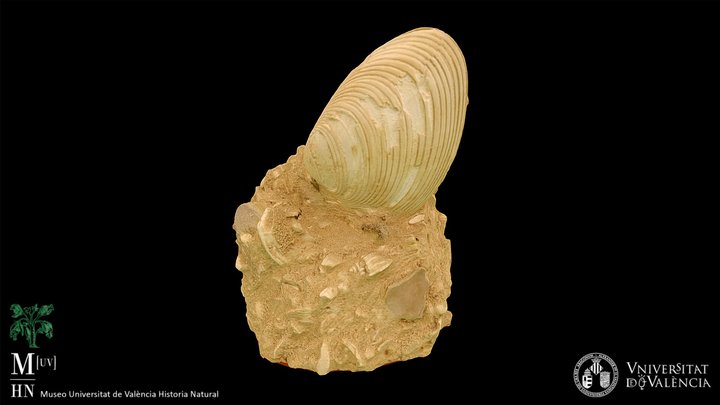
3D model
- Source
- Sketchfab
- Licence
- CC Attribution
- Commercial use
- cannot be read from the licence given — check the record
The description on this site
- Licence
- CC BY-SA 4.0
This is what the site found, which is not the same as what exists.
Keep going
What may have been alongside itFimbriinae through timeFormations of the Middle JurassicThe world it lived on
Occurrence data from the Paleobiology Database, CC BY 4.0. Mühlfeldt 1811