Gadus
Gadus is a genus of demersal fish in the family Gadidae, commonly known as cod, although there are additional cod species in other genera. The best known member of the genus is the Atlantic cod.

Uncredited · Public Domain · via Wikipedia/Commons. May be a photograph of a specimen, or an artist’s reconstruction — an interpretation of a skeleton, since colour and soft tissue are almost never preserved.
On record
Recorded, not inferred- Also called
- codPBDB
- Sits inside
- GadidaePBDB
- Diet
- carnivorePBDB, for Gadiformes
- Life habit
- nektonicPBDB, for Gadiformes
- Motility
- actively mobilePBDB, for Gadiformes
Time the record covers
At least 59 million years on record.
The record covers at least 59.24 Mya to 11.7 ka. No occurrence read is dated outside 61.66 Mya to 0 Mya.
43 occurrences of Gadus on record, most of them in the Pleistocene. The Paleobiology Database records this as a living group. Bar height is expected occurrences, not a count: each fossil is spread across the span it is dated to, so a tall narrow bar means tight dating and a low wide one means loose.
When
43 occurrencesThese are dates about fossils, not the animal: the record can only begin after it arose and end before it died out, so either end may reach further. Shares are expected occurrences: a fossil dated to a span is counted partly in each period it straddles. More on what this infers.
Found in
13 formations
- Cromer Forest Bed Formation2
- Sant’Agata Fossili Formation2
- Barton Clay Formation1
- Acredale Formation1
- Yorktown Formation · Chesapeake Group1
- Forest Bed Formation1
Loading coastlines…
The named rock units Gadus has been recovered from, largest first. Drawn where the rock is now, not where it formed. 28 occurrences have no formation on record, which is common for older literature.
Gadus and its relatives
PleistoceneWhere Gadus and its relatives were recorded in the Pleistocene.
Found in the same rock
1,397 taxa- Hygophum10 sites
- Myctophum8 sites
- Scopelopsis pliocenicus8 sites
- Benthosema fitchi7 sites
- Diaphus cavallonis7 sites
- Diaphus metopoclampoides7 sites
- Gadiculus argenteus7 sites
- Hygophum derthonensis7 sites
- Lampadena dea7 sites
- Notoscopelus elongatus7 sites
- Notoscopelus resplendens7 sites
- Diaphus befralai6 sites
- Diaphus splendidus6 sites
- Grammonus6 sites
- Hoplostethus praemediterraneus6 sites
- Lampanyctus latesulcatus6 sites
- Otolithus labiatus6 sites
- Parascombrops mutinensis6 sites
- Antigonia capros5 sites
- Bathycongrus5 sites
- Bathygadus novus5 sites
- Coelorinchus caelorhincus5 sites
- Lobianchia dofleini5 sites
- Lobianchia gemellari5 sites
The Paleobiology Database records 37 sites for Gadus, and this reads all of them. The number is how many of those sites it was catalogued from too. The 24 sharing the most are listed.
This is not a list of everything alive at the time. It is only what has come out of the same ground as this animal and been written down.
Entered from
27 references- Tortonian teleost otoliths from northern Italy: taxonomic synthesis and stratigraphic significance6
- Neue Untersuchungen an tertiaren Fisch-otolithen. Part II6
- The Vertebrata of the Forest Bed Series of Norfolk and Suffolk3
- Tortonian fish otoliths from turbiditic deposits in Northern Italy: Taxonomic and stratigraphic significance2
- The Weichselian (c. 115,000 - 10,000 B.P.) vertebrate fauna of Norway2
- Quaternary marine stratigraphy and geochronology in central West Greenland2
- Fischotolithen aus dem Obermiozän von Hohen Woos2
- Fossil fish otoliths from the Chibanian Miyata Formation, Kanagawa Prefecture, Japan, with comments on the paleoenvironment1
- The Marine Fish Fauna of the Middle Pleistocene Port Orford Formation1
- Humans and marine resource interaction reappraised: Archaeofauna remains during the late Pleistocene and Holocene in Cantabrian Spain1
- Animals and the precontact Inuit of Labrador: an examination using faunal remains, space and myth1
- A late Pleistocene Stellar sea lion (Eumetopias jubatus) from Courtenay, British Columbia: its death, associated biota, and paleoenvironment1
Each of the 43 occurrences read was entered from one of these publications, ordered by how many each accounts for. This is not a search for papers mentioning the name. 15 further references are not listed. Entries link to doi.org where the Paleobiology Database holds an identifier, and to its own record where it does not. Relayed as the Paleobiology Database holds them, not checked against what they resolve to.
Media and terms
Media content2

Picture of Gadus
- Source
- Wikipedia/Commons
- Credit
- nobody named on the record
- Licence
- Public Domain
- Commercial use
- the licence allows it
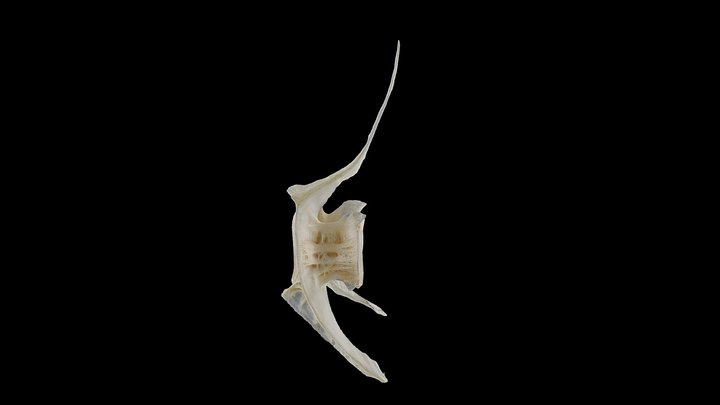
3D model
- Source
- Sketchfab
- Licence
- CC Attribution
- Commercial use
- cannot be read from the licence given — check the record
Smithsonian Open Access and MorphoSource were not reached for this taxon, so this list is what the others held rather than everything there is.
The description on this site
- Source
- Wikipedia, “Gadus”
- Licence
- CC BY-SA 4.0
This is what the site found, which is not the same as what exists.
Keep going
What may have been alongside itGadidae through timeFormations of the PleistoceneThe world it lived on
Occurrence data from the Paleobiology Database, CC BY 4.0. Linnaeus 1758