Glyptocrinus
Glyptocrinus is an extinct genus of sea lily that lived from the Middle Ordovician to the Early Silurian. Its remains have been found in North America.

Hectonichus · CC BY-SA 3.0 · via Wikipedia/Commons. May be a photograph of a specimen, or an artist’s reconstruction — an interpretation of a skeleton, since colour and soft tissue are almost never preserved.
On record
Recorded, not inferred- Sits inside
- GlyptocrinidaePBDB
- Diet
- suspension feederPBDB
- Life habit
- upper-level epifaunalPBDB
- Motility
- stationary, attachedPBDB
- Vision
- blindPBDB, for Crinoidea
- Environment
- marinePBDB, for Echinodermata
Time the record covers
At least 15 million years on record.
The record covers at least 458.2 Mya to 443.1 Mya. No occurrence read is dated outside 471.3 Mya to 438.1 Mya.
176 occurrences of Glyptocrinus on record, most of them in the Ordovician. Bar height is expected occurrences, not a count: each fossil is spread across the span it is dated to, so a tall narrow bar means tight dating and a low wide one means loose.
When
176 occurrences- Ordovician96%
- Silurian4%
These are dates about fossils, not the animal: the record can only begin after it arose and end before it died out, so either end may reach further. Shares are expected occurrences: a fossil dated to a span is counted partly in each period it straddles. More on what this infers.
Found in
32 formations
- Fairview Formation30
- Sunset Formation28
- Mount Auburn Formation17
- Corryville Formation16
- Dunleith Formation · Galena Group13
- Oregonia Formation13
Loading coastlines…
The named rock units Glyptocrinus has been recovered from, largest first. Drawn where the rock is now, not where it formed. 8 further formations hold fewer occurrences each and are not listed.
Glyptocrinus and its relatives
OrdovicianWhere Glyptocrinus and its relatives were recorded in the Ordovician.
Found in the same rock
750 taxa- Rafinesquina alternata116 sites
- Trepostomata112 sites
- Zygospira modesta88 sites
- Isotelus70 sites
- Bryozoa63 sites
- Ambonychia51 sites
- Hebertella occidentalis49 sites
- Cincinnaticrinus48 sites
- Flexicalymene46 sites
- Platystrophia45 sites
- Flexicalymene meeki41 sites
- Parvohallopora ramosa33 sites
- Cyclonema30 sites
- Pterinea27 sites
- Platystrophia ponderosa26 sites
- Lophospira24 sites
- Escharopora20 sites
- Plectorthis20 sites
- Pterinea demissa20 sites
- Modiomorphidae19 sites
- Dalmanella18 sites
- Petrocrania scabiosa18 sites
- Iocrinus14 sites
- Carabocrinus13 sites
The Paleobiology Database records 164 sites for Glyptocrinus, and this reads all of them. The number is how many of those sites it was catalogued from too. The 24 sharing the most are listed.
This is not a list of everything alive at the time. It is only what has come out of the same ground as this animal and been written down.
Entered from
17 references- Gradient ecology of a biotic invasion: biofacies of the type Cincinnatian Series (Upper Ordovician), Cincinnati, Ohio region, USA123
- Upper Mississippi Valley Champlainian and Cincinnatian echinoderms22
- The fossil fauna of the Ordovician in the Cincinnati Region6
- Oporniih razrez reki Moiero silura Sibirskoi platformih -The Silurian composit section of the Moiero River (Sibirian platform)4
- Anticosti Island, Québec4
- Palaeozoic geology of the Lake Simcoe Area, Ontario3
- Fossil Communities of the Middle Trenton Group (Ordovician) of New York State2
- Pre-Chattanooga stratigraphy in Central Tennessee2
- Echinodermata of the Ottawa Formation of the Ottawa-St. Lawrence lowland2
- Deepwater occurrence of a new Glyptocrinus (Crinoidea, Camerata) from the Late Ordovician of southwestern Ohio and northern Kentucky: revision of crinoid paleocommunity composition1
- Paleoecology of commensal epizoans fouling Flexicalymene (Trilobita) from the Upper Ordovician, Cincinnati Arch region, USA1
- Analysis of sample-level properties along a paleoenvironmental gradient: the behavior of evenness as a function of sample size1
Each of the 176 occurrences read was entered from one of these publications, ordered by how many each accounts for. This is not a search for papers mentioning the name. 5 further references are not listed. Entries link to doi.org where the Paleobiology Database holds an identifier, and to its own record where it does not. Relayed as the Paleobiology Database holds them, not checked against what they resolve to.
Media and terms
Media content2

Picture of Glyptocrinus
- Source
- Wikipedia/Commons
- Credit
- Hectonichus
- Licence
- CC BY-SA 3.0
- Commercial use
- the licence allows it
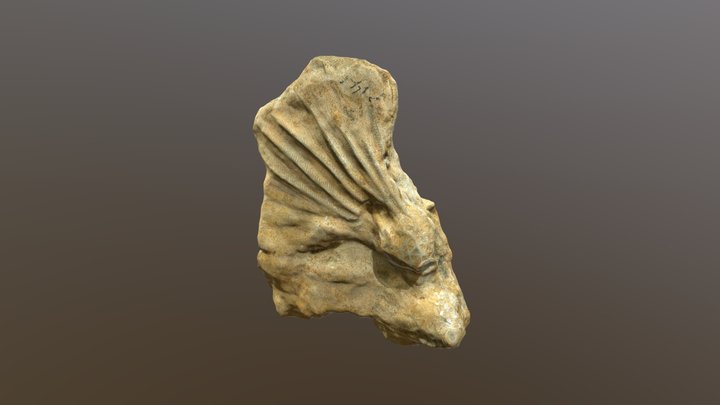
3D model
- Source
- Sketchfab
- Credit
- Shellie Luallin
- Licence
- CC Attribution
- Commercial use
- cannot be read from the licence given — check the record
The description on this site
- Licence
- CC BY-SA 4.0
This is what the site found, which is not the same as what exists.
Keep going
What may have been alongside itGlyptocrinidae through timeFormations of the OrdovicianThe world it lived on
Occurrence data from the Paleobiology Database, CC BY 4.0. Hall 1847