Iocrinus
Iocrinus is an extinct genus of crinoid. It is an early form of crinoid, from the Ordovician rock of North America, England, and Gilwern Hill, Powys in Wales.

Daderot · CC0 · via Wikipedia/Commons. May be a photograph of a specimen, or an artist’s reconstruction — an interpretation of a skeleton, since colour and soft tissue are almost never preserved.
On record
Recorded, not inferred- Sits inside
- IocrinidaePBDB
- Diet
- suspension feederPBDB
- Life habit
- intermediate-level epifaunalPBDB
- Motility
- stationary, attachedPBDB
- Vision
- blindPBDB, for Crinoidea
- Environment
- marinePBDB, for Echinodermata
Time the record covers
At least 21 million years on record.
The record covers at least 471.3 Mya to 449.6 Mya. No occurrence read is dated outside 477.1 Mya to 443.1 Mya.
76 occurrences of Iocrinus on record, most of them in the Ordovician. Bar height is expected occurrences, not a count: each fossil is spread across the span it is dated to, so a tall narrow bar means tight dating and a low wide one means loose.
When
76 occurrences- Ordovician100%
These are dates about fossils, not the animal: the record can only begin after it arose and end before it died out, so either end may reach further. Shares are expected occurrences: a fossil dated to a span is counted partly in each period it straddles. More on what this infers.
Found in
24 formations
- Denley Limestone Formation19
- Waynesville Formation12
- Corryville Formation7
- Kope Formation6
- Liberty Formation4
- Sugar River Limestone Formation · Lower Trenton Group4
Loading coastlines…
The named rock units Iocrinus has been recovered from, largest first. Drawn where the rock is now, not where it formed.
Iocrinus and its relatives
OrdovicianWhere Iocrinus and its relatives were recorded in the Ordovician.
Found in the same rock
482 taxa- Isotelus34 sites
- Flexicalymene28 sites
- Rafinesquina alternata27 sites
- Cincinnaticrinus24 sites
- Ambonychia22 sites
- Platystrophia21 sites
- Amplexopora20 sites
- Stictopora20 sites
- Ectenocrinus19 sites
- Rafinesquina19 sites
- Trepostomata19 sites
- Eridotrypa mutabilis17 sites
- Hallopora17 sites
- Paucicrura rogata17 sites
- Bryozoa15 sites
- Glyptocrinus15 sites
- Petrocrania15 sites
- Pterinea15 sites
- Sinuites15 sites
- Zygospira modesta15 sites
- Conularia14 sites
- Dendrocrinus14 sites
- Lophospira14 sites
- Merocrinus14 sites
The Paleobiology Database records 71 sites for Iocrinus, and this reads all of them. The number is how many of those sites it was catalogued from too. The 24 sharing the most are listed.
This is not a list of everything alive at the time. It is only what has come out of the same ground as this animal and been written down.
Entered from
15 references- Gradient ecology of a biotic invasion: biofacies of the type Cincinnatian Series (Upper Ordovician), Cincinnati, Ohio region, USA26
- R. Titus unpublished collections15
- The fossil fauna of the Ordovician in the Cincinnati Region10
- Fossil Communities of the Middle Trenton Group (Ordovician) of New York State7
- Fossil communities of the lower Trenton Group (Middle Ordovician) of central and northwestern New York State4
- Disparid and hybocrinid crinoids (Echinodermata) from the Upper Ordovician (lower Katian) Brechin Lagerstätte of Ontario2
- Llanvirn (Middle Ordovician) echinoderms from Llandegley Rocks, Central Wales2
- The paleoecology of a Late Ordovician shale unit from southwest Ohio and southeastern Indiana2
- Upper Mississippi Valley Champlainian and Cincinnatian echinoderms2
- Solutan echinoderms from the Fezouata Shale Lagerstätte (Lower Ordovician, Morocco): diversity, exceptional preservation, and palaeoecological implications1
- An Upper Ordovician faunal assemblage from the Neuville Formation of Québec, including an exceptionally preserved soft bodied sea anemone, Paleocerianthus neuvillii n. sp1
- Caradocian-Gedinnian echinoderm associations of Central and Eastern North America1
Each of the 76 occurrences read was entered from one of these publications, ordered by how many each accounts for. This is not a search for papers mentioning the name. 3 further references are not listed. Entries link to doi.org where the Paleobiology Database holds an identifier, and to its own record where it does not. Relayed as the Paleobiology Database holds them, not checked against what they resolve to.
Media and terms
Media content2

Picture of Iocrinus
- Source
- Wikipedia/Commons
- Credit
- Daderot
- Licence
- CC0
- Commercial use
- the licence allows it
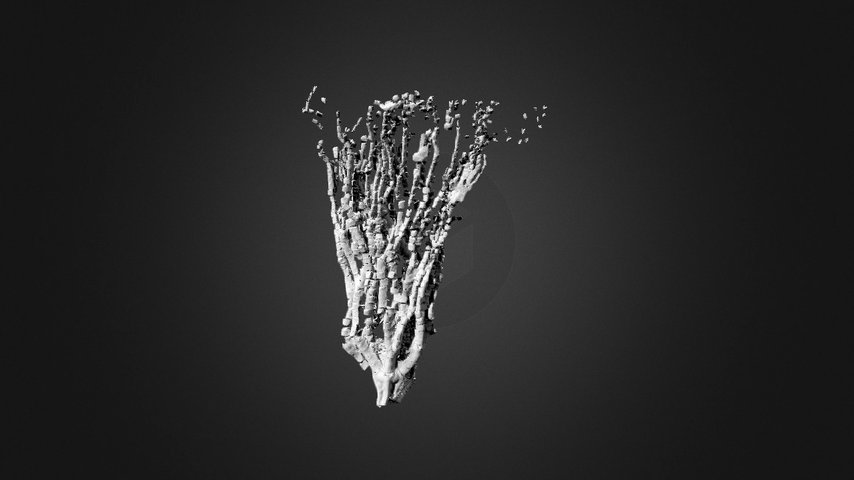
3D model
- Source
- Sketchfab
- Credit
- Imran Rahman
- Licence
- CC Attribution
- Commercial use
- cannot be read from the licence given — check the record
Smithsonian Open Access was not reached for this taxon, so this list is what the others held rather than everything there is.
The description on this site
- Source
- Wikipedia, “Iocrinus”
- Licence
- CC BY-SA 4.0
This is what the site found, which is not the same as what exists.
Keep going
What may have been alongside itIocrinidae through timeFormations of the OrdovicianThe world it lived on
Occurrence data from the Paleobiology Database, CC BY 4.0. Hall 1866