Gryphaea
Searched as Gryphaea arcuataeformis kolymensis. The Paleobiology Database treats Gryphaea as the accepted name.
Gryphaea is a genus of marine gryphaeid oysters known from the Mesozoic Era. Its fossils are almost worldwide-known but they are mostly common in Jurassic strata from Europe, North America, and South America. Gryphaea fossils are particularly important in the tectonically deformed Andean basins of Argentina and Chile and serve as index fossils. Gryphaea species appeared during the Late Triassic period and flourished during the Early Jurassic, eventually becoming extinct around the Late Jurassic. The name "devil's toenail" originated because of the curved shells of Gryphaea resembling a toenail. There used to be a common folk belief that carrying one of these fossils could prevent rheumatism.

Hallettx · CC BY-SA 4.0 · via Wikipedia/Commons. May be a photograph of a specimen, or an artist’s reconstruction — an interpretation of a skeleton, since colour and soft tissue are almost never preserved.
On record
Recorded, not inferred- Sits inside
- GryphaeinaePBDB
- Diet
- suspension feederPBDB, for Gryphaeidae
- Life habit
- epifaunalPBDB, for Gryphaeidae
- Motility
- stationary, attachedPBDB, for Gryphaeidae
- Vision
- blindPBDB, for Bivalvia
- Environment
- marine,brackishPBDB, for Ostreida
Time the record covers
At most 22 million years on record.
Every occurrence read is dated to somewhere between 227.3 Mya and 205.7 Mya, and nothing in the dating separates them, so that window is what the record shows rather than a span.
2 occurrences of Gryphaea on record, most of them in the Late Triassic. Bar height is expected occurrences, not a count: each fossil is spread across the span it is dated to, so a tall narrow bar means tight dating and a low wide one means loose.
When
2 occurrences- Late Triassic100%
These are dates about fossils, not the animal: the record can only begin after it arose and end before it died out, so either end may reach further. Shares are expected occurrences: a fossil dated to a span is counted partly in each period it straddles. More on what this infers.
Found in
1 formation
Loading coastlines…
The named rock units Gryphaea has been recovered from, largest first. Drawn where the rock is now, not where it formed.
Gryphaea and its relatives
Late TriassicWhere Gryphaea and its relatives were recorded in the Late Triassic.
Found in the same rock
592 taxa- Serpula78 sites
- Pleuromya uniformis58 sites
- Actinostreon gregarea54 sites
- Protocardia striatula50 sites
- Nanogyra (Nanogyra) nana48 sites
- Plagiostoma45 sites
- Grammatodon concinnus44 sites
- Chlamys textoria42 sites
- Lobothyris punctata36 sites
- Radulopecten fibrosus35 sites
- Plicatula (Harpax) spinosa34 sites
- Entolium (Entolium) corneolum33 sites
- Pecten (Pecten) dentatus32 sites
- Inoperna sowerbiana31 sites
- Actinostreon29 sites
- Parvamussium pumilum29 sites
- Camptonectes (Camptonectes) auritus28 sites
- Modiolus28 sites
- Myophorella28 sites
- Parallelodon hirsonensis28 sites
- Isognomon26 sites
- Nicaniella (Nicaniella) voltzi25 sites
- Nubeculinella25 sites
- Quadratirhynchia attenuata24 sites
The Paleobiology Database records 879 sites for Gryphaea, and this reads 240 of them. The number is how many of those sites it was catalogued from too. The 24 sharing the most are listed.
This is not a list of everything alive at the time. It is only what has come out of the same ground as this animal and been written down.
Entered from
1 referenceEach of the 2 occurrences read was entered from one of these publications, ordered by how many each accounts for. This is not a search for papers mentioning the name. Each entry links to doi.org. Relayed as the Paleobiology Database holds them, not checked against what they resolve to.
Media and terms
Media content2

Picture of Gryphaea
- Source
- Wikipedia/Commons
- Credit
- Hallettx
- Licence
- CC BY-SA 4.0
- Commercial use
- the licence allows it
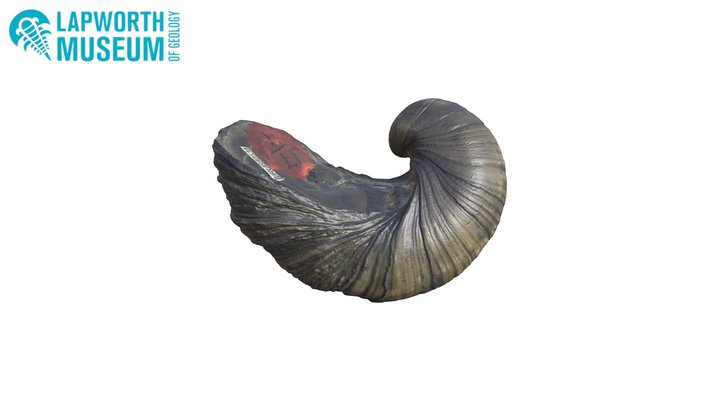
3D model
- Source
- Sketchfab
- Licence
- CC Attribution-NonCommercial
- Commercial use
- the licence does not allow it
Smithsonian Open Access was not reached for this taxon, so this list is what the others held rather than everything there is.
The description on this site
- Source
- Wikipedia, “Gryphaea”
- Licence
- CC BY-SA 4.0
This is what the site found, which is not the same as what exists.
Keep going
What may have been alongside itGryphaeinae through timeFormations of the Late TriassicThe world it lived on
Occurrence data from the Paleobiology Database, CC BY 4.0. Lamarck 1801